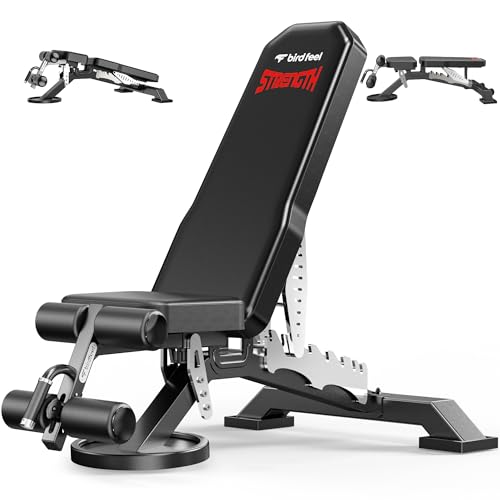
Adjustable Weight Bench 1800LBS Review 2026: this is a straightforward look at a heavy-duty home-gym bench built around stability and angle flexibility.
If you are shopping for an adjustable bench review that prioritizes support over gimmicks, this model has a clear pitch.
The Adjustable Weight Bench is aimed at home-gym buyers who want a versatile bench that can handle pressing, incline work, decline sit-ups, and general strength training without feeling flimsy.
Based on the listing, its main appeal is the combination of a commercial-style steel frame, a claimed 1,800 lb static capacity, and a multi-angle adjustment setup that makes it practical for full-body training.
Best fit: lifters who want one bench to cover flat, incline, and decline work with a strong stability bias.
Less ideal for: anyone who wants the lightest possible bench, a minimalist footprint, or a premium competition-style bench with a more specialized feel.
Review Scorecard
Category
Score
Buyer-focused rationale
Stability
9/10
The listing emphasizes a triangular frame, dual-arm reinforcement, and vertical stabilizers for heavy-load support.
Adjustability
8/10
A 3-position seat and 8-angle backrest give broad exercise coverage from decline to upright work.
Comfort
8/10
The long backrest and padded leg rollers suggest better support for presses and sit-up work.
Build confidence
9/10
The 70 x 50 mm steel frame and high stated capacity point toward a serious strength-training design.
Convenience
8/10
90% pre-assembled setup plus wheels and a handle make it easier to move and install.
Versatility
9/10
Removable leg hold-down hardware and multi-angle positioning expand its use beyond basic bench pressing.
Home-gym fit
8/10
It looks purpose-built for a multi-use home setup, though its heavy-duty design may be more bench than casual users need.
Editorial verdict: this bench looks strongest as a practical all-rounder for a garage gym or dedicated training corner.
The selling point is not elegance; it is the promise of solid support, easy angle changes, and broader exercise coverage than a fixed flat bench.
Key Features and Specifications of Adjustable Weight Bench
The listing presents this bench as a commercial-style adjustable bench for home gym use.
The headline specification is the stated 1,800 lb static weight capacity, paired with a 70 x 50 mm heavy-duty steel frame.
That combination makes the product sound intentionally overbuilt for typical home use, which is reassuring if you care about stiffness and long-term durability.
It also uses a force-bearing triangular design with dual-arm reinforcements and vertical stabilizers.
That is the kind of construction language buyers usually want to see when they plan to load the bench with heavier dumbbells or use it for explosive movements, not just light accessory work.
The adjustability is a major part of the value.
The bench offers:
3 seat positions
8 backrest angles
Settings that run from decline to upright
A C-lock system for quick and stable angle changes
The listing also highlights a detachable leg hold-down with extended foam rollers.
That matters because it broadens what the bench can do.
Instead of being only a pressing station, it can support decline presses, sit-ups, and other movements where lower-body anchoring helps.
Comfort and usability also appear to be part of the design brief.
The upholstery is described as soft, odor-resistant, non-slip, and wear-resistant leather, and the back pad is called extra-long for improved body support.
On top of that, the bench comes 90% pre-assembled and includes transport wheels and a handle for moving it around the gym space.
In practical terms, the bench seems designed for a user who wants:
A bench that covers pressing and core work
A frame that feels more serious than a budget flat bench
Fast changes between workout angles
A setup process that is not a weekend project
Pros and Cons of Adjustable Weight Bench
Pros
High stated load capacity for buyers who want strong stability confidence.
Wide exercise coverage thanks to flat, incline, upright, and decline-style positioning.
Detachable leg support adds value for sit-ups and decline work.
Easy movement features make the bench more manageable in a home gym.
90% pre-assembled is a real convenience advantage.
Long backrest support should help with security during longer sessions.
Cons
The listing is heavily focused on strength and construction, so it may feel more serious than necessary for casual lifters.
A bench designed around stability and steel reinforcement can be less compact and less sleek than lighter alternatives.
The marketing copy is broad and repetitive, so buyers should treat the stated capacity and performance claims as listing claims, not independent lab verification.
If you only need a simple flat bench, this may offer more hardware than you actually use.
The overall pros and cons picture is clear: this product is attractive when you want one bench to do a lot of work and you care about support more than minimalism.
The main drawback is that the bench’s ambition may be unnecessary if your training is simple.
This bench makes the most sense for home-gym owners who regularly rotate between bench press variations, incline dumbbell work, decline sit-ups, and general accessory training.
If you want a bench that can serve as a central station for chest, shoulders, arms, and core work, the feature set is well aligned with that role.
It is also a logical choice for buyers who value a stable-feeling frame over a lightweight design.
The combination of a triangular structure, heavy-duty steel, and a high stated capacity is aimed at confidence under load, which matters if you train hard or share the bench with other lifters.
You should also consider it if setup convenience matters.
A bench that arrives mostly assembled and includes wheels plus a handle is easier to live with in a garage gym than a bulky piece of equipment that is hard to move.
Who should skip it:
Buyers who only need a basic flat bench
Lifters with very limited floor space
People who prefer ultra-light, portable equipment
Buyers who want the simplest possible bench with no extra attachment or angle complexity
In short, the bench is best for someone building a serious but practical home training setup.
It is not the most stripped-down option, and that is exactly why it may be right for the user who wants more versatility.
Bench Training and Adjustability
Stability Under Load
The biggest design story here is stability.
The reinforced steel frame, triangular geometry, and vertical stabilizers all point to a bench intended to stay planted during pressing and dynamic movement.
For buyers, that is important because bench wobble is one of the fastest ways to undermine confidence under heavier dumbbells.
Incline, Decline, and Upright Use
The 8-angle backrest and 3-position seat make this more useful than a simple fixed bench.
That flexibility matters if you want to move from flat presses to incline work or set up decline sit-ups without switching equipment.
This is the kind of feature set that helps a home gym stay efficient.
Leg Hold-Down Function
The removable leg holder is a practical addition, not just a feature checklist item.
It adds support for decline-based movements and makes the bench more versatile for ab work.
If you use decline positions often, this could be one of the most useful parts of the design.
Setup and Daily Use
The 90% pre-assembled claim, plus transport wheels and a handle, suggest that the bench was built with actual day-to-day use in mind.
That is useful in a home gym where equipment often needs to be repositioned or tucked away between sessions.
These are common Amazon search starting points for buyers comparing home-gym benches across different build styles and space needs.
If your priority is a simpler, more compact setup, a flat-bench search such as flat weight bench may be a better fit.
If you want more premium competition-style cues, search for commercial bench brands and compare frame geometry, pad length, and adjustment smoothness carefully.
The right alternative depends on whether you want:
More compact storage
A lower-complexity bench
A different padding or frame feel
A brand with more established bench specialization
Is Adjustable Weight Bench Worth It?
Yes, if you want a sturdy adjustable bench that can anchor a serious home gym.
The listing supports a strong case for versatility, support, and convenience, especially for users who want to move between flat, incline, decline, and upright positions without buying multiple pieces of equipment.
It is less compelling if your training is simple or your space is tight.
In that case, a lighter or more basic bench may be easier to live with.
But for buyers who want a single bench that looks built for hard use, the Adjustable Weight Bench appears worth considering and likely worth shortlisting.