The best rebounders for circuit training make it easier to combine cardio, coordination, conditioning, and sport-specific drills in one workout. This roundup includes mini trampolines for low-impact jumping alongside adjustable rebounder boards and nets for fast ball-return exercises.
Use the buying guide below to match the rebounder’s design, size, adjustability, and weight capacity to your training space and goals.
Best 10 Rebounders for Circuit Training Picks for 2026
For shoppers comparing rebounders for circuit training, the Newan offers a compact, joint-friendly platform for indoor cardio, jumping, and muscle-focused intervals. Its 30 thickened bungee ropes, six supported legs, and 330-pound maximum weight recommendation make it a practical option for home workouts.
Best For: Adults seeking a quiet, compact rebounder for home cardio circuits, weight-management workouts, and lower-impact jumping.
Pros:
Bungee suspension helps reduce noise and impact compared with a spring-based design.
Six rubber-capped legs provide stability and help protect flooring.
Supports users up to 330 pounds and uses a wear-resistant polypropylene mat.
Cons:
The 40-inch model without a handle may offer less balance support for some users.
Assembly requires physical effort and is best completed by two people.
The Newan is a straightforward choice when quiet operation and a stable, handle-free design matter most. It is especially suited to users who want a basic rebounder to combine with other home circuit exercises.
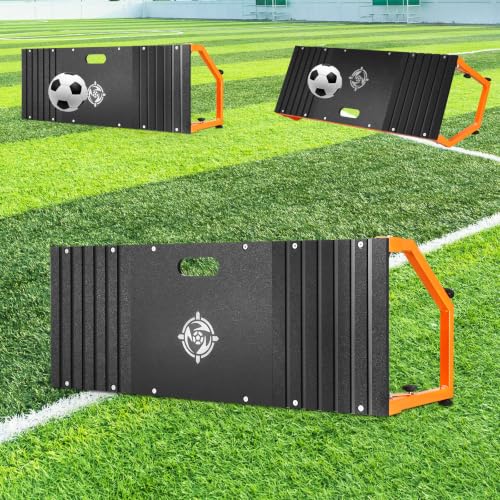
Although it is not a fitness trampoline, this Apex Sports board can add sport-specific intervals to circuit training. Four rebound modes and adjustable angles support passing, volley, first-touch, footwork, and reaction drills with either consistent or reactive returns.
Best For: Soccer players building ball-control, passing, volley, and reaction drills into field-based circuit training.
Pros:
Four configurations provide 60-degree volley and 90-degree ground-pass options.
Dual-sided surfaces offer both predictable and reactive rebounds.
Tool-free setup takes under a minute and includes a carry case and stabilization sandbag.
Powder-coated steel and UV-resistant polymer support all-weather use.
Cons:
It is a soccer training board rather than a cardio rebounder for jumping workouts.
The 37.5-inch width may limit the target area compared with larger nets.
This is a strong circuit-training accessory for athletes who want repeated soccer touches without a partner. Its portable design and lifetime warranty add convenience for practices at home, on turf, or at the field.
For rebounders for circuit training that prioritize capacity and balance support, the ACWARM HOME combines a bungee bounce with an adjustable handlebar. It is designed for jogging, jumping jacks, lateral movements, and balance work, while its foldable frame helps simplify storage between sessions.
Best For: Adults, seniors, and users with balance concerns who want a supportive rebounder for low-impact cardio circuits.
Pros:
440-pound load capacity exceeds many compact rebounder options.
Four-level handlebar adjusts from 30 to 40 inches above the mat.
8mm bungee cords provide quiet bounce and shock absorption.
Folds to 15 by 30 inches and arrives 60% pre-assembled.
Cons:
Perimeter straps must be unfastened before exercise to prevent breakage or mat damage.
Setup still takes about 10 minutes despite the partially assembled design.
The ACWARM HOME stands out for its high stated capacity, adjustable support bar, and storage-friendly folding design. It is a practical pick for varied indoor circuits, provided users follow the strap-removal instruction before every workout.
For sports-focused rebounders for circuit training, the Apex Sports pitchback net adds baseball, softball, soccer, and volleyball return drills to solo practice. Its four adjustable angles let athletes vary ground balls, fastballs, air balls, and other reaction-focused movements.
Best For: Multi-sport athletes creating outdoor throwing, fielding, agility, and reaction circuits.
Pros:
Four adjustable angles support different ball-return techniques.
Powder-coated galvanized steel and UV-resistant HDPE net are built for outdoor use.
Its 4-by-4.5-foot training area requires more outdoor space than a compact board.
It is intended for ball-return practice, not trampoline-style cardio bouncing.
Assembly and disassembly are required for setup and storage.
This pitchback is a useful circuit station when the goal is repeated throwing, catching, fielding, or reaction work across multiple sports. Its larger frame and weather-oriented materials favor backyard or field use over small indoor spaces.
For rebounders for circuit training that combine ball work with reaction and agility drills, the QuickPlay RXTR Pro Coach is an unusually complete option. It includes a rebounder board, reaction light, color markers, and built-in tests without requiring a phone or app.
Best For: Soccer players, coaches, and teams building reaction, passing, speed, and cognitive-response circuits.
Pros:
Includes a rebounder, reaction light, markers, instructions, and charging cable.
Offers six pre-programmed tests and 11 built-in drills with live scoring.
Rebounder tank can be filled with water or sand for added stability.
Up to six units can connect for expanded group-training setups.
Cons:
Its soccer-specific design may be less useful for non-ball circuit exercises.
At 11 pounds, it is less lightweight than a basic portable rebounder.
The RXTR Pro Coach stands out when a circuit should measure performance as well as provide ball returns. It is a strong fit for structured solo or team sessions, especially where app-free feedback and expandable drills are priorities.
The VEVOR rebounder is a practical choice among rebounders for circuit training when repeatable ball returns and adjustable angles matter most. Its iron frame, reinforced net, stakes, and sandbags support passing, control, and volley stations outdoors.
Best For: Teens and adults practicing soccer passing, first touch, volleys, and ball control in backyard or field circuits.
Pros:
Multiple adjustment positions support ground passes, volleys, and control drills.
Reinforced net is designed to provide consistent, predictable rebounds.
Iron frame, triangular support, stakes, and sandbags help improve stability.
Includes useful setup hardware, target lacing cord, and three sandbags.
Cons:
At 3.7 by 3.7 feet and 14.4 pounds, it may require more storage and transport space.
Setup involves stakes, sandbags, and multiple hardware pieces rather than a simple fold-out design.
This model is well suited to repeat-heavy outdoor circuits where consistent returns are more important than electronic scoring. Its adjustable structure lets one station serve several soccer skills, although it is less convenient for quick relocation.
For rebounders for circuit training that need fast transitions between drills, this three-angle soccer board offers a compact, tool-free setup. Its 90°, 60°, and 35° positions create different rebound trajectories for passing, aerial work, and shooting practice.
Best For: Solo players who want a portable soccer station for varied passing, volley, shooting, and accuracy circuits.
Pros:
Three angles support ground passes, aerial volleys, and shooting drills.
Tool-free setup and a fold-flat design make it easy to transport and store.
HDPE construction is designed to resist fading, scratching, and cracking outdoors.
Includes four ground stakes and three target stickers for anchored accuracy work.
Cons:
The supplied 32-by-12-inch version is more compact than larger rebounder options.
It does not include electronic scoring or reaction-light features.
Ground stakes are intended for grass or soil, which may limit some locations.
This board is a strong space-saving choice for circuits that rotate through several soccer techniques. Its angle variety and quick setup are especially useful for solo practice, while the compact size favors portability over a larger rebound surface.
For athletes comparing rebounders for circuit training, the QWORK Rebounder offers a versatile way to repeat ball-return drills without constantly chasing equipment. Its reinforced Neoprene 3000X fabric is designed for elastic, durable performance across several sports.
Best For: Volleyball, soccer, basketball, and water polo drills for beginners and intermediate athletes.
Pros:
Reinforced, stitched Neoprene 3000X construction is designed for intense practice sessions.
Supports training across volleyball, soccer, basketball, and water polo.
Helps reduce time spent retrieving balls during repetitive drills.
Suitable for athletes of all ages and skill levels.
Cons:
The supplied details do not specify adjustable rebound angles or a folding frame.
It is listed as a single rebounder, so additional equipment may be needed for larger circuits.
The QWORK is a practical choice when circuit training involves multiple ball sports and repeat-return exercises. Its main advantage is broad sport compatibility rather than specialized angle or bounce controls.
The CAROD Soccer Rebounder Board suits buyers seeking rebounders for circuit training with clearly defined passing and shooting stations. Its two-angle setup supports ground shots and aerial passes, while the compact foldable design makes it easy to transport.
Best For: Soccer players practicing ground shooting, aerial passing, precision, and unpredictable ball reactions.
Pros:
Switches between 90° for ground shooting and 60° for aerial passing.
Includes sandbags for hard surfaces and ground anchors for grass.
Combines erratic side-panel rebounds with consistent center-panel returns.
Foldable 32-by-12-inch design includes carrying handles for transport and storage.
Cons:
Designed specifically for soccer rather than multi-sport use.
Its compact rebound area may offer less coverage than a larger net-style rebounder.
With two securing methods and two training angles, the CAROD is well suited to structured soccer circuits. Choose it when portability and drill variety matter more than a full-size rebound surface.
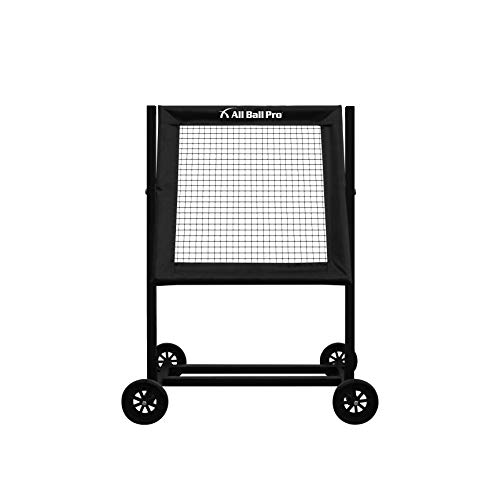
The All Ball Pro Stinger X is a strong option for rebounders for circuit training when several athletes or sports share one practice setup. Its 3.5-by-3.5-foot screen, three positions, adjustable height, and mobile frame support varied drills indoors or outdoors.
Best For: Families, coaches, and multi-sport athletes training in fields, backyards, courts, gyms, or other practice areas.
Pros:
Large 3.5-by-3.5-foot rebound screen provides a spacious training target.
Three screen positions and height adjustment up to 7.25 feet support varied workouts.
Designed for high-velocity returns across lacrosse, soccer, basketball, tennis, volleyball, baseball, and softball.
Collapsible, mobile, and made with galvanized, powder-coated steel for all-weather use.
Cons:
Its larger steel frame may be less convenient than a compact board for small storage spaces.
The supplied details do not specify included anchors or sandbags.
Although collapsible, it may require more setup space than a small portable rebounder.
The Stinger X stands out for broad sport coverage, adjustable positioning, and a high-velocity return. It is especially practical for shared circuits where one durable rebounder needs to support different drills and users.
How We Picked the Best Rebounders for Circuit Training
We compared the 10 selected rebounders by intended use, adjustability, portability, construction, and training versatility. The list includes fitness trampolines for repeated jumping intervals, compact boards for soccer and baseball drills, and multisport nets designed to return balls at different angles. We also considered practical details such as setup, storage, stability, target users, and stated weight limits where available.
Because a rebounder’s ideal design depends heavily on the workout, there is no single best option for every athlete. The right pick should support the movements you perform most often without taking up more space or requiring more setup than your routine allows.
Key Buying Factors for Rebounders for Circuit Training
Rebounder Type
A mini trampoline is best for jumping jacks, bounce intervals, balance drills, and lower-impact cardio. Ball rebounders are better for passing, catching, shooting, reaction work, and coordination circuits. If your routine combines both, check whether you have room for separate equipment or prefer a portable ball trainer that can be moved between stations.
Size, Angle, and Return Behavior
Larger rebound surfaces are generally easier for beginners and multisport use, while compact boards are simpler to store. Adjustable angles let you change the trajectory for ground passes, high returns, shooting, or reaction drills. A predictable rebound is especially important when building timed circuits or progressing skill work.
Stability and Construction
Look for a broad base, secure frame, durable net or board, and feet that resist sliding on your workout surface. For trampolines, inspect the frame and suspension system, then confirm that the stated weight limit comfortably exceeds the user’s body weight. Outdoor users should also consider weather exposure and storage requirements.
Portability and Storage
Portable rebounders are useful when workouts move between a garage, yard, gym, or field. Foldable or lightweight designs save space but may trade some stability for convenience. Measure your storage area and verify the assembled dimensions before buying.
Who Should Buy Which Rebounders for Circuit Training?
Choose a mini fitness trampoline if your priority is cardio conditioning, balance, or low-impact jumping circuits. Select a model with a suitable capacity and stable footprint for repeated use.
Choose an adjustable soccer rebounder if you want one training tool for passing, first touch, shooting, and reaction drills. Multiple angle settings make it easier to vary intensity and trajectory.
Choose a baseball, softball, or volleyball rebounder when your circuits focus on sport-specific ball control, throwing, receiving, or setting practice. A dedicated target can provide more consistent returns for those movements.
Choose a multisport or smart rebounder if several athletes share the equipment or you want more variety from one station. Prioritize adjustment range, return consistency, and setup speed so the rebounder does not interrupt your circuit flow.