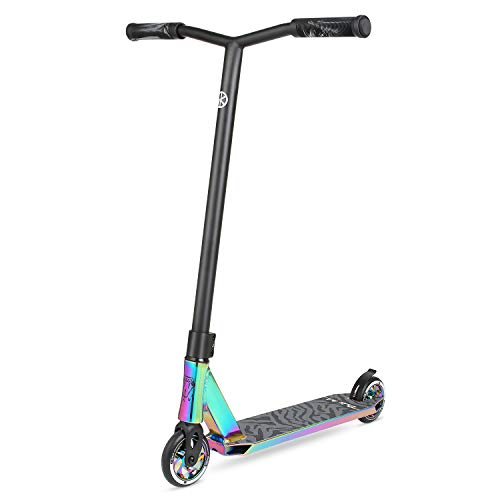
Choosing the right stunt scooter means balancing deck strength, manageable weight, wheel durability, and rider fit. The best aluminum stunt scooters make learning spins, jumps, grinds, and park lines easier without feeling cumbersome.
We compared 10 complete models for beginners, progressing riders, teens, and adults, focusing on construction, rider capacity, wheel setup, age range, and everyday value.
The VOKUL K1 is a versatile choice among aluminum stunt scooters for beginners and intermediate riders aged 8 and up. Its 220-pound capacity, aluminum deck, 110mm wheels, and ABEC-9 bearings make it suitable for learning and practicing freestyle tricks.
Best For: Kids, teens, and adults seeking a smooth, trick-ready scooter with a higher weight capacity.
Pros:
T-6061 aluminum deck and one-piece T4T6 fork support freestyle use.
ABEC-9 bearings and high-rebound 88A PU wheels are designed for a smooth, quiet glide.
Supports riders up to 220 pounds and requires only three clamp bolts for assembly.
Includes a six-month manufacturing-defect warranty and 30-day money-back guarantee.
Cons:
The handlebar is fixed in the supplied specifications despite the listing describing it as adjustable.
At 9 pounds, it is heavier than some lightweight stunt scooter options.
The recommended age range is primarily children 8 and up, with a listed maximum age of 12.
The K1 stands out for combining a durable aluminum deck, premium bearings, and generous rider capacity. It is a practical all-around pick when smooth rolling and room to progress matter more than minimum weight.
The Sequel Rise is a lightweight aluminum stunt scooter built for skatepark practice and regular trick riding. With an 8-pound frame, 110mm aluminum alloy wheels, and a 220-pound capacity, it balances portability with sturdy construction for riders aged 8 and up.
Best For: Young riders and teens who want a lightweight aluminum scooter for skatepark sessions and transportation.
Pros:
Aluminum frame is designed for intense tricks and regular use.
At 8 pounds, it is relatively easy to carry.
110mm wheels provide maneuverability for stunt riding.
Flex fender brake and rubber T-bar grips provide basic control during tricks.
Cons:
It has a six-month limited warranty, shorter than some competing options.
The fixed T-bar offers no height adjustment.
The listed dimensions and handle height vary slightly between the specifications.
The Rise is a sensible option for riders who value a lighter scooter without giving up an aluminum frame or a high weight rating. Its straightforward setup is best suited to skatepark-focused use rather than a highly adjustable configuration.
The LIMIT LMT69 offers a broad aluminum deck and lightweight build for beginners and junior riders aged 8 and up. Its AL7003 deck, 110mm wheels, ABEC-9 bearings, and 200-pound capacity make it a capable option for recreational riding, streets, and skatepark tricks.
Best For: Beginners and junior riders who want a light, wide-deck aluminum stunt scooter at a moderate weight rating.
Pros:
Lightweight 3.3-kilogram design is easy to handle and transport.
ABEC-9 bearings and 88A PU wheels are suited to smooth rolling.
Most of the scooter arrives assembled, and it includes a six-month component warranty.
Cons:
The 200-pound capacity is lower than several alternatives in this roundup.
The handlebar is fixed rather than adjustable.
The listing includes foldable and front-suspension specifications, which may not align with typical fixed freestyle-scooter designs.
The LMT69 is especially appealing if low weight and deck width are priorities. Its capacity is sufficient for many riders, but heavier users should consider a model rated for 220 pounds instead.
The Madd Gear MG3 ZEN is an aluminum-and-steel stunt scooter aimed at kids ages 8 to 12 who are progressing from basic riding to freestyle tricks. Its extruded aluminum deck, double clamp, 110mm polyurethane wheels, and 220-pound capacity support regular skatepark use.
Best For: Kids ages 8 to 12 who want a progression-focused scooter backed by a long manufacturer warranty.
Pros:
Extruded aluminum deck and double clamp are built for repeated trick practice.
110mm PU wheels with ABEC-7 bearings support a smooth, quiet ride.
Textured grip tape, responsive rear brake, and 150mm TPR grips aid control.
Includes a three-year manufacturer warranty and U.S.-based support.
Cons:
At 10 pounds, it is the heaviest scooter in this selection.
The steel handlebar adds weight compared with an all-aluminum setup.
The stated maximum age is 12, making it less clearly suited to older teens and adults.
The MG3 ZEN is a strong choice for younger riders who want dependable components and warranty coverage while developing skills. Choose it when long-term manufacturer support matters more than having the lightest scooter.
The FREEDARE Pro is a lightweight option for riders comparing aluminum stunt scooters for beginner-to-intermediate park and street practice. Its 3.2-kilogram build, 810mm overall height, and one-piece welded deck-and-fork connection balance maneuverability with stated support for riders up to 220 pounds.
Best For: Beginners and entry-level freestyle riders who want a light scooter for practicing tricks.
Pros:
6061-T6 heat-treated aluminum deck helps keep the scooter light while supporting a maximum load of 220 pounds.
Solid 100mm wheels, bearings, and a rear brake support smooth rolling and straightforward stopping.
One-piece welded fork-and-deck connection is rated for impact capacity up to 1,800 pounds.
810mm height and 520mm-wide bar give shoppers useful sizing information before buying.
Cons:
The 810mm setup may not suit every rider, so measuring hip and navel height is recommended.
Lightweight decks can be less durable than heavier decks, according to the supplied guidance.
Bolts and screws need regular tightening, and the scooter should be kept away from water, sand, and humidity.
Choose this model when low weight and a clearly specified aluminum deck matter most. It is a practical starting point for learning freestyle skills, provided the rider follows the maintenance guidance.
The Mongoose Rise is a sturdy choice among aluminum stunt scooters, pairing a lightweight alloy deck with a heavy-duty frame. It is designed for riders age 8 and up, with a 220-pound maximum weight limit and components aimed at recreational riding and stunt practice.
Best For: Youth and adult riders who prioritize a durable frame and a roomy standing area.
Pros:
Alloy deck has an extended standing area and full-coverage MaxGrip for added foot traction.
Heavy-duty frame and one-piece welded steel T-bar emphasize durability.
100mm high-impact alloy wheels and ABEC-7 bearings are designed for smooth rolling.
Bike-style grips and a triple-anodized clamp collar support comfort and responsive steering.
Cons:
At 5.21 kilograms, it is considerably heavier than the FREEDARE model in this roundup.
The supplied details list no suspension, so rides remain dependent on the riding surface.
Its recommended maximum age is listed as 12 despite the product also being described for adults.
The Rise makes sense for shoppers who want an alloy-deck stunt scooter with a more substantial frame. Its heavier construction may appeal to durability-focused riders, though weight-sensitive trick riders may prefer a lighter setup.
The Dadywheels Pro is sized for younger riders while still supporting up to 220 pounds, making it a versatile option when comparing aluminum stunt scooters. Its 31.5-inch height, 19.7-inch handlebar width, lightweight aluminum deck, and 7.3-pound scooter weight suit riders about 3 feet 6 inches to 5 feet 1 inch tall.
Best For: Riders ages 6 and up who need a manageable scooter for streets, skate parks, and skill practice.
Pros:
Lightweight aluminum deck and 7.3-pound overall weight offer a manageable setup for growing riders.
100mm polyurethane wheels with ABEC-9 bearings support smooth, responsive rolling on suitable paved surfaces.
Steel T-bar, thick steel fork, and reinforced front fork provide a sturdy platform for repeated riding.
Textured grip tape, a concave deck, ergonomic grips, and a flexible rear brake support control.
Cons:
The recommended rider height range may not fit taller teens or adults.
Its steel components make it less aluminum-focused than a scooter with an aluminum frame and fork.
The supplied details do not specify a maximum age, so height and fit are more useful buying checks.
This model is a sensible pick when fit, smooth bearings, and approachable weight are priorities for a younger rider. Check the rider’s height carefully, since the listed dimensions are aimed at a growing-rider range.
For shoppers comparing aluminum stunt scooters for younger beginners, the S2 stands out for its 7-pound build, aircraft-grade aluminum deck, and ready-to-ride setup. Its IHC compression system, 100 mm PU wheels, and ABEC-7 bearings support controlled practice and smooth everyday riding.
Best For: Kids ages 6 and up who are learning basic tricks and want a lightweight scooter.
Pros:
Lightweight 7-pound T-6061 aluminum deck
Reinforced alloy fork and IHC compression system
ABEC-7 bearings and 100 mm PU wheels for smooth control
Arrives in two pieces and requires only clamp tightening
Cons:
Fixed handlebar offers no height adjustment
Its entry-level design is aimed primarily at younger riders
The S2 is a practical starting point for riders who value low weight and simple assembly. Its 220-pound listed capacity adds versatility, but its compact, beginner-focused design may be less suitable for advanced or taller riders.
The VOKUL is a beginner-oriented choice among aluminum stunt scooters, combining a 6061 aircraft aluminum deck with reinforced heat-treated plates and a 4130 chromoly batwing bar. It is built to help younger riders progress from basic skills to tricks such as barspins, tail taps, and tailwhips.
Best For: Kids ages 7 and up who are starting freestyle riding and want room to develop basic tricks.
Pros:
6061 aircraft aluminum construction with reinforced deck plates
4130 chromoly bar and triple clamp support stability
Lightweight 8-pound design with a listed 220-pound capacity
One-year warranty and simple three-bolt assembly
Cons:
Fixed handlebar is not height adjustable
Designed mainly for beginner and recreational riding
Wheel specification details are less focused on advanced skatepark performance
With its sturdy frame materials, beginner-friendly setup, and warranty coverage, the VOKUL makes sense as a first freestyle scooter. Riders seeking advanced competition-level components may eventually want a more specialized model.
For teens and older beginners comparing aluminum stunt scooters, the VEVOR offers a double-layer 6063 aluminum alloy deck, HIC compression, and 110 mm PU wheels. Its ABEC-9 bearings are intended to keep the ride smooth while riders practice jumps, grinds, turns, and other skatepark skills.
Best For: Intermediate and beginner riders ages 11 to 13 who want a sturdy scooter for streets and skateparks.
Pros:
Lightweight double-layer 6063 aluminum alloy deck
HIC hidden internal compression system for secure stunt riding
110 mm silent PU wheels with ABEC-9 bearings
Designed for skateparks, rails, roads, and backyard riding
Cons:
Listed maximum age recommendation is 13
Fixed handlebar is not adjustable
Front-braking specification may feel less familiar to riders used to rear brakes
The VEVOR is the most performance-oriented option in this group, with larger wheels, higher-rated bearings, and HIC compression. Its 31.5-inch handle height and youth-focused sizing should be checked carefully for fit before purchase.
We focused on complete freestyle scooters designed for tricks rather than ordinary commuting. Our comparison considered aluminum deck construction, frame and fork design, wheel size, handlebar setup, braking hardware, stated weight limits, and intended rider age. We also looked for models that offer a practical starting point for learning hops and spins while still providing enough durability for skatepark and street use.
Because product specifications can vary by size and seller, check the current listing carefully before buying. Confirm the maximum rider weight, assembled dimensions, included parts, and whether replacement wheels or clamps are readily available.
An aluminum deck is usually lighter and easier to maneuver than a heavier steel alternative, but deck dimensions matter just as much. A shorter, narrower deck can feel nimble for spins, while a longer or wider deck offers more stability for larger riders and grinds. Look for reinforced headtube and underside areas if the scooter will see frequent park use.
Rider Fit and Weight Capacity
Age labels are only a starting point. Compare the handlebar height and stated weight limit with the rider’s height and body weight. A scooter that is too small can make landings uncomfortable, while an undersized weight rating may reduce durability and safety.
Wheels, Fork, and Compression
Wheels around 110 mm are common on beginner and intermediate freestyle scooters because they balance speed, control, and trick clearance. Check that the fork and compression system are built for stunt riding, not merely casual rolling. Threadless systems and stronger clamps generally provide a more secure platform as skills progress.
Brakes and Maintenance
A responsive rear fender brake helps control speed, but it should not rub the wheel during normal riding. Periodically inspect bolts, headset play, wheel bearings, and deck wear. Easy access to replacement wheels, bearings, grips, and clamps can make a budget scooter more economical over time.
Who Should Buy Which Aluminum Stunt Scooters?
Choose a lightweight entry-level model for a child learning basic balance, braking, hops, and turns. Intermediate riders should move toward a sturdier deck and fork with a more responsive cockpit. Teens and adults should prioritize handlebar height, deck room, and a generous weight rating over the lowest price. If the rider practices several times a week or regularly visits a skatepark, choose the strongest compatible model and verify that replacement components are available.