The right barbell can make a major difference in how safely and effectively you train. Whether you are building a compact home gym or preparing for heavy squats, deadlifts, presses, and Olympic-style lifts, bar length, sleeve size, capacity, and grip design all matter.
We selected 10 barbells for strength training across Olympic and standard formats, including short bars for limited spaces and complete sets for beginners. Use the guide below to compare the key specifications and find the best match for your equipment, training style, and available room.
Best 10 Barbells for Strength Training Picks for 2026
Compact Accessory Pick

- Compact 4-foot design for home gyms
- Needle bearings support smooth rotation
- Lifetime warranty against bending
Best For: Curls, close-grip work, and accessory training
Versatile Standard-Bar Value

- 480-pound stated weight capacity
- Knurled grip supports slip resistance
- Includes two swivel steel clamps
Best For: Home gyms using 1-inch standard plates
Full-Length Strength Pick

- 7-foot design fits rack-based compound lifts
- 500-pound capacity for progressive training
- Bronze bushings support smooth rotation
Best For: Beginner-to-intermediate home-gym strength programs
Compact Olympic Rotation Pick

- 500-pound stated capacity
- Needle bearings support rotating sleeves
- Includes two spring rings
Best For: Compact home gyms using 2-inch Olympic plates
Best Complete Set
CAP 100 LB Threaded Barbell Set

- Includes bar, collars, and 100 lb of plates
- Compact 47.2-inch design for home gyms
- Threaded collars provide a secure plate fit
Best For: Beginners and intermediate home-gym lifters
Best Compact Olympic Bar

- 500 lb capacity in a space-saving 5-foot format
- Smooth bronze-bushing sleeve rotation
- Fits 2-inch Olympic plates and rack equipment
Best For: Compact home and garage gyms
Best Home Gym Value

- 35-pound bar with a 500-pound stated capacity
- Center knurl and volcano-style grip
- Rotating sleeves for versatile home workouts
Best For: Beginners and intermediate home-gym lifters
Best High-Capacity Option

- 45-pound bar with a 1,500-pound stated capacity
- Needle bearings and brass bushings for smooth rotation
- Dual knurl marks for powerlifting and Olympic lifting
Best For: Experienced lifters training heavy and across multiple disciplines
Best Smooth-Spinning Design
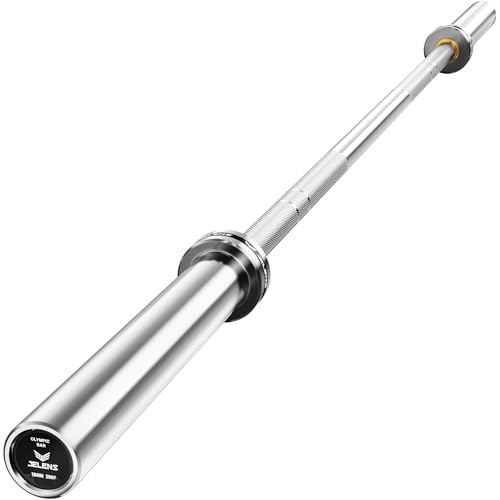
- 45-pound-class bar with a 1,000-pound stated capacity
- Hybrid needle-bearing and brass-bushing sleeve system
- Dual-marking knurl with 2-inch Olympic sleeves
Best For: Lifters wanting controlled rotation for strength and dynamic lifts
Compact Accessory Pick – RITFIT 4-Foot Olympic Barbell
For home gyms that need a shorter option, this RITFIT barbell is a practical choice among barbells for strength training. Its 4-foot length and 25 mm shaft are suited to close-grip work and accessory exercises, while the 2-inch sleeves fit Olympic plates.
Best For: Curling, close-grip exercises, and compact home-gym workouts.
Pros:
- Compact 4-foot design is convenient for storage and accessory work.
- Needle bearings support smoother, quieter sleeve rotation.
- Oxide finish and alloy-steel construction are designed for durability.
- Backed by a lifetime warranty against bending.
Cons:
- Its 350-pound listed capacity is lower than some full-length bars.
- No knurling may provide less grip feedback for heavy lifts.
- Short length may not suit rack-based compound exercises.
This is a useful space-saving bar for lighter, close-grip training, but users seeking a primary squat, bench, or deadlift bar should consider a longer rackable model.
Versatile Standard-Bar Value – 55-Inch Straight Barbell
This 55-inch standard bar is a flexible option for barbells for strength training when your plates use 1-inch holes. Its solid-steel construction, knurled grip, and included swivel clamps make it suitable for a range of bench, arm, shoulder, back, and leg exercises.
Best For: Home-gym users with 1-inch plates who want one bar for varied strength exercises.
Pros:
- 480-pound stated capacity supports progressive training.
- Diamond knurling is designed for grip and slip resistance.
- Chrome and nickel plating help resist corrosion and oxidation.
- Includes two anti-slip swivel steel clamps.
Cons:
- Uses 1-inch standard plates rather than 2-inch Olympic plates.
- At 55 inches, it may be too short for some racks and wide-grip lifts.
- Its 12-pound weight may feel lighter than a full-size Olympic bar.
Choose this bar when plate compatibility and multi-position training matter most. Verify that your plates and bench setup match its 1-inch diameter before ordering.
Full-Length Strength Pick – CAP 7-Foot Olympic Barbell
The CAP 7-foot bar is a strong all-purpose choice among barbells for strength training, with a 500-pound capacity for squats, bench presses, deadlifts, rows, and full-body sessions. Its 2-inch Olympic sleeves are compatible with standard Olympic plates and common racks and benches.
Best For: Beginner-to-intermediate lifters building a versatile home or garage gym setup.
Pros:
- Full 7-foot length suits rack-based compound lifts.
- 500-pound capacity supports progressive strength programs.
- Volcano-style knurling and center knurl help with grip and squat positioning.
- Bronze bushings promote smooth sleeve rotation.
Cons:
- Its 35-pound weight is lighter than many standard 45-pound Olympic bars.
- Full-length construction requires more storage space.
- Designed for 2-inch Olympic plates, not standard 1-inch plates.
With its rack-friendly length, rotating sleeves, and broad exercise compatibility, this is the most suitable option here for a primary home-gym barbell.
Compact Olympic Rotation Pick – 57-Inch Olympic Barbell
This 57-inch Olympic bar offers a compact alternative for barbells for strength training, with 2-inch sleeves, a 500-pound stated capacity, and needle roller bearings for rotating movement. Its shorter profile is convenient for storage and home workouts, provided your equipment accommodates the length.
Best For: Home-gym users who want an Olympic-plate bar that stores easily and supports varied exercises.
Pros:
- Compatible with 2-inch Olympic plates.
- Needle roller bearings support rotation and wrist turnover.
- Diamond knurling is designed for grip without excessive sharpness.
- Includes two spring rings for quick plate changes.
Cons:
- Short length may not fit every rack or wide-grip setup.
- Requires checking length compatibility with existing equipment.
- The manufacturer notes that unusual sleeve noise may require lubrication.
This bar balances Olympic-plate compatibility with easier storage, making it appealing for compact spaces. Confirm rack width and lifting-position requirements before choosing it for major compound lifts.
Best Complete Set – CAP 100 LB Threaded Barbell Set
For shoppers seeking barbells for strength training in a compact home gym, this CAP set provides the bar, plates, and collars together. Its 100-pound capacity and included 10-, 15-, and 25-pound cement grip plates make it a practical option for beginner and intermediate routines.
Best For: Beginners and intermediate lifters who want a complete, space-conscious home gym set.
Pros:
- Includes a 47.2-inch threaded bar, collars, and 100 pounds of plates
- Grip-style cement plates are designed for easier handling
- Threaded star collars hold plates securely during exercises
- Supports squats, presses, deadlifts, curls, and general strength work
Cons:
- Maximum capacity is limited to 100 pounds
- The bar has no knurling
- Cement plates may be less durable than all-steel plates
This is a convenient starter package rather than a high-capacity progression bar. Its short, lightweight design and included plates suit home workouts where simplicity and a compact footprint matter most.
Best Compact Olympic Bar – CAP 5-Foot Olympic Barbell
This CAP Olympic bar is a strong fit for barbells for strength training when space is limited. The 5-foot, 25-pound bar supports up to 500 pounds, fits standard 2-inch Olympic plates, and is suited to lifts such as squats, presses, rows, and deadlifts.
Best For: Beginner lifters, youth athletes, and home or garage gyms that need a shorter Olympic bar.
Pros:
- Compact 5-foot length works well in smaller training spaces
- 500-pound maximum capacity offers room for progression
- Bronze bushings promote smooth sleeve rotation
- Compatible with 2-inch Olympic plates and common rack equipment
Cons:
- The shorter bar may not suit every rack or lifting setup
- It is sold as a bar only, without plates or collars
- Its 25-pound weight may feel different from a standard full-size bar
Choose this bar when maneuverability and equipment compatibility matter more than full-length dimensions. Its E-Coat finish, knurled grip, and Olympic sleeves make it a versatile foundation for a compact strength-training setup.
Best Short Heavy-Duty Bar – TEEMOO 57-Inch Home Gym Bar
TEEMOO’s 57-inch bar offers a shorter option for barbells for strength training, with a 500-pound capacity and compatibility with 2-inch plates. Its diamond knurling and included spring collars make it suitable for upper-body work and other home-gym exercises, provided it fits your rack.
Best For: Home-gym users who want a compact, knurled bar for pressing and upper-body strength training.
Pros:
- Heavy-duty solid-steel construction supports up to 500 pounds
- 1.5 mm diamond knurling provides a textured, anti-slip grip
- Includes two steel spring collars
- E-Coat-style finish is designed for corrosion resistance and durability
Cons:
- Short length may not fit every bench-press rack
- Spring collars may provide less threaded security than screw collars
- Plates are not included
The main buying consideration is fit: measure your bench or rack before ordering. If the 57-inch length works with your equipment, this bar combines a compact profile, useful capacity, and a grippy surface for focused home training.
Best Home Gym Value – CAP Olympic Barbell
For shoppers comparing barbells for strength training, the CAP Olympic Barbell is a practical option for home-gym fundamentals. Its 35-pound weight, 500-pound stated capacity, volcano-style knurling, center knurl, and rotating sleeves suit squats, bench presses, deadlifts, rows, and general progressive lifting.
Best For: Beginners to intermediate lifters building a versatile home or garage gym setup.
Pros:
- Compatible with standard 2-inch Olympic plates and common racks, benches, and home-gym equipment.
- Center knurling can help stabilize the bar during squats.
- Bronze bushing sleeves provide smoother rotation during pressing, rowing, and other lifts.
- 100,000 PSI tensile-strength rating and hard E-Coat finish support regular home-gym use.
Cons:
- At 35 pounds, it differs from the 45-pound standard of many full-size Olympic bars.
- The listed manufacturer warranty is limited to 30 days.
This CAP bar focuses on approachable handling and broad exercise compatibility rather than competition-focused specifications. It makes the most sense for a home lifter who wants one bar for core strength movements and standard Olympic plates.
Best High-Capacity Option – PB01 7FT Olympic Barbell
Among barbells for strength training, the PB01 stands out for its 45-pound Olympic format and 1,500-pound stated capacity. It combines dual-marking knurling, 28mm grip diameter, long loadable sleeves, and a needle-bearing and brass-bushing sleeve system for powerlifting, Olympic lifting, and full-body training.
Best For: Experienced lifters who want a high-capacity bar for heavy squats, deadlifts, presses, and Olympic movements.
Pros:
- 45-pound, 7-foot design with 150,000 PSI tensile strength and a stated 1,500-pound capacity.
- Dual knurl marks support both powerlifting and Olympic weightlifting hand positions.
- Needle bearings and brass bushings are designed for smooth sleeve rotation and reduced wrist and forearm pressure.
- Hard chrome plating provides corrosion resistance, and the bar includes a 12-month warranty.
Cons:
- The 1.5-inch-plus loadable sleeve length may require more storage space.
- Its heavy-duty specifications may exceed the needs of casual or beginner lifters.
The PB01 is the most capacity-oriented choice in this group. Its standard 45-pound weight, generous sleeves, and dual-purpose knurling make it better suited to demanding training than to a minimalist or entry-level setup.
Best Smooth-Spinning Design – JELENS 7FT Olympic Barbell
The JELENS 7FT Olympic Barbell is a strong contender for barbells for strength training when smooth sleeve movement and a secure grip are priorities. Its 45-pound design, 150,000 PSI steel, 1,000-pound stated capacity, dual knurl marks, and hybrid bearing-and-bushing sleeve system cover squats, deadlifts, presses, rows, curls, and Olympic-style lifts.
Best For: Home or commercial-gym users seeking a durable, high-capacity bar with controlled sleeve rotation.
Pros:
- High-grade steel construction with a 150,000 PSI tensile-strength rating.
- Needle bearings and brass bushings are designed to reduce wrist and forearm torque during dynamic lifts.
- Dual-marking, 1.2mm diamond knurling supports varied hand positions and grip control.
- Hard chrome finish resists corrosion, while 2-inch sleeves fit standard Olympic plates.
Cons:
- The product details list an inconsistent maximum weight-capacity value, so buyers should verify the specification.
- Its 47-pound listed item weight may be less convenient for lifters seeking a precisely standardized 45-pound bar.
JELENS emphasizes a balanced mix of capacity, grip guidance, and sleeve performance. The specification inconsistency is worth checking, but the overall design is well matched to lifters who regularly combine strength work with more dynamic barbell movements.
How We Picked the Best Barbells for Strength Training
We compared these barbells by looking at the features that most affect day-to-day training: bar length, sleeve diameter, stated weight capacity, knurling, included collars or plates, and compatibility with racks and weight plates. We also considered practical differences between full-size Olympic bars, standard one-inch bars, shorter bars, and bundled home-gym sets.
Because product specifications can vary by size and seller, verify the selected configuration before ordering. Pay particular attention to sleeve diameter and the listed capacity rather than assuming every version has the same specifications.
Quick Comparison
| Bar Type | Best For | What to Check |
|---|---|---|
| 7-foot Olympic bar | Racks, heavy compound lifts, and general strength training | Two-inch plates, rack fit, capacity, and sleeve construction |
| 5- to 6-foot Olympic bar | Smaller home gyms and versatile workouts | Rack width, usable sleeve space, and overall balance |
| 47- to 57-inch bar | Limited spaces, curls, presses, and lighter training | Weight limit, grip length, and whether it fits Olympic or standard plates |
| Standard one-inch bar | Budget setups and existing standard plates | Plate compatibility and lower maximum capacity |
| Barbell set | Beginners who need plates and collars together | Total included weight, plate material, and storage space |
Key Buying Factors for Barbells for Strength Training
Olympic or Standard Compatibility
Olympic bars use two-inch plates and are generally the more flexible choice for racks and progressive strength training. Standard bars use one-inch plates and can cost less, but they usually offer less sleeve space and lower load limits. Choose the format that matches the plates you already own.
Length and Training Space
A 7-foot bar is the conventional choice for squats, bench presses, and deadlifts in a rack. Shorter bars are easier to store and maneuver in tight rooms, but they may not fit every rack or provide the same loading space. Measure your rack and available floor area before buying.
Capacity, Shaft, and Knurling
Choose a stated weight capacity comfortably above your current working load. Knurling should provide a secure grip without being unnecessarily abrasive, while a suitable shaft diameter and straight construction can improve control during presses, rows, and pulls.
Collars and Included Plates
Collars help keep plates secure during use. Some bars include spring collars, while complete sets may include plates and threaded or star-style collars. Bundles can simplify setup, but compare the total included weight and plate dimensions with the price of buying components separately.
Who Should Buy Which Barbells for Strength Training?
Choose a 7-foot Olympic bar if you have a power rack, use two-inch plates, and want one bar for heavy squats, deadlifts, bench presses, and overhead work.
Choose a shorter Olympic bar if floor space is limited or you train primarily with presses, curls, rows, and moderate loads. Confirm that its dimensions work with your rack.
Choose a standard one-inch bar if you already own standard plates and want an economical setup for lighter lifting. It is less suitable for high-load progression.
Choose a complete barbell set if you are starting from scratch and want plates and collars included. For serious long-term strength goals, prioritize a durable Olympic bar with room to add weight.
Related Posts:

