Regular calf stretching can help runners maintain ankle mobility, ease post-run tightness, and build a more consistent recovery routine. The right tool makes it easier to apply steady, repeatable tension without relying on balance or awkward positioning.
These 10 calf stretchers include compact foot rockers, adjustable boards, strap-based designs, and supportive options for runners managing tight calves, plantar fascia discomfort, or Achilles tension.
Best 10 Calf Stretchers for Runners Picks for 2026
For runners seeking targeted calf stretchers, the ProStretch Original uses a rocker design to position the foot for a focused lower-leg stretch. Its slip-resistant rubber pads and compact, U.S.-made construction make it practical for regular use at home or after training.
Best For: Runners with tight calves who want a single-foot rocker for calf, foot, and lower-leg stretching.
Pros:
Rocker design helps isolate the lower-leg muscles, tendons, and ligaments.
Slip-resistant pads help limit movement during stretching.
Includes a stretching guide via QR code and carries a one-year warranty.
Lightweight 14-ounce design made in the United States.
Cons:
Fits adult shoes only up to size 12.
Recommended weight limit is 250 pounds.
Must be used with socks and rubber-soled athletic shoes.
This is a focused option when you want controlled, single-foot stretching rather than an adjustable platform. Follow the stated shoe and weight requirements for proper use.
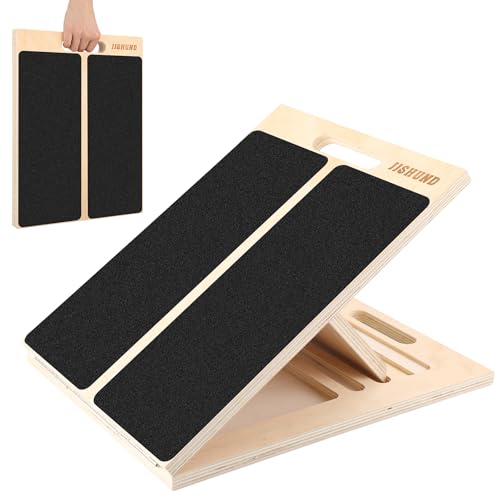
This adjustable wooden slant board is one of the more versatile calf stretchers for runners who want to vary the intensity. Five incline settings support gradual progression, while the foldable design makes it suitable for home, gym, or travel use.
Best For: Runners who want adjustable calf stretching and a platform that can also support ankle, heel, leg, and mobility exercises.
Pros:
Offers five angles: 23°, 30°, 35°, 40°, and 45°.
Can be used with one or both feet.
Foldable and portable at 4.6 pounds.
Includes a workout poster and instructions.
Cons:
Wooden platform is heavier than the compact rocker-style alternatives.
No warranty is listed in the supplied details.
Its larger footprint may require more storage space.
The broad angle range makes this a good choice for runners who prefer to start gently and increase the challenge over time. It also accommodates broader stretching and strengthening routines.
For runners who want to stretch both sides efficiently, this double ProStretch model provides a dual-foot rocker platform. It can also be used one foot at a time, with slip-resistant pads designed to help keep the stretcher stable during use.
Best For: Runners who want simultaneous two-foot calf stretching or the flexibility to work one side independently.
Pros:
Dual rocker design supports one- or both-foot stretching.
Designed to target tight calves, feet, and lower-leg tissues.
Non-slip pads help reduce sliding on surfaces.
Includes a QR-code stretching guide and a one-year warranty.
Cons:
Fits adult shoes only up to size 12.
Recommended weight limit is 250 pounds.
Requires socks and rubber-soled athletic shoes.
The double format can streamline post-run routines by addressing both calves at once, while the single-foot option allows more focused work. It is best suited to users who meet the stated shoe and weight requirements.
This portable wooden slant board gives runners a stable platform for calf stretching, squats, Pilates, and weight-bearing mobility work. Four incline positions let you select a suitable challenge for stretching or broader lower-body exercise.
Best For: Runners who want a lightweight slant board for stretching, mobility, and rehabilitation-style exercises at home, in the office, gym, or clinic.
Pros:
Adjusts to four positions: 30°, 35°, 40°, and 45°.
Lightweight design weighs about 4.5 to 5 pounds.
Supports stretching, squats, Pilates, and weight-bearing exercises.
Suitable for beginners, experienced athletes, and varied fitness levels.
Cons:
Offers fewer angle settings than the five-angle slant board.
No warranty is listed in the supplied details.
Wooden construction may be less compact than a foot rocker.
This board is a practical pick when calf stretching is part of a larger mobility or recovery routine. Its adjustable incline and portable size provide useful flexibility without requiring setup.
For runners comparing calf stretchers for runners, the PowerStep UltraFlexx is a lightweight foot rocker designed to place the foot in a stable position while stretching the foot and lower leg. Its non-skid rocker bottom is intended for use with sturdy athletic shoes.
Best For: Runners who want a simple rocker for calf, Achilles, plantar fascia, and shin-splint stretching.
Pros:
Helps stretch and strengthen the foot and lower-leg muscles, ligaments, and tendons.
Designed to address tight calves, Achilles tendonitis, plantar fasciitis, ball-of-foot pain, and shin splints.
Lightweight plastic construction with a non-skid base.
Cons:
Recommended for use with sturdy athletic shoes rather than barefoot stretching.
Provides a fixed rocker format without adjustable angle settings.
The UltraFlexx is a straightforward choice when portability and uncomplicated foot positioning matter more than customization. It is especially practical for runners seeking one device for several common lower-leg stretching needs.
This adjustable wooden slant board gives runners a broader platform for calf stretching, ankle mobility, and lower-body warmups. With five angle settings, it can accommodate gradual stretching as well as deeper positions.
Best For: Runners who want adjustable incline levels and a sturdy board for warmups, cooldowns, or mobility work.
Pros:
Five angle settings from 20° to 45° support different stretching intensities.
Can be used for calves, heels, ankles, buttocks, and front- or back-leg stretching.
Foldable design includes a handle and weighs 4.8 pounds for transport.
Wooden triangular structure, anti-slip surface, and bottom pad support stability.
Cons:
Its 4.8-pound weight is heavier than compact plastic foot rockers.
The stated maximum weight recommendation is about 200 pounds.
The wide board may require more storage space than a small rocker.
The adjustable angle range makes this a flexible option for runners who prefer to control stretching intensity over time. Its larger wooden platform is useful for multi-purpose mobility work, though it is less compact than dedicated foot stretchers.
The ProStretch Plus is a customizable foot rocker for runners who want more control over calf and foot stretching. Its adjustable heel rest, slip-resistant platform, and removable toe lift allow the stretch to be tailored from a basic calf position to a more advanced foot and plantar fascia stretch.
Best For: Runners seeking adjustable calf, Achilles, plantar fascia, and hamstring stretching in a shoe-compatible design.
Pros:
Adjustable heel rest helps increase or decrease stretch intensity.
Removable toe lift adds an advanced stretch for the toes and plantar fascia.
Wide platform with slip-resistant pads is designed to resist sliding.
Supports adult shoes up to size 14 and includes a stretching guide.
Cons:
Requires socks and rubber-soled athletic shoes for use.
Recommended weight limit is 300 pounds, so users should check fit and capacity.
Its adjustable parts may take more setup than a fixed rocker.
With multiple adjustment features and a removable toe lift, the ProStretch Plus is the most customizable option in this group. It suits runners who want to fine-tune lower-leg stretching rather than rely on one fixed position.
For runners comparing calf stretchers for runners, the Pro-Tec EVA Bold offers a firm, portable platform for calf and Achilles stretching before or after training. Its textured EVA foam surface is designed to help reduce slipping, while the compact shape also supports balance and strengthening exercises.
Best For: Runners who want a firm, travel-friendly calf stretcher with added balance and core-training versatility.
Pros:
Firm EVA foam construction helps retain its shape.
Textured surface is designed to help prevent slipping.
Can support calf, Achilles, balance, and strengthening exercises.
Compact design measures about 11.81 by 5.91 by 2.76 inches.
Cons:
Its firm platform may feel less cushioned than a strap-style stretcher.
Requires standing balance, which may not suit every user.
The Pro-Tec is a practical choice if you prefer a structured platform over a manually controlled strap. The included instruction guide and portable size add convenience for regular recovery routines.
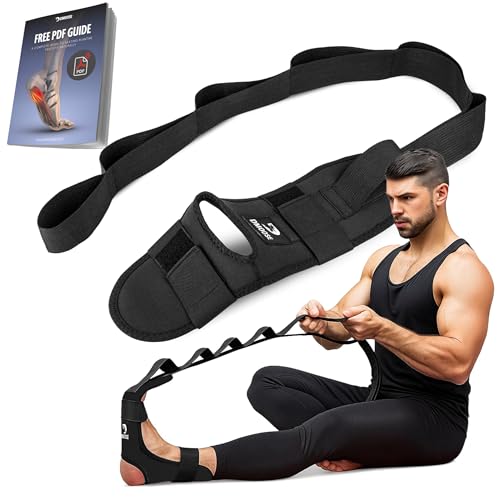
This foot and calf stretcher is a flexible option among calf stretchers for runners, using an adjustable nylon strap to let you control stretch intensity and duration. Its cradle design, six loops, and wide foot strap support targeted stretching for the calf, plantar fascia, hamstrings, and hips.
Best For: Runners who want active, adjustable stretching for calf tightness, foot discomfort, or Achilles-focused routines.
Pros:
Six adjustable loops allow precise control of the stretch.
Extra-wide foot strap and secure fasteners help stabilize the foot.
Can be used for calves, plantar fascia, hamstrings, thighs, hips, and Achilles stretching.
Long 60-inch nylon strap is lightweight and portable.
Cons:
Requires the user to actively hold and adjust the strap.
One-size construction may not provide the same fit for every adult.
Unlike a fixed platform, this strap gives you direct control over positioning and intensity. It is especially useful for runners who want one lightweight tool for several lower-body flexibility exercises.
The DMoose Foot & Calf Stretcher combines a nylon loop strap with 8mm neoprene padding, making it a comfortable choice among calf stretchers for runners. Seven hand loops provide several grip positions for calf, hamstring, Achilles, and foot-focused flexibility work.
Best For: Runners and athletes who prioritize padded support, multiple grip positions, and guided stretching exercises.
Pros:
8mm neoprene padding is designed to reduce strain during stretching.
Seven hand loops provide multiple grip options and tension control.
Dual hook-and-loop straps offer an adjustable fit for different foot sizes.
Includes an e-guide with step-by-step rehabilitation exercises.
Cons:
The 52-inch strap is shorter than the 60-inch strap in the comparable option.
More padding and hardware may make it less minimal than a basic stretching strap.
Choose the DMoose if hand comfort and guided technique matter during recovery or mobility sessions. Its loop layout supports varied exercises, while the padded foot section is suited to repeated stretching.
How We Picked the Best Calf Stretchers for Runners
We focused on design, adjustability, portability, comfort, and the range of muscles each product can target. The selection includes tools for simple standing stretches as well as models with straps, padding, textured surfaces, or multiple incline settings. We also considered whether each option is practical for pre-run mobility, post-run recovery, home workouts, or travel.
Because foot and lower-leg discomfort can have different causes, these products are not a substitute for medical advice. Runners with persistent pain, swelling, numbness, or an Achilles injury should consult a qualified professional before stretching.
Quick Comparison
Best for simple, guided stretching: A compact foot rocker or dedicated calf stretcher.
Best for adjustable intensity: A multi-angle slant board.
Best for portability: A lightweight rocker or stretching strap.
Best for stability and broader exercises: A wooden incline board with a textured or padded surface.
Best for personalized positioning: A customizable stretcher with adjustable settings or straps.
Key Buying Factors for Calf Stretchers for Runners
Range of Motion and Adjustability
Beginners often benefit from a gentler angle, while experienced runners may want deeper dorsiflexion. Adjustable boards let you increase intensity gradually; fixed rockers are simpler and faster to use.
Stability and Construction
Look for a wide, secure base and a surface that keeps your foot from slipping. Wood can provide a solid platform, while molded plastic is often lighter and easier to transport. Check the stated weight capacity if you plan to use the tool for squats or balance exercises.
Comfort and Foot Support
Padding, contouring, arch support, and textured surfaces can make longer holds more comfortable. Strap-based models may be useful when you want controlled tension or additional hamstring and foot stretching.
Portability and Storage
Runners who travel should prioritize compact designs, low weight, and minimal setup. Larger slant boards may offer better stability but need more room in a home gym or recovery area.
Who Should Buy Which Calf Stretchers for Runners?
Choose a basic rocker if you want a quick, repeatable stretch after runs and prefer a compact tool. Choose an adjustable slant board if you are progressing gradually or want one platform for calves, ankles, squats, and mobility work. Choose a strap model if seated stretching, portability, or adjustable pulling tension matters most. Choose a padded or contoured stretcher if foot comfort is a priority during plantar fascia or Achilles-focused routines.
Whichever design you choose, start with a mild stretch, keep movements controlled, and avoid bouncing. Consistent short sessions are generally more useful than forcing an intense stretch occasionally.