Finding effective glute and hamstring equipment for a tight home gym can be tricky. The best compact options deliver serious posterior-chain training without swallowing your floor space.
Below, we’ve rounded up the best glute ham developers for small spaces in 2026, focusing on build quality, adjustability, storage footprint, and overall value for home lifters.
Best 10 Glute Ham Developers for Small Spaces Picks for 2026
Adjustable Heavy-Duty GHD
Titan Fitness Glute and Ham Developer

- 10 adjustment settings for better fit
- 350 lb capacity with steel frame
- Wheels help with repositioning and storage
Best For: Home gym users who want a full-size GHD with easier storage movement
Compact Floor Glider

- No assembly required for quick setup
- Smooth 3-inch urethane wheels
- Compact size fits tight training areas
Best For: Small home gyms that need a portable, floor-based glute and hamstring trainer
Compact Home-Gym GHD
REP Fitness Glute Ham Developer
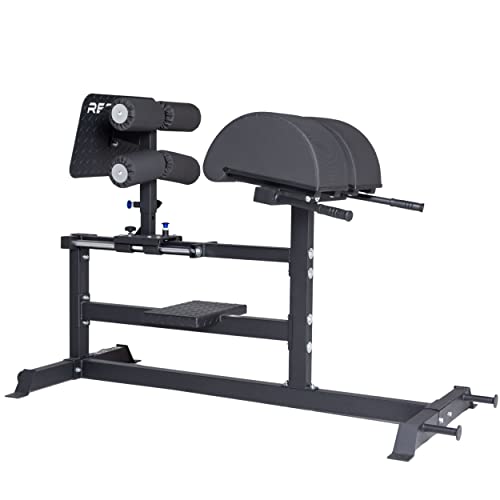
- 13 adjustment points for fit and setup
- 70 x 36 inch footprint for home gyms
- Rear wheels help move the 150 lb frame
Best For: Home gyms needing a sturdy GHD with a relatively manageable footprint
Ultra-Portable Mini Trainer
Bells of Steel Single Foot Glute Ham Developer

- Tiny footprint for very tight spaces
- Heavy-duty steel build
- Portable enough for travel or trainer kits
Best For: Anyone needing the smallest, most portable glute and hamstring option
Compact Glute Glider
GMWD Glute Ham Glider with Smooth Wheels

- Compact 27" x 8.5" x 3" footprint
- Heavy-duty steel with 300-lb capacity
- Smooth four-wheel design for varied training
Best For: Small home gyms that need a space-saving glute and hamstring trainer
Rack-Mounted GHD
Adjustable Glute Ham Developer for 3x3 Racks

- Attaches to a compatible 3" x 3" power cage
- 14 adjustment settings for multiple users
- 800-lb capacity with padded support
Best For: Rack owners wanting a space-saving glute ham developer attachment
Glider With Band Resistance
Yes4All Glute Ham Glider with Resistance Band
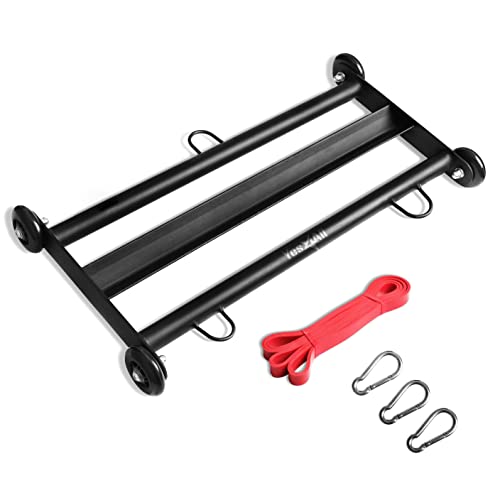
- Adds 20- to 55-lb resistance-band levels
- Heavy-duty stainless steel construction
- U-shaped support and smooth urethane wheels
Best For: Compact home workouts that want extra resistance and exercise variety
Ultra-Compact Glider
Bells of Steel Glute Ham Glider
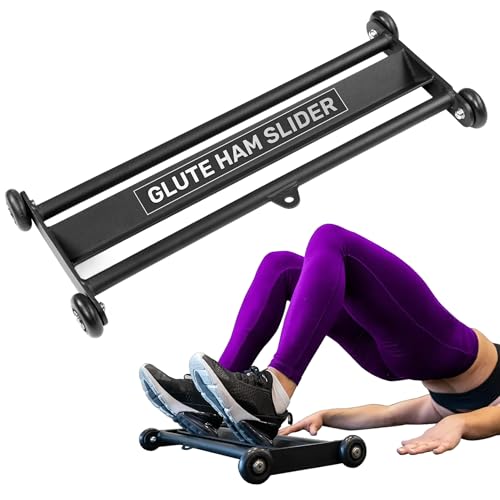
- Compact 25.75 x 11 x 2.5 in. footprint
- Fully assembled with solid steel build
- Trains glutes, hamstrings, abs, and upper body
Best For: Small home gyms needing a ready-to-use, versatile glider
Space-Saving Roller
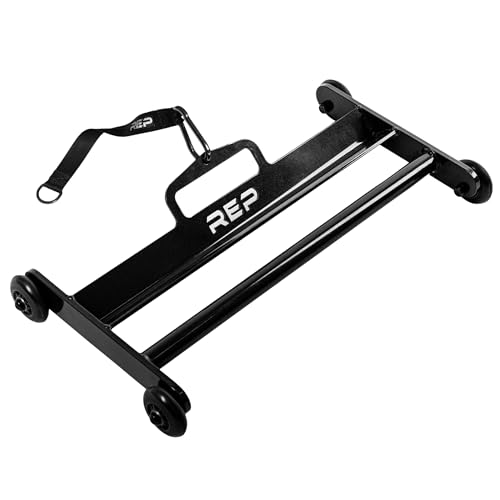
- Slim 25 x 4 x 13 in. footprint
- Steel frame with smooth-rolling wheels
- Works for leg curls, rollouts, and hip extensions
Best For: Compact home gyms needing a versatile roller-style trainer
Heavy-Duty Glider

- Steel build with 600 lb capacity
- Four urethane wheels for smooth motion
- V-bar and handles add support and versatility
Best For: Durable glider users wanting support, band options, and high capacity
Adjustable Heavy-Duty GHD – Titan Fitness Glute and Ham Developer
If you want glute ham developers for small spaces but still need a full-size training feel, this Titan Fitness GHD is a serious option. It targets glutes, hamstrings, lower back, and core work, and the built-in wheels make it easier to move when you need to clear floor space.
Best For: Home gym users who want an adjustable, heavy-duty GHD that can be stored away more easily than a fixed machine.
Pros:
- 10 adjustment settings help dial in fit for different athletes.
- Comfortable HeftyGrip vinyl padding and secure ankle rollers add stability.
- 350 lb weight capacity and powder-coated steel construction for durability.
- Sturdy wheels make it easier to maneuver for storage.
Cons:
- Still a large machine at 190 pounds, so it is not truly compact.
- Best suited to spaces that can handle a commercial-style footprint.
This is a strong pick if you want a traditional GHD with real adjustability and durability, but it works best when you have enough room to roll it out and put it away between sessions.
Compact Floor Glider – Glute Ham Glider with V Bar
Among glute ham developers for small spaces, this glute ham glider stands out for its compact, no-assembly design. It uses smooth rolling wheels and a V-shaped bar to support hamstring curls, crunches, glute bridges, and other floor-based work without committing to a large fixed machine.
Best For: Lifters who want a compact, portable glute and core trainer that stores easily and requires no assembly.
Pros:
- No assembly required, so it is ready to use quickly.
- 3-inch urethane wheels are designed for smooth, stable rolling.
- V-shaped bar with rounded steel edges adds comfort during use.
- 500 lb tension support gives it a strong capacity rating.
Cons:
- It is a floor glider, not a full stand-up GHD machine.
- Shorter range of exercises than a larger adjustable developer.
If your priority is saving space, this is the easiest product in the group to fit into a home gym. It delivers useful lower-body and core training without the bulk of a commercial GHD.
Compact Home-Gym GHD – REP Fitness Glute Ham Developer
If you need glute ham developers for small spaces but still want a serious posterior-chain machine, this REP Fitness GHD is built around a more compact home-gym footprint. It supports glute ham raises, back extensions, hip extensions, and sit-ups, while rear transport wheels help when you need to move the 150 lb frame.
Best For: Home gym owners who want a sturdy, feature-rich GHD with a smaller footprint than many commercial models.
Pros:
- 13 adjustment points make it easier to fit different users and training styles.
- Compact dimensions help it work better in garage gyms and tighter spaces.
- 16-gauge steel frame, thick padding, and steel endcaps add durability.
- Rear transport wheels make repositioning simpler.
Cons:
- At 70 inches long, it still requires meaningful floor space.
- 150 lb frame is substantial even with transport wheels.
This is a smart middle ground if you want a real GHD without going all the way to a huge commercial setup. It offers the most complete feature set here for a home gym that can still spare a dedicated corner.
Ultra-Portable Mini Trainer – Bells of Steel Single Foot Glute Ham Developer
For glute ham developers for small spaces, this Bells of Steel mini slider is the most space-friendly choice in the group. Its compact steel design is built for unilateral leg and core work, and the tiny footprint makes it easy to keep in a home gym, travel bag, or trainer kit.
Best For: Lifters who want the smallest possible glute and hamstring tool for portable core and leg work.
Pros:
- Very compact size makes storage and transport easy.
- Heavy-duty alloy steel construction is built for tough workouts.
- Designed for unilateral leg and core training.
- Works well for on-the-go training or very limited spaces.
Cons:
- Much more limited than a full GHD machine.
- Best for slider-style work rather than full glute ham raises.
This is the best fit if you simply do not have room for a full developer. It is not a replacement for a large GHD, but it is an easy way to train glutes, hamstrings, and core in a very small area.
Compact Glute Glider – GMWD Glute Ham Glider with Smooth Wheels
If you’re looking for glute ham developers for small spaces, this GMWD glute ham glider is a compact option that keeps the footprint modest while still supporting a wide range of lower- and upper-body work. At 27″ D x 8.5″ W x 3″ H and 9.8 pounds, it is easy to place in a home gym without taking over the room, and the four urethane wheels are designed for smooth movement during exercises.
Best For: Home gym users who want a lightweight, space-conscious glider for glute, hamstring, and core training.
Pros:
- Compact 27″ x 8.5″ x 3″ size fits tighter training areas.
- Heavy-duty steel build with a 300-pound maximum weight recommendation.
- Four urethane wheels are made for smooth rolling during curls, bridges, and split squats.
- Supports more than lower-body work, including chest, back, shoulder, and ab exercises.
Cons:
- Fixed-handle design may feel less adjustable than rack-mounted GHD setups.
- Weight capacity is lower than some full developer machines.
- Best suited to floor-based training rather than a large station-style setup.
This is a practical choice if your priority is saving space without giving up exercise variety. The lifetime warranty is a nice added value, especially for a piece of home gym equipment meant to see regular use.
Rack-Mounted GHD – Adjustable Glute Ham Developer for 3×3 Racks
For buyers comparing glute ham developers for small spaces, this adjustable GHD attachment is built for a power cage rather than a standalone footprint, which can be a smart way to save floor space. It uses a 3″ x 3″ frame, offers 14 adjustment settings, and is designed for posterior-chain work like back extensions, hip extensions, Russian twists, and sit-ups.
Best For: Lifters with a compatible 3″ x 3″ rack who want a stable, adjustable GHD attachment.
Pros:
- Rack-mounted design helps reduce the need for a separate large machine.
- 14 adjustment settings make it easier to fit different users.
- Heavy-duty steel construction with a claimed 800-pound capacity.
- Extra-large padding and side handles add comfort and support.
Cons:
- Requires a compatible 3″ x 3″ power cage, so it is not universal.
- Less flexible than a free-standing unit if you want to move it often.
- Better suited to rack owners than first-time buyers building a minimal setup.
This is the most space-efficient option here if you already own the right rack. Its adjustability and high weight capacity make it a strong match for families or shared home gyms that need one attachment to serve multiple users.
Glider With Band Resistance – Yes4All Glute Ham Glider with Resistance Band
If you want glute ham developers for small spaces with a bit more training variety, this Yes4All glute ham glider adds resistance-band work to a compact floor-based design. It uses black urethane wheels for smooth movement, a V-shaped bar for heel and toe support, and a heavy-duty stainless steel build that is aimed at home gym use.
Best For: Users who want a compact glider with resistance-band options for more challenging workouts.
Pros:
- Includes a band with 20- to 55-pound resistance levels.
- Black urethane wheels are made for smooth, secure movement.
- V-shaped bar supports split squats, glute bridges, and ab roller work.
- Heavy-duty stainless steel construction supports HIIT-style training.
Cons:
- Maximum weight recommendation is 330 pounds, lower than some rack-mounted options.
- Floor-based format may not satisfy users wanting a full GHD station.
- Resistance-band setup adds complexity compared with a basic glider.
This model makes sense if you want a compact trainer that still offers progression through band resistance. It is especially appealing for mixed workouts that go beyond glutes and hamstrings into upper-body and core work.
Ultra-Compact Glider – Bells of Steel Glute Ham Glider
If you want glute ham developers for small spaces, this Bells of Steel glider is built to do a lot without taking over your room. It comes fully assembled, uses a compact steel frame, and gives you options for hamstring curls, ab work, single-leg glides, and even push movements.
Best For: Lifters who want a ready-to-use, space-saving glute and hamstring tool with extra core versatility.
Pros:
- Compact footprint at 25.75 x 11 x 2.5 inches.
- Solid steel construction and smooth-gliding wheels for controlled reps.
- Works for glutes, hamstrings, abs, upper body, and banded resistance work.
- Arrives fully assembled, so you can use it right away.
Cons:
- More of a glider-style trainer than a full-size GHD bench.
- Best suited to bodyweight and banded movements rather than heavy loading.
For small home gyms, this is a practical pick if you want posterior-chain work without the footprint of larger machines. Its size and versatility make it especially appealing when floor space is tight.
Space-Saving Roller – REP Fitness Glute Ham Roller
For glute ham developers for small spaces, this REP Fitness roller focuses on compact utility rather than bulk. Its slim 25-inch length and 4-inch width make it easy to fit into a home gym, while the wheel-based design supports leg curls, glute ham raises, ab rollouts, and hip extensions.
Best For: Home gym users who want a compact posterior-chain trainer with a stable, versatile feel.
Pros:
- Compact 25 x 4 x 13 inch size saves floor space.
- Solid steel frame with high-performance wheels for smooth rolling.
- Supports leg curls, glute ham raises, ab rollouts, and hip extensions.
- Can be scaled with bands, a weight vest, or a GHD bench.
Cons:
- Bodyweight-focused unless you add accessories for more resistance.
- Less like a traditional machine and more like a roller trainer.
This is a strong choice if you want a compact tool that still covers a wide range of posterior-chain work. It offers commercial-grade style performance without the footprint of larger equipment.
Heavy-Duty Glider – SELEWARE Glute Ham Glider
If you’re shopping for glute ham developers for small spaces, this SELEWARE glider offers a space-conscious way to train hamstrings, glutes, and abs. It uses a steel frame, four urethane wheels, and a V-bar design that helps keep your heels or toes anchored during glides and floor-based movements.
Best For: Users who want a durable, multi-use glider with added support and a higher weight limit.
Pros:
- Steel construction with a black powder-coated finish.
- Four 3-inch urethane wheels for smooth rolling.
- V-bar design helps keep heels or toes in position.
- Supports banded resistance and holds up to 600 pounds.
Cons:
- Dimensions are larger than the most minimal compact rollers.
- More of a floor trainer than a seated or pad-based glute-ham machine.
This model stands out if you want a sturdy, multi-purpose glider that can handle tough workouts without adding much complexity. The added handles and band options make it flexible for home or commercial use.
How We Picked the Best Glute Ham Developers for Small Spaces
For Glute Ham Developers for Small Spaces, the biggest priorities are footprint, versatility, and stability. We looked for designs that fit smaller garages, spare rooms, and apartment gyms while still supporting glute-ham raises, back extensions, hamstring curls, and core work where applicable. We also favored durable frames, smooth movement, and adjustability that helps different users train comfortably.
Quick Comparison
There are two main categories in this roundup: full-size GHD machines and smaller roller-style glute ham gliders. Full-size models usually offer more exercise variety and a more locked-in training experience, but they take up more room. Gliders and wheel-based trainers are far easier to store and move, making them a smart choice when floor space is limited.
Key Buying Factors for Glute Ham Developers for Small Spaces
Footprint and Storage
Measure your available space before buying. Check the machine’s working length, width, and height, and consider whether it needs permanent placement or can be moved aside after training.
Adjustability
Adjustable footplates, pads, rollers, and frame settings make a big difference in smaller gyms because one machine may need to serve multiple users or multiple exercises.
Stability and Weight Capacity
Compact should not mean flimsy. Look for solid steel construction, secure attachment methods for rack-mounted units, and smooth rolling or locking components that keep the machine steady under load.
Exercise Versatility
If you want maximum value from limited space, choose a model that can handle more than one movement. A good compact unit should support hamstring curls, glute work, back extensions, and some core training if possible.
Comfort and Setup
Padding, wheel quality, and simple assembly matter more than many buyers expect. A smaller machine that is uncomfortable or awkward to use can end up collecting dust.
Who Should Buy Which Glute Ham Developers for Small Spaces?
If you want a true posterior-chain station and have room for it, a full GHD machine is the better pick. If your priority is saving space first and training second, a roller-style glider is usually the most practical choice. Lifters with power cages should also consider rack-mounted options, which can deliver strong performance without committing to a permanent footprint. For most home gym owners, the best choice is the one that matches both your space and your training frequency, not just the longest feature list.
Related Posts: