The best gravel bikes combine road-bike efficiency with the tire clearance, stability, and braking control needed for dirt roads and light trails. The models in this roundup range from carbon gravel machines to versatile aluminum commuters.
Use the guide below to compare drivetrains, frame materials, tire fit, braking systems, and intended use before choosing the bike that matches your routes and budget.
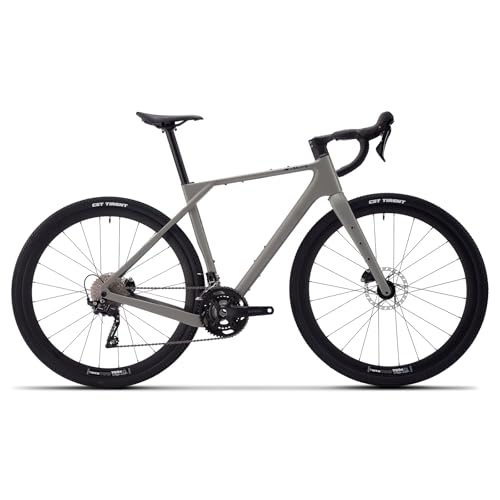
The SAVADECK Gelaro S8 is a performance-focused choice for gravel bikes shoppers who want a light carbon build, a wide 12-speed range, and confident braking across paved and unpaved routes. Its 9.8kg frame-and-fork-focused design, 700x40c tires, and upright geometry suit mixed-terrain exploration and longer rides.
Best For: Riders seeking a lightweight carbon gravel bike for road-to-trail adventures and all-day comfort.
Pros:
T800 carbon frame and fork with a listed weight of 9.8kg.
Shimano GRX820 12-speed drivetrain offers a broad gear range.
Hydraulic disc brakes and 700x40c tires support control on loose terrain.
Upright geometry and internal cable routing emphasize comfort and protection.
Cons:
The listed 53cm size may not suit every rider.
Its rigid design provides no suspension assistance on rough trails.
With its carbon construction and higher-spec GRX820 equipment, the Gelaro S8 is positioned for riders who prioritize low weight and component performance. Confirm the 53cm fit before buying, especially if you need a different frame size.
The Pipleo is a road-oriented option among gravel bikes, combining a 21-speed Shimano drivetrain with 700x28C tires for paved roads, city streets, and lighter gravel use. Its aluminum frame, dual-disc brakes, and mostly assembled setup make it practical for commuters who want an adaptable everyday bicycle.
Best For: Adult commuters and urban riders who mainly use pavement but want some mixed-surface flexibility.
Pros:
21-speed Shimano drivetrain provides plenty of gearing for urban riding.
700x28C tires and double-wall rims are designed for city streets and gravel roads.
Dual-disc brakes provide braking capability in varied weather conditions.
Listed as 95% pre-built for a quicker initial setup.
Cons:
28C tires are narrower than the 40c tires on the other gravel-focused models here.
The supplied details identify it as a road bike for paved and urban terrain, not a dedicated gravel bike.
The listed frame size is 49cm, so fit should be checked carefully.
The Pipleo makes the most sense when commuting and city riding come first. It can handle lighter gravel according to the supplied description, but riders planning frequent rough-trail trips may prefer a purpose-built gravel model with wider tires.
The SAVADECK GRX400 is a versatile carbon option for gravel bikes buyers who want off-road capability without moving to the higher-tier GRX820 setup. It combines a listed 10.4kg T800 carbon frame and fork with 20-speed Shimano GRX400 gearing, hydraulic disc brakes, and 700x40c tires for paved and unpaved routes.
Best For: Riders wanting a lightweight carbon gravel bike for mixed terrain, touring-style rides, and everyday exploration.
Pros:
T800 R21 carbon frame and fork with a listed weight of 10.4kg.
Shimano GRX400 front and rear derailleurs provide 20 speeds.
Hydraulic disc brakes and internal routing support control and a clean design.
700x40c tires are specified for stability and traction on rough surfaces.
Cons:
The listed 51cm size may limit fit options for some riders.
Its rigid suspension design does not add suspension travel for very rough terrain.
This model strikes a practical middle ground: it keeps the lightness advantages of carbon while using the GRX400 groupset and a 20-speed layout. Check the 51cm fit and remember that the product listing identifies it as a road bike while also specifying gravel and road use.
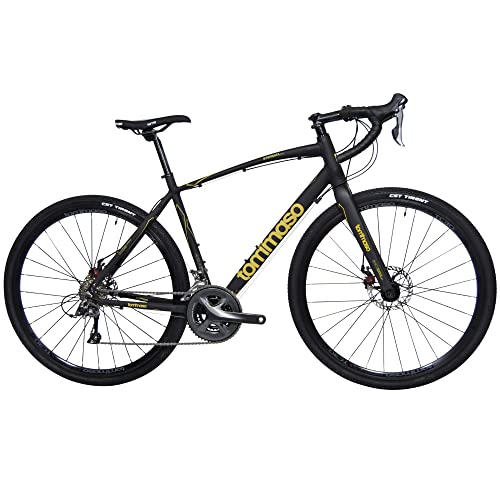
The Tommaso Sterrata Sport is a durable aluminum choice for gravel bikes newcomers and intermediate riders who want dependable equipment at an accessible level. Its carbon fork, 24-speed Shimano drivetrain, 700x40c tires, and disc brakes are suited to paved roads and unpaved trails, though professional assembly is required to validate the warranty.
Best For: Newer or intermediate riders seeking an aluminum gravel bike with wide tires and a carbon fork.
Pros:
Aluminum frame pairs with a carbon fork for a performance-oriented setup.
700x40c tires and 28-spoke TC-20D rims are designed for varied terrain.
24-speed Shimano drivetrain offers a broad range of gearing.
Lifetime frame warranty is listed, alongside a component warranty.
Cons:
Professional assembly is required to validate the warranty and ensure setup.
Avid BB5 disc brakes are mechanical rather than hydraulic.
The supplied listing references the Siena in one description, so buyers should verify the exact model and configuration.
The Sterrata Sport favors durability and approachable performance over the low weight of the carbon models. It is a sensible starting point for mixed-surface riding, provided you budget for professional assembly and confirm the warranty terms.
If you want an adaptable option for commuting and casual rides, this DEYGIA hybrid is a practical alternative to a dedicated gravel bike. Its 700 x 32C tires, 24-speed drivetrain, and dual-disc brakes suit paved roads, park paths, and lighter unpaved routes.
Best For: Daily commuters and recreational riders who want upright comfort and flexible gearing for mixed urban terrain.
Pros:
24-speed 3 x 8 drivetrain supports climbs and faster descents.
700 x 32C tires are designed for smooth rolling on pavement and gravel roads.
Dual-disc brakes, adjustable contact points, and an upright riding position add everyday practicality.
Arrives 90% pre-assembled with tools and instructions.
Cons:
Carbon steel frame is less weight-focused than the carbon frames on the other bikes here.
Its hybrid, city-oriented design is better suited to light gravel than demanding off-road riding.
The DEYGIA makes the most sense when comfort, commuting utility, and a broad gear range matter more than racing performance. Check the size guide carefully, since the listed options are Size S and M.
The KABON is a dedicated gravel bike for riders who want low weight and a road-racing feel without giving up rough-surface capability. Its T800 carbon frame, carbon components, 700 x 40C tires, and drop-bar controls are aimed at paved roads, gravel, and entry-level racing.
Best For: Beginners and commuters seeking a lightweight, drop-bar bike for mixed road riding and faster gravel routes.
Pros:
Carbon frame, fork, handlebar, and seatpost keep the listed weight to 8.7 kg.
700 x 40C tires provide added stability and traction on rougher terrain.
Shimano Sora 2 x 9 drivetrain offers 18 speeds and smooth shifting.
Mechanical disc brakes and mostly pre-assembled delivery simplify ownership.
Cons:
Mechanical disc brakes may require more manual adjustment than hydraulic systems.
The listed 53 cm size may not suit every rider, so fit should be verified before ordering.
With its low listed weight and wider tires, the KABON is a compelling choice for riders prioritizing speed and portability. It is especially appealing for smoother gravel and road-oriented adventures rather than highly technical trails.
For riders who want a more feature-rich gravel setup, the SAVADECK pairs a T800 carbon frame and fork with Shimano U6000 components, hydraulic disc brakes, and 700 x 40C tires. It is designed for mixed pavement and trail riding, with an emphasis on traction, stability, and confident braking.
Best For: Adventure riders and commuters who want a carbon gravel bike with hydraulic braking and broad mixed-surface capability.
Pros:
T800 carbon frame and fork keep the listed weight at 10.4 kg.
Shimano U6000 drivetrain components are designed for crisp, reliable shifting.
Hydraulic disc brakes provide consistent stopping power in varied conditions.
700 x 40C tires and 45-spoke wheels target traction and stability on pavement and trails.
Cons:
At 10.4 kg, it is heavier than the KABON listed here.
The supplied details identify it as a road bike despite its gravel-focused design, so buyers should confirm the exact configuration.
Only a 51 cm size is specified in the provided details.
The SAVADECK is the strongest fit for riders who value braking control and all-terrain confidence over the lowest possible weight. Its 40 mm tires and upright-oriented design also support comfortable longer rides.
Although it is built for paved roads rather than true gravel, the SAVADECK A7L is worth considering for riders comparing gravel bikes who prioritize speed, low weight, and responsive handling. Its T800 carbon frame, fork, seatpost, and rims keep the bike at a claimed 8.9 kg, while hydraulic disc brakes add confident stopping control.
Best For: Riders seeking a lightweight, aerodynamic road bike for paved-road training, fast rides, and road-focused performance.
Pros:
Claimed 8.9 kg weight with a T800 carbon frame and carbon components.
Shimano 105 R7100 24-speed groupset for versatile road gearing.
Hydraulic disc brakes and fully internal cable routing.
Includes clipless pedals and arrives 85% pre-assembled.
Cons:
700x25C tires are narrower and less suited to unpaved trails than gravel-bike tires.
Designed specifically for paved roads, with rigid suspension.
The A7L makes the most sense when road speed and lightweight construction matter more than trail versatility. Riders wanting a dedicated gravel setup should look for wider tires and geometry intended for unpaved terrain.
The SAVADECK Carbon Gravel Bike is a balanced option for riders comparing gravel bikes for mixed pavement and trail use. Its T800 carbon frame and fork keep the claimed weight to 10.4 kg, while 700x40C tires, Shimano GRX400 gearing, and hydraulic disc brakes support everyday rides and longer off-road adventures.
Best For: Riders who want one carbon bike for paved roads, unpaved trails, commuting, and mixed-surface exploration.
Pros:
T800 carbon frame and fork with a claimed 10.4 kg weight.
Shimano GRX400 20-speed groupset is designed for gravel riding.
700x40C tires provide stability and traction on rougher terrain.
Hydraulic disc brakes and internal cable routing support control and a clean appearance.
Cons:
Aluminum wheels add weight compared with a full carbon wheelset.
The rigid design provides no suspension for especially rough trails.
With its wide tires and GRX drivetrain, this model is the more naturally versatile choice for mixed surfaces. It favors efficient gravel and road riding rather than technical, suspension-oriented trail use.
For shoppers comparing gravel bikes with a clean, modern build, this SAVADECK combines a claimed 10.4 kg T800 carbon frame and fork with a Shimano U6000 drivetrain. Its 700x40C tires, hydraulic disc brakes, and upright design are aimed at riders who split time between roads, gravel, and unpaved trails.
Best For: Commuters, adventure riders, and mixed-surface cyclists who want carbon construction with wide all-terrain tires.
Pros:
Claimed 10.4 kg weight from the T800 carbon frame and fork.
Shimano U6000 components, including shifters, rear derailleur, cassette, and chain.
700x40C tires and 45-spoke wheels are specified for mixed terrain.
Hydraulic disc brakes, internal routing, and 90% pre-assembly with tools included.
Cons:
Rigid suspension may transmit more impact on rough trails.
The supplied specifications list a rear derailleur configuration, so drivetrain details should be confirmed before purchase.
This model emphasizes practical versatility and easy setup. Its wide tires and upright geometry suit everyday riding and gravel exploration, while the carbon frame keeps the claimed weight relatively low.
We selected this group to cover the main categories shoppers encounter when comparing Gravel Bikes: carbon and aluminum frames, mechanical and hydraulic disc brakes, wide-range and road-oriented gearing, and tires suited to pavement or mixed terrain. We also considered practical versatility, including commuting, recreational riding, bike-path use, light touring, and off-road exploration.
Because specifications and component availability can vary by size or seller, verify the current listing for frame sizing, wheel specifications, included accessories, warranty coverage, and assembly requirements before ordering.
Quick Comparison
Priority
Look for
Best suited to
Fast mixed-surface riding
Carbon frame, hydraulic brakes, 40mm tires
Experienced riders and long adventures
Affordable versatility
Aluminum frame, multiple gears, disc brakes
Commuting and recreational use
Road-focused performance
Shimano 105 or Claris-style road drivetrain
Pavement, fitness, and group rides
Rougher gravel
Wide tires, lower gearing, hydraulic braking
Loose roads and light trail riding
Key Buying Factors for Gravel Bikes
Frame Material and Fit
Carbon frames can reduce weight and vibration, while aluminum usually delivers strong value and durability. Fit matters more than material: compare the manufacturer’s size chart with your height, inseam, reach preferences, and riding position. A professional fit can improve comfort on longer rides.
Gearing
Choose lower climbing gears if you expect steep grades, loose surfaces, luggage, or extended off-road sections. A road-oriented drivetrain may feel faster on pavement but can be less forgiving on climbs. Check the crankset and cassette range rather than relying only on the advertised number of speeds.
Brakes and Tires
Hydraulic disc brakes generally offer stronger modulation and better control in wet or variable conditions. Tire width and tread affect comfort and grip: around 38–45mm is a useful range for mixed surfaces, while narrower, smoother tires favor pavement. Confirm the actual clearance and whether tubeless-ready wheels or tires are included.
Assembly and Ownership Costs
Many online bikes require final assembly and adjustment. Budget for professional setup if you are not comfortable checking torque, shifting, headset preload, and brake alignment. Also account for pedals, lights, racks, fenders, spare tubes, and replacement parts.
Who Should Buy Which Gravel Bikes?
Choose a carbon gravel model with hydraulic brakes if you want a lighter, more responsive bike for frequent mixed-surface rides and are comfortable paying more for performance. An aluminum gravel or hybrid bike is often the better choice for commuting, casual fitness, and riders who prioritize value and everyday durability.
Road-oriented models make sense when most miles will be on smooth pavement, while wider-tire gravel builds are preferable for broken roads, packed dirt, and light trails. Before buying, confirm the size, drivetrain range, tire clearance, brake type, return policy, and whether the bike arrives fully assembled.