Frequent charging can interrupt training and make consistent tracking harder. The best heart rate monitors with long battery life combine dependable readings with enough endurance for workouts, travel, and daily use.
This roundup compares chest straps, armbands, and smartwatch-style trackers across battery life, connectivity, durability, comfort, and compatibility.
Best 10 Heart Rate Monitors with Long Battery Life Picks for 2026
Best Budget Battery Pick
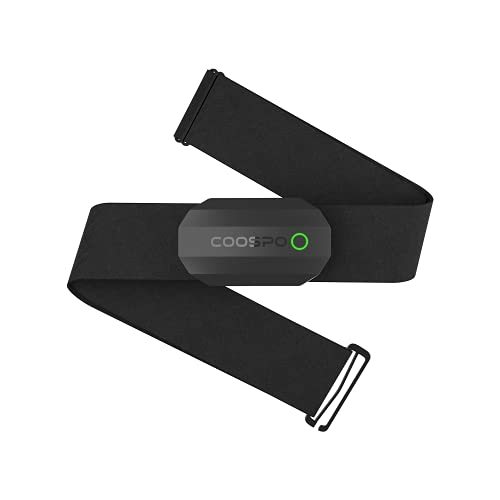
- Up to 300-hour replaceable-battery life
- Bluetooth and ANT+ connectivity
- IP67 waterproof design
Best For: Multi-device training on a budget
Best for Data-Driven Athletes

- Up to two months of rechargeable power
- Records workouts without a watch
- Adds advanced running dynamics
Best For: Garmin-based performance training
Longest Battery Runtime
GEOID HS500 Heart Rate Monitor

- Up to 800 hours of battery life
- Replaceable CR2032 battery
- ANT+ and Bluetooth support
Best For: High-frequency training with minimal maintenance
Best Set-and-Forget Battery

- Up to one year of battery life
- User-replaceable battery
- Machine-washable strap with 3 ATM rating
Best For: Low-maintenance Garmin training
Long-Lasting Smart Band

- Up to 21 days of battery life
- AMOLED touchscreen with 1500 nits brightness
- Tracks heart rate, sleep, blood oxygen, and activity
Best For: Everyday wellness tracking with minimal charging
Precision Chest Strap

- Up to 400 hours of battery life
- Bluetooth, ANT+, and 5 kHz connectivity
- Waterproof with internal memory
Best For: Precise training data across compatible devices
Extended-Use Armband

- Up to 110 hours of battery life
- 30-minute magnetic full charge
- Bluetooth 5.1 and ANT+ connectivity
Best For: Comfortable, long-duration multisport training
Long-Range Chest Strap
POWR LABS Bluetooth ANT+ Heart Rate Monitor
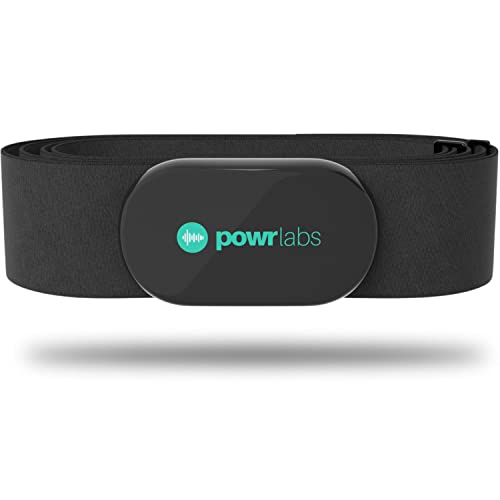
- 400+ hours of replaceable-battery life
- Dual Bluetooth and ANT+ connectivity
- Comfortable, sweat- and water-resistant strap
Best For: Athletes wanting a low-maintenance chest-strap sensor
Feature-Packed Watch
H32 24/7 Heart Rate Fitness Tracker

- 24/7 heart-rate and other health tracking features
- 120+ exercise modes and sleep monitoring
- Notifications, customizable faces, and phone-connected GPS
Best For: Users wanting a versatile fitness watch for daily tracking
Long-Lasting Fitness Watch
Zeacool 24/7 Heart Rate Tracker

- 10–14 days of regular battery life
- 123 sport modes and sleep analysis
- IP68 waterproof design with AMOLED display
Best For: Everyday users seeking a multi-day fitness tracker
Best Budget Battery Pick – COOSPO H808S Chest Strap
For shoppers comparing heart rate monitors with long battery life, the COOSPO H808S offers a practical chest-strap design with up to 300 hours from a replaceable CR2032 battery. Its Bluetooth and ANT+ connectivity also makes it suitable for a broad range of training devices and apps.
Best For: Multi-device workouts, cycling, running, and fitness-app users who want a replaceable-battery chest strap.
Pros:
- Up to 300 hours of battery life with a replaceable CR2032 battery.
- Supports both Bluetooth 4.0 and ANT+ connections.
- IP67 waterproof rating and compatibility with apps including Strava, Zwift, Peloton, and Wahoo Fitness.
- LED indicators and an audible reminder help confirm operating status.
Cons:
- Requires moistening the electrode areas before use.
- The strap is recommended for replacement after six months or 300 washes.
- It should be connected through the fitness app rather than directly through phone Bluetooth.
The H808S is a sensible choice when extended battery life and broad connectivity matter more than onboard display features. Its replaceable battery helps reduce charging interruptions, while the chest-strap format is well suited to active training.
Best for Data-Driven Athletes – Garmin HRM 600
The Garmin HRM 600 is a premium option among heart rate monitors with long battery life, combining up to two months of rechargeable power with detailed training data. It can record workouts independently when wearing a watch is impractical and sync them to Garmin Connect.
Best For: Garmin users, runners, swimmers, and athletes who want heart rate, HRV, and advanced running metrics.
Pros:
- Provides up to two months of battery life from a rechargeable lithium-ion battery.
- Records workouts without a watch and syncs data to Garmin Connect.
- Supports running dynamics such as stride length, vertical oscillation, and ground contact time balance with a compatible smartwatch.
- Machine-washable strap is available in two sizes.
Cons:
- Advanced running metrics require a compatible Garmin smartwatch.
- Battery life is shorter than several replaceable-coin-cell alternatives.
- Its feature set is most useful within the Garmin ecosystem.
The HRM 600 is geared toward athletes who value detailed post-workout analysis and Garmin integration. Its rechargeable battery avoids frequent coin-cell replacement, while independent recording adds flexibility for team sports and other watch-free activities.
Longest Battery Runtime – GEOID HS500 Heart Rate Monitor
With a claimed 800-hour battery life, the GEOID HS500 stands out among heart rate monitors with long battery life. It uses a replaceable CR2032 battery, supports ANT+ and Bluetooth, and is designed for use with phones, watches, bike computers, treadmills, and popular training apps.
Best For: Frequent athletes who want maximum battery longevity and flexible ANT+/Bluetooth compatibility.
Pros:
- Offers up to 800 hours of battery life with a replaceable CR2032 battery.
- Supports ANT+ and Bluetooth connections across many fitness devices and apps.
- IP67 waterproof construction suits running, cycling, football, and general fitness.
- One-year limited warranty and 24/7 online customer support are included.
Cons:
- Swimming is not recommended.
- Connection should be made through the app rather than directly through phone Bluetooth.
- It does not provide the advanced Garmin-specific training features of the HRM 600.
The HS500 is the strongest choice here for minimizing battery changes. Its long runtime, replaceable cell, and dual-protocol connectivity make it particularly convenient for high-frequency training across different platforms.
Best Set-and-Forget Battery – Garmin HRM 200
The Garmin HRM 200 is a straightforward choice for shoppers seeking heart rate monitors with long battery life and minimal upkeep. Its user-replaceable battery lasts up to one year, and the monitor sends real-time heart rate and HRV data to compatible Garmin devices, equipment, apps, and smartphones.
Best For: Garmin users who want a durable, low-maintenance chest strap for regular workouts.
Pros:
- Provides up to one year of battery life with a user-replaceable battery.
- Transmits real-time heart rate and HRV data.
- Works with Garmin smartwatches, cycling computers, fitness equipment, apps, and smartphones.
- Machine-washable strap and 3 ATM water rating support regular use.
Cons:
- It does not offer the independent workout recording and running-dynamics features listed for the HRM 600.
- Compatibility and features are most closely aligned with Garmin devices and apps.
- The supplied details do not specify a rechargeable battery.
The HRM 200 prioritizes dependable everyday monitoring over an extensive feature list. Its one-year replaceable-battery life and washable strap make it a convenient fit for users who want to train regularly without frequent charging.
Long-Lasting Smart Band – Xiaomi Mi Smart Band 10
For shoppers comparing heart rate monitors with long battery life, the Xiaomi Mi Smart Band 10 combines continuous wellness tracking with a bright touchscreen and up to 21 days of battery life. It is a practical choice for everyday activity, sleep, and multisport tracking rather than a dedicated chest-strap sensor.
Best For: Everyday users who want extended battery life, heart-rate and sleep tracking, and a large readable display.
Pros:
- Up to 21 days of battery life, with a full recharge in about an hour.
- Tracks heart rate, blood oxygen, sleep duration, and activity metrics.
- Large 1.72-inch AMOLED display with up to 1500 nits HBM brightness.
- 50-meter water resistance and multisport features, including swimming insights.
Cons:
- No built-in GPS, so it relies on a connected device for route tracking.
- The Xiaomi Fit app supports the metric system; imperial measurements require a third-party Google Fit connection.
The Mi Smart Band 10 stands out when minimizing charging is a priority. Its long runtime and broad wellness feature set make it well suited to daily wear, while the lack of onboard GPS may matter to runners and cyclists who want phone-free tracking.
Precision Chest Strap – Polar H10 Heart Rate Monitor
The Polar H10 is a focused option for shoppers seeking heart rate monitors with long battery life and high measurement precision. Its chest-strap design supports Bluetooth, ANT+, and 5 kHz connections, making it suitable for compatible training equipment and fitness apps.
Best For: Athletes and serious fitness users who prioritize precise heart-rate data, broad connectivity, and long sensor battery life.
Pros:
- Provides up to 400 hours of battery life from a CR2025 button cell.
- Recognized for high precision by the supplied product notes.
- Supports Bluetooth, ANT+, and 5 kHz connectivity, including simultaneous Bluetooth and ANT+ connections.
- Waterproof design with internal memory for multiple hours of data.
Cons:
- Chest-strap wear may be less convenient than an armband or wrist band for some users.
- It requires a separate compatible display or connected device to view readings.
- The specified CR2025 battery should be used to avoid damage or malfunction.
With its 400-hour battery rating and flexible connection options, the Polar H10 is particularly compelling for frequent training. Choose it over a smartwatch-style tracker when accurate sensor data matters more than an on-device display.
Extended-Use Armband – CYCPLUS H1 Heart Rate Monitor
The CYCPLUS H1 is a convenient choice among heart rate monitors with long battery life, offering up to 110 hours of use and a quick 30-minute magnetic charge. Its optical armband design keeps the wrist free while sending readings to phones, cycling computers, sports watches, and compatible fitness equipment.
Best For: Cyclists and multisport users who want a comfortable armband, long runtime, and Bluetooth or ANT+ connectivity.
Pros:
- Up to 110 hours of battery life with a 30-minute full charge.
- Optical sensor provides continuous exercise heart-rate monitoring with stated ±1 BPM accuracy.
- Bluetooth 5.1 and ANT+ support connection to multiple compatible devices.
- LED colors indicate heart-rate zones for quick workout feedback.
Cons:
- No display, so detailed readings appear on a connected device.
- It is rated IP67 and listed as waterproof to a depth of 1 meter, rather than designed for deep-water use.
- Optical armband readings may not suit shoppers specifically seeking a chest-strap sensor.
The CYCPLUS H1 balances comfort and endurance well, especially for users who do not want a chest strap. Its quick charging and 110-hour runtime reduce interruptions, while dual wireless protocols make it adaptable to common training setups.
Long-Range Chest Strap – POWR LABS Bluetooth ANT+ Heart Rate Monitor
For athletes prioritizing dependable tracking and minimal maintenance, this chest strap is a strong option among heart rate monitors with long battery life. Its dual Bluetooth and ANT+ connectivity supports a broad range of fitness devices and apps, while the replaceable battery is rated for more than 400 hours of use.
Best For: Cyclists, runners, and gym users who want an accurate chest-strap monitor that can pair with Garmin, Peloton, Wahoo, Polar, smartphones, and compatible fitness apps.
Pros:
- 400+ hour replaceable-battery life can support months of regular training.
- Dual Bluetooth and ANT+ connectivity works with many watches, computers, and fitness apps.
- Soft, adjustable strap is designed for comfort during extended sessions.
- IPX67 sweat and water resistance suits demanding workouts and swimming under a wetsuit.
Cons:
- Must be worn before pairing, which adds a step to setup.
- Chest-strap design may be less convenient than a wrist-worn tracker for all-day activity monitoring.
The POWR LABS monitor stands out when long battery life, broad compatibility, and chest-strap accuracy matter more than smartwatch features. It is a practical training sensor, but it does not provide an on-device display or the broader lifestyle tools found on fitness watches.
Feature-Packed Watch – H32 24/7 Heart Rate Fitness Tracker
Fitness Tracker with Heart Rate Blood Oxygen Blood Pressure Monitor Sleep Tracker Activity Trackers
Check Price On AmazonThis H32 fitness watch combines continuous heart-rate tracking with everyday smartwatch functions, making it a versatile pick among heart rate monitors with long battery life when you also want notifications and activity tracking. It includes more than 120 exercise modes, sleep tracking, and phone-connected GPS route mapping.
Best For: Android and iPhone users seeking a wrist-worn fitness tracker with health monitoring, exercise modes, call and message notifications, and customizable watch faces.
Pros:
- Provides 24/7 heart-rate, blood-oxygen, and blood-pressure monitoring features.
- Offers more than 120 exercise modes plus steps, distance, and calorie tracking.
- Includes sleep-stage tracking, notifications, weather, music control, and phone-finding tools.
- Large 1.58-inch high-resolution display supports touch controls and an always-on clock.
Cons:
- The supplied notes do not specify the watch’s battery runtime.
- GPS route mapping requires a connection to the phone’s GPS rather than standalone GPS.
- Health metrics are presented as tracking features and should not be treated as medical measurements.
This is a broad daily-use tracker rather than a dedicated training sensor. Its feature set is appealing for users who want health data, workout modes, and notifications in one device, though shoppers specifically comparing battery life will need to verify runtime before buying.
Long-Lasting Fitness Watch – Zeacool 24/7 Heart Rate Tracker
With up to 10–14 days of regular use and up to 30 days on standby, the Zeacool tracker is a compelling choice among heart rate monitors with long battery life. It adds continuous health tracking, sleep analysis, and 123 sport modes in a compact watch with a 1.47-inch AMOLED display.
Best For: iPhone and Android users who want extended charging intervals, basic health and sleep insights, and a waterproof activity tracker for everyday wear.
Pros:
- Offers 10–14 days of regular battery life and up to 30 days of standby time.
- Tracks heart rate, blood oxygen, sleep, temperature, steps, distance, and calories.
- Supports 123 sport modes through the companion Da Fit app.
- IP68-rated design is intended for hand washing, bathing, swimming, diving, and rain.
Cons:
- Requires magnetic fast charging rather than a replaceable battery.
- Outdoor workout route tracking and app features depend on a compatible smartphone.
- The supplied notes do not identify a standalone GPS feature.
The Zeacool is the clearest fit here for shoppers focused on multi-day smartwatch battery life. Its AMOLED screen, health features, and water-resistant design make it useful for daily wear, while the app connection supports broader workout-data review.
How We Picked the Best Heart Rate Monitors with Long Battery Life
We selected these Heart Rate Monitors with Long Battery Life based on stated battery endurance, sensor format, connectivity, water resistance, and compatibility with common phones, watches, cycling computers, gym equipment, and training platforms. The list includes dedicated chest straps for workout accuracy, an armband option for users who prefer a less restrictive fit, and fitness trackers that add sleep, activity, and wellness features.
Battery claims vary by usage. Continuous broadcasts, frequent workouts, GPS use, bright displays, and smart notifications can reduce real-world runtime, so treat advertised figures as benchmarks rather than guarantees.
Quick Comparison
- Best for training compatibility: ANT+ and Bluetooth chest straps such as the Polar H10, Garmin HRM models, COOSPO, GEOID, and POWR LABS options.
- Best for extended battery claims: The GEOID HS500 and COOSPO H808S emphasize long sensor-battery life, while the Xiaomi Smart Band 10 is designed for multiweek everyday use.
- Best for an armband design: The CYCPLUS H1 places the sensor on the upper arm rather than around the chest.
- Best for broader wellness tracking: The Xiaomi, Smart Watch Fitness Tracker, and Zeacool models add display-based activity and sleep features.
Key Buying Factors for Heart Rate Monitors with Long Battery Life
Sensor Type and Placement
Chest straps generally provide responsive readings during intervals and high-intensity exercise because they measure electrical signals near the heart. Armbands can be more comfortable for some users, while wrist-based trackers are convenient for all-day monitoring but may be less consistent during rapid movement or strength training.
Connectivity and Compatibility
Check whether the monitor supports Bluetooth, ANT+, or both. Bluetooth is useful for phones and many apps; ANT+ is valuable for compatible bike computers, watches, and gym equipment. Also confirm whether the device supports multiple simultaneous connections if you want to use more than one display.
Battery and Charging
Look beyond the headline number. Replaceable coin-cell batteries can be convenient for long-term readiness, while rechargeable models avoid battery purchases but require regular charging. Consider whether the monitor stores workouts internally or must remain connected to a phone or watch.
Comfort, Water Resistance, and Care
A washable, adjustable strap and secure sensor contacts matter as much as battery life. IP67 or IP68 ratings can help with sweat and water exposure, but they do not always mean the device is suitable for swimming. Follow the manufacturer’s cleaning and storage instructions to protect the strap and electrodes.
Who Should Buy Which Heart Rate Monitors with Long Battery Life?
Choose a chest strap if accurate, responsive workout data is your priority, especially for running, cycling, interval training, or structured workouts. Choose an armband if chest straps feel restrictive but you still want a dedicated sensor. Choose a fitness band or smartwatch-style tracker if you want one wearable for heart rate, sleep, steps, notifications, and general activity rather than a specialized training sensor.
Before buying, confirm device compatibility, review the included strap or charger, and compare the stated battery duration with your typical training schedule. The right choice is the one that stays comfortable and connected long enough that you will actually wear it consistently.
Related Posts:

