The best lightweight running watches give you essential training data without feeling bulky during long runs, workouts, or everyday wear. This roundup compares 10 options across GPS accuracy, battery life, coaching features, displays, and price.
Whether you want a focused running watch, a smartwatch with fitness tools, or a simple GPS tracker, use the guide below to match features with your training goals and budget.
Best 10 Lightweight Running Watches Picks for 2026
Ultralight Training Pick

- 32g nylon-band design
- Up to 41 hours of GPS battery
- Training, sleep, and recovery metrics
Best For: Runners seeking minimal weight and long training battery life
Advanced Small-Wrist Choice

- 42mm lightweight design
- Adaptive workouts and training readiness
- Up to 24 hours in GPS mode
Best For: Smaller-wrist runners who want advanced training guidance
Long-Battery Value Pick

- Lightweight aluminum build
- Up to 14 days of battery life
- 140-plus workout modes and GPS maps
Best For: Everyday fitness users wanting a bright display and infrequent charging
Accessible Running Companion

- Lightweight 43mm design
- Up to 19 hours of GPS battery
- Adaptive workouts and recovery guidance
Best For: Runners wanting straightforward training tools for daily use
Simple GPS Value

- GPS tracks distance and pace
- Stores 10 exercise records
- 5ATM water resistance
Best For: Casual runners wanting essential tracking and button controls
Training-Focused Pick

- GPS and wrist-based heart rate
- Up to 23 hours in GPS mode
- Adaptive plans and recovery insights
Best For: Event-focused runners wanting structured training guidance
Lightweight Coaching Choice
Mibro GS Active2 GPS Running Watch

- 39g body with nylon band
- Dual-band GPS and route navigation
- Running metrics and adaptive plans
Best For: Runners wanting detailed coaching in a lightweight design
Balanced Training Pick

- Built-in GPS with 30+ sports apps
- Up to 11 days of smartwatch battery
- Advanced sleep, recovery, and Body Battery tools
Best For: Everyday runners wanting broad fitness and smartwatch features
Outdoor Value Option

- Built-in GPS tracks pace, distance, and routes
- Up to 7 days of heavy-use battery
- Includes interval, lap, compass, and elevation tools
Best For: Runners wanting phone-free tracking and outdoor essentials
Focused Running Choice
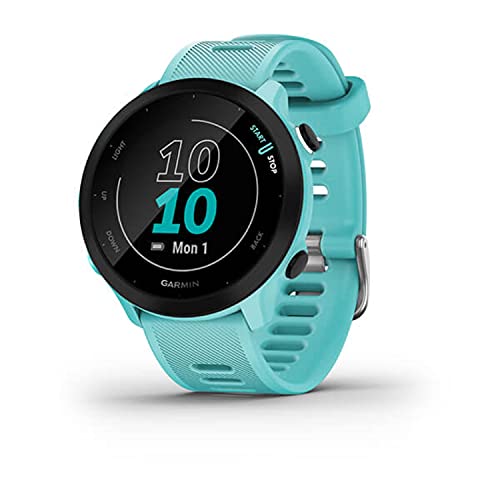
- GPS, heart-rate monitoring, and running profiles
- Daily suggested workouts and PacePro guidance
- Up to 20 hours of GPS battery life
Best For: Runners prioritizing structured training and pace guidance
Ultralight Training Pick – COROS PACE 4
For runners prioritizing minimal wrist weight, the COROS PACE 4 is a strong option among lightweight running watches. Its 32g nylon-band design, 41-hour GPS battery, and bright AMOLED display are suited to long training sessions and everyday wear.
Best For: Runners who want an ultralight training watch with long battery life and detailed recovery metrics.
Pros:
- Weighs just 32g with the nylon band and measures 11.8mm thin.
- Provides up to 41 hours of continuous GPS use and 19 days of daily battery life.
- Tracks recovery time, sleep stages, HRV, heart rate, and blood oxygen.
- Combines AMOLED touchscreen, buttons, digital crown, voice tools, and customizable controls.
Cons:
- Its 1.2-inch display is smaller than the screens on several general-purpose smartwatches.
- Some voice and app features require a compatible smartphone or the COROS app.
The PACE 4 stands out when low weight and endurance matter more than broad smartwatch extras. It is especially appealing for runners who want detailed training and recovery information without a bulky watch.
Advanced Small-Wrist Choice – Garmin Forerunner 265S
The Garmin Forerunner 265S combines a lightweight 42mm form factor with an AMOLED touchscreen and traditional buttons. Among lightweight running watches, it is designed for runners who want adaptive training guidance, multi-band positioning, and extensive performance insights.
Best For: Runners with smaller wrists who want advanced training readiness and race-planning features.
Pros:
- Lightweight 42mm design with a vivid AMOLED display and button controls.
- Offers up to 24 hours in GPS mode and up to 15 days in smartwatch mode.
- Training readiness, HRV status, sleep information, and adaptive daily workouts support structured training.
- Multi-band GNSS with SatIQ is designed to improve positioning accuracy in challenging environments.
Cons:
- Its broad training feature set may be more than casual runners need.
- Safety and smart notification features require pairing with a compatible smartphone and network coverage where applicable.
The Forerunner 265S is a feature-rich pick for runners who want a smaller watch without giving up advanced training tools. Its adaptive workouts and positioning features make it particularly suitable for consistent, goal-oriented training.
Long-Battery Value Pick – Amazfit Bip 6
The Amazfit Bip 6 offers a large, bright AMOLED display in a lightweight aluminum build, making it a practical option among lightweight running watches for everyday fitness. It adds 140-plus workout modes, multi-system GPS, downloadable maps, and up to 14 days of battery life.
Best For: Everyday runners and fitness users who want a readable display, broad activity tracking, and infrequent charging.
Pros:
- Lightweight 1.44-ounce design with a 1.97-inch AMOLED display rated up to 2,000 nits.
- Supports more than 140 workout modes and 50-meter water resistance.
- Provides up to 14 days of battery life for extended use between charges.
- Supports five satellite systems, downloadable maps, and turn-by-turn directions.
Cons:
- Its fitness and smartwatch platform is less specifically running-focused than the Garmin and COROS options.
- The included magnetic charger does not include a USB-C cable.
The Bip 6 is a versatile choice if you want running GPS alongside general fitness and smartwatch features. Its large screen and long battery make it convenient for users who prefer easy readability and less frequent charging.
Accessible Running Companion – Garmin Forerunner 165
The Garmin Forerunner 165 is an easy-to-use 43mm running smartwatch with built-in GPS, wrist-based heart rate, and an AMOLED touchscreen. It fits the lightweight running watches category while adding adaptive workout suggestions, recovery guidance, and Garmin Pay support.
Best For: Runners who want straightforward Garmin training features in a lightweight, everyday design.
Pros:
- Lightweight 43mm design with AMOLED touchscreen and traditional button controls.
- Provides up to 19 hours of GPS battery life and 11 days in smartwatch mode.
- Daily suggested workouts, Garmin Coach, and race-adaptive plans help support training goals.
- Tracks recovery time, training effect, sleep, heart rate, and HRV status.
Cons:
- Its GPS battery life is shorter than the COROS PACE 4 and Garmin Forerunner 265S.
- Incident detection and assistance require smartphone pairing and suitable network coverage.
The Forerunner 165 offers a balanced entry point for runners who want useful training guidance without a more specialized feature set. It is a practical daily watch for monitoring runs, recovery, notifications, and general fitness.
Simple GPS Value – EZON GPS Running Watch
EZON GPS Running Watch with Distance Pace Alarm and Calorie Counter and Stopwatch for Men (Blue)
Check Price On AmazonFor runners seeking lightweight running watches with straightforward GPS tracking, the EZON offers essential workout data without an overly complex interface. It records distance, pace, calories, and time, while button controls keep post-run review simple.
Best For: Casual runners who want GPS basics, stopwatch functions, and a practical water-resistant design.
Pros:
- Built-in GPS tracks distance and pace, with automatic time synchronization.
- Stores the last 10 exercise records for convenient review.
- Stopwatch supports countdown and lap timing, with up to 50 laps saved.
- 5ATM water resistance suits everyday activities and swimming.
Cons:
- Cold GPS starts can take approximately one minute.
- Its fitness features are more basic than those of advanced training watches.
- Buttons rather than a touchscreen provide the main interface.
The EZON is a sensible pick when reliable run essentials matter more than extensive smartwatch or coaching features. Its stored workout history and long stopwatch range add useful practicality for everyday training.
Training-Focused Pick – Garmin Forerunner 70
The Garmin Forerunner 70 is a strong choice among lightweight running watches for runners who want built-in GPS, wrist-based heart rate, and structured training support. Its AMOLED touchscreen, button controls, and extensive recovery features make it suited to more purposeful training.
Best For: Runners training toward events or milestones who want adaptive plans, recovery guidance, and broad activity tracking.
Pros:
- Built-in GPS and wrist-based heart rate support pace and distance tracking.
- Battery lasts up to 23 hours in GPS mode or 13 days in smartwatch mode.
- Garmin Coach plans and daily suggested workouts adapt to performance and recovery.
- Offers sleep, training readiness, training status, and recovery insights.
Cons:
- Some safety and tracking features require a paired smartphone and network coverage.
- The feature set may be more than needed for runners seeking only basic tracking.
- The supplied specifications list GPS but do not identify additional satellite systems.
With its combination of training plans, recovery metrics, and long GPS battery life, the Forerunner 70 is designed for runners who want guidance beyond simple distance measurement. It is the most training-oriented option in this group.
Lightweight Coaching Choice – Mibro GS Active2 GPS Running Watch
The Mibro GS Active2 stands out among lightweight running watches with a 39g body, dual-band GPS, and dedicated running analysis. It combines real-time metrics, adaptive race plans, route navigation, and a broad selection of sports modes in a compact training watch.
Best For: Runners who want a very light watch with advanced positioning, running metrics, and goal-based plans.
Pros:
- 39g design, including the nylon band, is intended for comfortable extended sessions.
- Dual-band, five-satellite positioning supports fast and precise location data.
- Professional running mode includes cadence, stride, pace, VO₂ Max, and running ability metrics.
- Offers 15-day daily battery life, approximately 15 hours in GPS mode, and 150+ sports modes.
Cons:
- GPS battery life is approximately 15 hours, shorter than its daily-use rating.
- It is not suitable for hot spring baths or hot showers.
- Some navigation and training functions may require a paired smartphone or app.
The GS Active2 is a compelling fit for runners prioritizing low weight without giving up detailed running feedback. Its dual-band GPS and built-in plans make it particularly useful for structured outdoor training.
Balanced Training Pick – Garmin vívoactive 5
The Garmin vívoactive 5 is a strong choice for runners seeking lightweight running watches with broad health and fitness features. Its built-in GPS, running profile, recovery tools, and bright AMOLED display make it suitable for everyday training, while up to 11 days of smartwatch battery life reduces charging.
Best For: Runners who want an everyday smartwatch with training, wellness, music, and multisport features.
Pros:
- Built-in GPS and running activity support, plus more than 30 indoor and GPS sports apps.
- Up to 11 days of battery life in smartwatch mode, or up to 5 days with the display always on.
- Offers Body Battery, sleep coaching, recovery time, stress tracking, and wrist-based heart-rate monitoring.
- Supports phone-free music from compatible Spotify, Amazon Music, or Deezer accounts.
Cons:
- Its extensive wellness and smartwatch features may be more than a focused runner needs.
- The supplied notes do not specify battery life in GPS mode.
Choose the vívoactive 5 if you want one watch for running, general exercise, sleep tracking, and daily smartwatch use rather than a running-only device.
Outdoor Value Option – GPS Distance Tracking Watch
This GPS distance tracking watch is a practical option among lightweight running watches for shoppers who want pace and distance tracking without carrying a phone. It adds interval and lap tools, a large AMOLED screen, and outdoor sensors, though its Bluetooth calling and notification features depend on pairing with a compatible phone.
Best For: Runners and outdoor users who prioritize basic GPS tracking, readable display numbers, and long battery life.
Pros:
- Tracks real-time pace, distance, route, and calories with built-in GPS.
- Includes a lap counter, interval timer, stopwatch, compass, altimeter, and barometer.
- Offers up to 7 days of heavy-use battery life, 20 days of light use, or 30 days on standby.
- 50-meter water resistance and swim features support pool use, rain, and heavy sweat.
Cons:
- GPS performance is best in open outdoor areas.
- Calls, texts, and SOS functions require Bluetooth pairing with an iOS or Android device.
- It is not intended for hot showers, diving, or high-velocity water sports.
Consider this model when easy-to-read running data, outdoor navigation tools, and extended battery life matter more than advanced, structured training guidance.
Focused Running Choice – Garmin Forerunner 55
The Garmin Forerunner 55 is a focused pick for runners comparing lightweight running watches. It combines built-in GPS, wrist-based heart-rate monitoring, suggested workouts, PacePro guidance, and race predictions in a 37-gram design, with up to 20 hours of GPS battery life.
Best For: Runners who want dedicated training guidance and straightforward GPS performance without extensive smartwatch extras.
Pros:
- Tracks distance, pace, and route with built-in GPS and wrist-based heart-rate monitoring.
- Daily suggested workouts adapt to training history, fitness level, and recovery time.
- PacePro provides GPS-based pace guidance, while race predictions and finish-time estimates support planning.
- Battery lasts up to 2 weeks in smartwatch mode or up to 20 hours in GPS mode.
Cons:
- The smaller 1.04-inch display uses a sunlight-visible MIP design rather than AMOLED.
- PacePro is not compatible with on-device courses.
- Its feature set is more running-focused than full-featured lifestyle smartwatches.
The Forerunner 55 is the most training-oriented choice here, especially for runners who value adaptive workouts, pace guidance, and recovery-aware planning.
How We Picked These Lightweight Running Watches
We selected models that prioritize a comfortable, low-profile fit while providing useful running data such as distance, pace, route tracking, workout guidance, or heart-rate information. The lineup includes dedicated running watches, multisport models, and affordable smartwatches so different types of runners can compare practical alternatives.
We also considered display readability, GPS capability, battery expectations, smartphone compatibility, water resistance, training features, and overall versatility. A lighter watch is valuable, but it should still offer dependable tools for the way you run.
Quick Comparison
| Best For | Look For | Likely Fit |
|---|---|---|
| Focused run training | GPS, pace alerts, structured workouts | Dedicated Forerunner or COROS models |
| Everyday fitness | Health tracking, notifications, bright display | Garmin vívoactive, Amazfit, or mibro |
| Simple GPS tracking | Distance, pace, stopwatch, long battery life | EZON or basic built-in GPS models |
| Small wrists | Compact case and adjustable band | Smaller 42mm-class watches |
Key Buying Factors for Lightweight Running Watches
Weight, Case Size, and Comfort
Check the watch’s listed weight, case diameter, thickness, and strap material. Nylon bands can reduce weight and improve ventilation, while a smaller case may be more comfortable on narrow wrists. A secure fit matters because a loose watch can affect optical heart-rate readings.
GPS and Running Metrics
At minimum, look for reliable distance, pace, route, and elapsed-time tracking. Pace alerts, interval support, cadence data, training suggestions, and recovery information become more valuable as your training becomes more structured. Dual-band GPS can help in dense urban areas or near tall buildings, but it may use more battery.
Battery and Charging
Compare both smartwatch-mode and GPS-mode battery claims. Frequent GPS use, bright screens, music, notifications, and always-on displays can shorten runtime. Choose enough capacity for your longest training sessions plus several days of normal use.
Smart Features and Compatibility
Confirm iPhone or Android compatibility and check whether the watch supports notifications, music controls, contactless payments, or third-party apps if those features matter. Some dedicated running watches offer fewer smartwatch extras but provide clearer training tools and longer endurance.
Who Should Buy Which Lightweight Running Watches?
Choose a dedicated Garmin Forerunner or COROS model if running performance, structured workouts, and training insights are your priorities. These are generally the strongest choices for regular runners who want to progress.
Pick a Garmin vívoactive, Amazfit, or mibro option if you want one lightweight device for running, general exercise, health tracking, and notifications. These models make more sense for mixed daily use than for highly specialized training.
Consider EZON or a simpler GPS distance watch if you mainly need basic pace, distance, and stopwatch functions at a lower cost. Before buying, verify the exact battery, water-resistance, app, and sensor specifications for the listing you intend to purchase.
Related Posts: