The best plyometric boxes for seniors can support more than jumping. A stable, appropriately sized box can also serve for controlled step-ups, balance work, mobility drills, and lower-body strength training.
This roundup compares 10 options across soft foam, padded wood-core, steel, and traditional wooden designs. The safest choice depends on your balance, joint comfort, available space, and preferred training height.
Best 10 Plyometric Boxes for Seniors Picks for 2026
Best Soft Adjustable Option

- Three heights: 16, 20, and 24 inches
- Padded foam with anti-slip vinyl cover
- Fully assembled and rated for 400 pounds
Best For: Cushioned step-ups and progressive functional training
Best Low-Height Wood Option
CAP Barbell 3-in-1 Plyometric Box

- Low 12-, 14-, and 16-inch settings
- Textured surface and smooth finished edges
- Carry handles ease repositioning
Best For: Controlled step-ups and low-profile training
Best Cushioned High-Capacity Choice

- 12-, 14-, and 16-inch height options
- EVA foam padding over a wooden core
- Non-slip surface and up to 450-pound capacity
Best For: Cushioned, low-height step-ups and strength exercises
Best for Large Step-Up Surface

- Broad 20-by-24-inch platform
- High-density foam and anti-slip surface
- Lightweight 16-pound portable design
Best For: Users needing a large platform and softer foam
Stable Step Training
GanFindX 12-Inch Steel Plyometric Box

- 12-inch platform for controlled step-ups
- Steel frame supports up to 500 pounds
- Non-slip top and rubber feet
Best For: Stable step-ups and strength exercises
Adjustable Foam Comfort
BalanceFrom 3-in-1 Foam Plyo Box

- Rotates between 16, 20, and 24 inches
- High-density foam softens impact
- Lightweight 10-pound design
Best For: Adjustable step-ups with softer cushioning
Soft Multi-Level Training
3-in-1 EPE Foam Plyometric Box
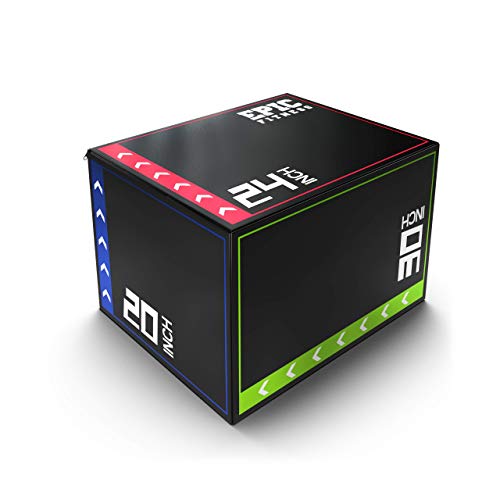
- 20-, 24-, and 30-inch height options
- High-density foam feels less intimidating
- Supports step, arm, and core exercises
Best For: Cushioned training for confident users
Stable Starter Pick

- Three height options
- Anti-slip surface
- 450-pound capacity
Best For: Home users wanting a durable adjustable wooden box
Joint-Friendly Option
REP Fitness Soft Foam Plyo Box Set

- Impact-absorbing foam
- Multiple stackable heights
- Non-slip vinyl cover
Best For: Low-impact step training with gradual height progression
Heavy-Duty Platform

- 12-, 18-, and 24-inch sizes
- Steel trapezoidal design
- Rubber feet and textured top
Best For: Home gyms wanting sturdy high-capacity platforms
Best Soft Adjustable Option – REP Soft Plyo Box
For seniors comparing plyometric boxes for seniors, the REP Soft Plyo Box offers three height choices and a padded foam surface that can make step-ups, box squats, and balance exercises more approachable. Its 16-, 20-, and 24-inch configurations allow users to begin at a lower height and progress gradually.
Best For: Seniors who want a versatile, cushioned box for controlled step-ups and low-impact functional training.
Pros:
- Three height options: 16, 20, and 24 inches.
- Dense foam core and textured, anti-slip vinyl cover.
- Lightweight, stackable, and shipped fully assembled.
- Supports up to 400 pounds.
Cons:
- The lowest available height is still 16 inches, which may be high for some beginners.
- Its larger 24-inch setting may be unnecessary for senior-focused workouts.
The REP is a strong choice when cushioning, stability, and height flexibility matter. Seniors should begin with supported step-ups rather than jumps and choose a height that allows secure foot placement.
Best Low-Height Wood Option – CAP Barbell 3-in-1 Plyometric Box
The CAP Barbell box is one of the more approachable choices among plyometric boxes for seniors because it rotates between 12-, 14-, and 16-inch heights. The lower profile can suit step-ups, balance drills, and controlled conditioning, while the textured surface helps with foot traction.
Best For: Seniors seeking a compact, low-height box for step-ups, agility drills, and gradual training.
Pros:
- Offers relatively low 12-, 14-, and 16-inch height settings.
- Textured surface supports more confident foot placement.
- Interlocking construction, countersunk screws, and smooth edges.
- Built-in carry handles make repositioning easier.
Cons:
- Engineered-wood construction does not provide the cushioned landing of a foam box.
- Its 300-pound maximum recommendation is lower than some alternatives.
With its low starting height and carrying handles, this CAP model is well suited to controlled senior workouts. It is best used for step-ups and strength exercises rather than unsupervised jumping, particularly for users concerned about hard landings.
Best Cushioned High-Capacity Choice – Yes4All Soft-Padded Plyo Box
For seniors looking at plyometric boxes for seniors, the Yes4All Soft-Padded Plyo Box combines a wooden core with EVA foam and a vinyl cover. Its 16-, 14-, and 12-inch settings support progressive step-up work, while the padded exterior helps provide a more forgiving surface than an uncovered wood box.
Best For: Seniors who prioritize cushioning, stability, and a high stated weight capacity for step-ups and strength work.
Pros:
- Three height options: 12, 14, and 16 inches.
- Wooden core covered with EVA foam and vinyl.
- Non-slip, waterproof PVC surface with impact-absorbing foam.
- Maximum stated weight capacity of up to 450 pounds.
Cons:
- The box is 16 inches long by 14 inches wide, offering a more compact stepping area.
- It is designed for multiple exercises, but the supplied details do not specify built-in handles.
The Yes4All is a practical option for seniors who want low height settings and a cushioned feel without giving up a supportive wooden core. Start at 12 inches and use it for deliberate step-ups, box squats, or supported balance work.
Best for Large Step-Up Surface – BalanceFrom Foam Plyo Box
The BalanceFrom Foam Plyo Box provides a large 20-by-24-inch footprint and rotates between 20-, 24-, and 30-inch heights. For seniors considering plyometric boxes for seniors, its foam construction and textured anti-slip surface may be useful for step-ups and balance-focused exercises, although the listed heights are relatively tall.
Best For: Seniors who need a broad platform and softer foam construction and can safely manage taller step-up heights.
Pros:
- Large 20-by-24-inch platform with three height configurations.
- High-density foam provides softer impact and can minimize shin scrapes.
- Textured anti-slip surface supports jumps, landings, and step-ups.
- Lightweight 16-pound design is easy to move and store.
Cons:
- The lowest listed height is 20 inches, which may be too high for many seniors.
- The supplied details list a maximum weight recommendation of 60 pounds, limiting suitability for most adult users.
The large surface and padded construction are appealing, but the stated 60-pound weight recommendation is a major limitation for senior buyers. Verify that specification before purchase and consider this model only when its height and weight guidance match the intended user.
Stable Step Training – GanFindX 12-Inch Steel Plyometric Box
For seniors comparing plyometric boxes for seniors, this 12-inch steel platform is better suited to controlled step-ups and strength exercises than high-impact jumping. Its wide base, non-slip top, and rubber feet are designed to help keep the box steady during training.
Best For: Seniors who want a compact, sturdy platform for step-ups, squats, push-ups, and low-height conditioning exercises.
Pros:
- Low 12-inch height can support more approachable step-training routines.
- Heavy-duty steel construction supports up to 500 pounds.
- Textured top and four rubber feet help provide traction and reduce sliding.
- Stackable design and simple setup make storage more convenient.
Cons:
- Steel construction offers less cushioning than a foam box.
- Only one 12-inch height is listed, limiting progression options.
- Its focus on stability and strength may be less suitable for users seeking softer impact during exercises.
The GanFindX is a practical choice when stability and a lower step height matter most. Seniors should still use it for controlled movements and choose exercises appropriate to their balance and mobility.
Adjustable Foam Comfort – BalanceFrom 3-in-1 Foam Plyo Box
For shoppers seeking plyometric boxes for seniors, this 3-in-1 foam box offers three height options and a softer surface than hard wooden or metal platforms. It can be rotated between 16, 20, and 24 inches for step-ups, balance work, and other general fitness exercises.
Best For: Seniors who value softer impact, portability, and the ability to adjust training height as their confidence changes.
Pros:
- Three height options—16, 20, and 24 inches—support varied routines.
- High-density foam provides softer impact and may reduce shin scrapes.
- Textured anti-slip surface is designed to help with footing.
- At 10 pounds, it is relatively easy to move and store.
Cons:
- The lowest listed height is 16 inches, which may still be high for some users.
- Foam may not feel as rigid as a steel platform during weight-bearing exercises.
- The product is described for training use, so users should prioritize controlled step-ups over jumping if balance is a concern.
The BalanceFrom stands out for its softer foam build and flexible height selection. Its 16-inch setting is the sensible starting point for many users, with higher positions reserved for those who feel secure and stable.
Soft Multi-Level Training – 3-in-1 EPE Foam Plyometric Box
This 3-in-1 foam option is worth considering among plyometric boxes for seniors because its high-density EPE foam core is less intimidating than a hard box. It provides 20-, 24-, and 30-inch training levels for step-ups, elevated push-ups, and other exercises, although the lowest height may be more appropriate for confident users.
Best For: Seniors who want a cushioned, versatile box for modified strength and core exercises rather than impact-heavy jumping.
Pros:
- Foam construction provides a softer surface around shins and knees.
- Three height settings allow different exercise variations.
- Can support elevated push-ups, knee touches, and lower-body exercises.
- PVC leather cover is designed to be durable and easy to clean.
Cons:
- Its lowest listed height is 20 inches, which may be too tall for some seniors.
- At 16 pounds, it is heavier than the 10-pound BalanceFrom model.
- The supplied notes do not list a maximum user weight.
This box offers useful exercise variety and a softer feel, but its 20-inch minimum height deserves careful consideration. It is likely a better fit for seniors who already have comfortable step-up height and balance.
Stable Starter Pick – Fitvids Wooden Plyo Box
For shoppers comparing plyometric boxes for seniors, the Fitvids wooden box offers three height options in one compact design. Its anti-slip surface and lower height choices can support step-ups or carefully scaled training, though users should choose a comfortable height and prioritize stability.
Best For: Home users who want a durable wooden box with adjustable height options.
Pros:
- Three height options provide workout variety.
- Anti-slip surface is designed to support stability.
- Durable plywood construction supports up to 450 pounds.
- Assembly takes about 10 minutes.
Cons:
- Wood construction is less impact-absorbing than foam.
- Users must select an appropriate height from the available options.
The Fitvids is a practical choice when firm support and a high weight capacity matter. For senior-friendly use, its lower 12-inch option may be the most approachable starting point, provided the user is comfortable stepping onto a rigid platform.
Joint-Friendly Option – REP Fitness Soft Foam Plyo Box Set
The REP Fitness foam set is a strong contender among plyometric boxes for seniors because its impact-absorbing foam and non-slip vinyl cover are designed to reduce harsh contact during training. The stackable format also lets users begin with shorter platforms for step-ups and balance work.
Best For: Users seeking softer surfaces and adjustable heights for low-impact step training.
Pros:
- Impact-absorbing foam helps protect joints and shins.
- Stackable 4-, 6-, 12-, 20-, and 24-inch boxes allow height adjustment.
- Non-slip, wipe-clean vinyl covers resist moisture and tears.
- Built-in handles make transport easier.
Cons:
- The supplied details list a 24-pound maximum weight capacity, so capacity should be checked carefully before use.
- Foam platforms may not provide the same rigid feel as a wooden or steel box.
Among these options, REP’s soft construction is the most focused on cushioning and gradual progression. Its shorter sections can be useful for controlled step-ups, while the listed weight capacity makes verifying suitability especially important.
Heavy-Duty Platform – VEVOR Steel Plyo Box Set
For shoppers seeking plyometric boxes for seniors with a firm, stable platform, the VEVOR set includes 12-, 18-, and 24-inch boxes. Rubber feet and a textured silicone top are intended to improve grip, while the steel construction provides a substantial base for step-ups and other exercises.
Best For: Home gyms needing sturdy steel platforms with three height choices.
Pros:
- Three sizes support different training heights.
- Trapezoidal steel design is built for stability.
- Rubber feet and textured silicone top provide anti-slip features.
- 500-pound weight capacity and powder-coated steel support durability.
Cons:
- Steel construction is firm and does not provide foam’s impact absorption.
- The 24-inch option may be too high for cautious or beginner users.
- Assembly is required.
VEVOR suits buyers who prioritize a solid, high-capacity platform and want multiple sizes in one set. For senior users, the 12-inch box is the logical starting point, with progression based on balance, comfort, and control.
How We Picked the Best Plyometric Boxes for Seniors
We focused on features that matter for controlled, low-impact training rather than maximum jump height. Our comparison considers stability, surface traction, padding, construction, height choices, ease of storage, and how practical each box is for step-ups and other senior-friendly exercises.
Soft foam and padded boxes generally provide a more forgiving surface if a shin contacts the edge, while wooden and steel models can offer firmer support when properly positioned. However, no box is automatically safe: users should select a height they can step onto comfortably and use a stable floor with adequate clearance.
Quick Comparison
| Box type | Best suited for | Main advantage | Watch for |
|---|---|---|---|
| Soft foam | Low-impact home exercise | Padded edges and lighter handling | May shift or compress without a grippy base |
| Padded wood-core | Regular step-ups and strength work | Balance of cushioning and support | Heavier than all-foam designs |
| Wooden | Firm, stable training surfaces | Rigid construction and multiple orientations | Hard edges require careful technique |
| Steel | Durability and compact storage | Strong frame and often adjustable height | Can feel less forgiving if misstepped |
Key Buying Factors for Plyometric Boxes for Seniors
Height and Adjustability
For most seniors, a lower platform is the sensible starting point. Choose a height that allows a controlled step-up without leaning heavily, twisting, or lifting the knee uncomfortably high. Multi-height and stackable designs make it easier to progress gradually.
Stability and Traction
Look for a broad footprint, non-slip feet or bottom surface, and a top that stays secure during slow step-ups. Test the box gently before use, especially on smooth flooring. A rubber mat can improve grip and protect the floor.
Padding and Surface Design
Foam or padded models may be preferable for users concerned about bumps and hard corners. Check whether the cover is easy to clean and whether the top remains firm enough for balance exercises. Excessively soft foam can feel unstable.
Size, Weight, and Storage
Measure the available training area and leave room to step off safely. Lightweight boxes are easier to move, while heavier models may stay planted better. Handles, stackability, and multiple orientations can make regular use more convenient.
Construction and Safe Use
Inspect seams, fasteners, feet, and the platform before every session. Begin with supported step-ups rather than jumps, keep movements slow, and consider holding a rail or exercising near a sturdy support. Consult a healthcare professional if balance, joint, or cardiac concerns affect exercise choices.
Who Should Buy Which Plyometric Boxes for Seniors?
Choose a soft foam box if cushioning, lighter weight, and low-impact drills are priorities. Choose a padded wood-core model if you want a softer exterior with a more supportive internal structure. Choose a wooden box if you prefer a firm platform and can manage hard edges safely. Choose a steel or stackable model if durability, adjustable heights, or compact storage matter most.
For many buyers, the best starting point is a low, stable, non-slip box used for step-ups rather than jumping. As confidence and strength improve, adjustable or multi-height Plyometric Boxes for Seniors can provide a practical path to gradual progression.
Related Posts:

