Push-up handles can make circuit training more comfortable by reducing wrist extension, improving hand placement, and creating extra range of motion. The right pair should also stay planted as you move quickly between exercises.
We’ve gathered 10 options ranging from simple fixed bars to rotating designs and heavy-duty stands. Use the guide below to match handle style, grip comfort, stability, and portability to your workouts.
Best 10 Push Up Handles for Circuit Training Picks for 2026
For circuit training that moves quickly between exercises, the Perfect Fitness Pushup Stands offer a stable, compact setup. Their non-skid platforms and padded grips support a more comfortable neutral wrist position, while the stacking design simplifies storage between sessions.
Best For: Home-gym circuit trainers who want straightforward, stable push-up handles with easy storage.
Pros:
360-degree stability with non-skid platforms
Padded grips help keep wrists in a neutral position
Handles stack for convenient storage
Rated for up to 120 kg
Cons:
Fixed handles do not provide rotating movement
Designed specifically as a single pair of push-up stands
These are a practical choice when stability, wrist comfort, and simple storage matter more than adjustable or rotating mechanics.
These READAEER push up bars suit circuit training when you want adjustable hand angles and a wider range of motion. Rotating handles, silicone grips, and large rubber bases are designed to support comfortable, secure repetitions across varied exercises.
Best For: Users seeking rotating push up handles with broad bases and adjustable exercise angles.
Pros:
Rotating handles adjust to different exercise angles
Ergonomic silicone grips help distribute pressure
Large 8.2-inch non-slip bases support stability
Product notes list support up to 400 pounds
Cons:
Plastic construction may feel less substantial than heavier materials
At 1060 g, the pair is relatively weighty for travel
Adjustment requires pressing a button on each handle
The adjustable rotation makes this a versatile option for circuit sessions, particularly if fixed bars feel restrictive around the wrists or elbows.
The Perfect Pushup Rotating handles are built for circuit training where smooth movement and natural arm alignment are priorities. Their ball-bearing rotation, rubber grips, and non-slip bases provide a stable platform for users ranging from beginners to advanced trainees.
Best For: Lifters who want classic rotating push up handles for upper-body circuits and varied training levels.
Pros:
Ball-bearing system provides smooth, full rotation
Rotating movement encourages natural arm and wrist alignment
Rubber grips and non-slip bases support secure workouts
Rated for up to 300 pounds
Cons:
Rotating mechanics may not suit users who prefer fixed handles
No warranty is listed in the supplied product details
This is a well-rounded pick for circuit routines that alternate pressing movements and emphasize comfortable, fluid upper-body training.
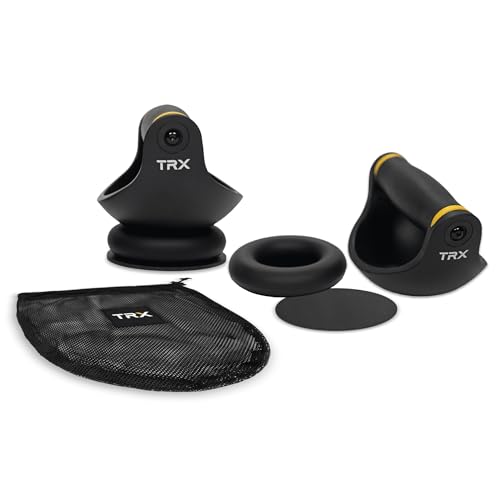
TRX Push-It handles are useful for circuit training because they go beyond standard push-ups. The compact set includes stabilizer rings and silicone pads, while the ergonomic grips support movements such as mountain climbers, planks, tricep dips, ab rolling, and yoga.
Best For: At-home or travel circuits that combine push-ups with core, mobility, and upper-body movements.
Pros:
Supports push-ups, mountain climbers, planks, and tricep dips
For circuit training, the SELEWARE push up bars combine angled handles with wide non-slip rubber pads. That setup can help you maintain a more natural wrist position while moving through push-ups, L-sits, handstands, and other bodyweight exercises.
Best For: Users who want cushioned, wrist-conscious push up handles for circuit training on varied indoor surfaces.
Pros:
Angled ergonomic design supports a more natural hand position and deeper push-ups.
Oversized rubber pads provide stability on hardwood, tile, and carpet.
Soft 1.6-inch rubber-textured grips help reduce palm discomfort and calluses.
Arrive assembled and are lightweight for storage or travel.
Cons:
Plastic construction may be less appealing to shoppers seeking metal handles.
The angled design may take some adjustment compared with standard straight grips.
Choose this pair if comfort, surface grip, and quick portability matter most in a circuit-training setup. Its design also supports exercises beyond standard push-ups, giving it useful versatility for upper-body sessions.
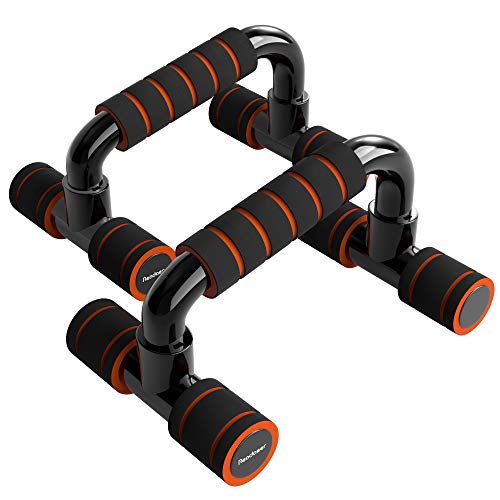
The 5BILLION push up bars are built for circuit training that alternates strength and cardio-focused movements. Their elevated, neutral-grip design supports deeper push-ups, while foam-wrapped handles and a compact assembly make them practical for home, gym, office, or outdoor workouts.
Best For: Beginners and intermediate users seeking portable push up handles for circuit-style chest, triceps, abdominal, and back training.
Pros:
Neutral I-shaped architecture is designed to reduce wrist strain.
High-density foam handles absorb sweat and provide a comfortable grip.
Compact, lightweight design can be assembled or disassembled for storage.
Includes a workout guide for different training modes.
Cons:
Assembly is required before use.
Fixed handles offer less grip-position flexibility than adjustable equipment.
This is a sensible circuit-training option when portability and guided versatility are priorities. The combination of elevated range of motion and padded handles suits repeated rounds, provided you are comfortable with basic setup.
READAEER push up bars keep circuit-training equipment simple and portable. The cushioned foam grips, non-skid bases, and lightweight two-piece design support repeated push-up sets at home, in the gym, at the office, or outdoors.
Best For: Travelers and home users who want lightweight push up handles for straightforward upper-body circuits.
Pros:
Cushioned foam grips help reduce wrist strain during push-ups.
Non-skid bases are designed to prevent movement during exercise.
Lightweight construction makes the pair easy to carry and store.
Targets the chest, shoulders, triceps, and back.
Cons:
Basic assembly is required, and detailed instructions are not provided.
The supplied specifications list a low 1.1-pound maximum weight recommendation, so verify suitability before use.
READAEER is a straightforward pick for low-fuss circuit training where portability and padded contact points matter. Its simple design works well for standard upper-body routines, but the unusual listed weight recommendation deserves careful attention.
For circuit training, the Kipika push up bars provide a raised hand position that can support deeper push-ups while reducing wrist and elbow strain. Their compact design and portable build make them practical for home, gym, office, or outdoor sessions.
Best For: Beginners and experienced users who prioritize grip comfort, portability, and wrist-friendly floor exercises.
Pros:
Thickened soft plastic handles offer a comfortable, textured grip.
Angled handles support a more natural range of motion.
Anti-skid base pads help keep the bars stable on different floor surfaces.
Lightweight, compact design requires no assembly and is easy to carry.
Cons:
Plastic construction may be less appealing to shoppers seeking metal handles.
The fixed handle design does not provide adjustable positions.
The Kipika is a straightforward choice for circuit training when comfort and easy transport matter most. It offers useful elevation and stability without adding setup or storage complexity.
These stainless steel push up handles are built for demanding circuit training, with a triangular base designed for stability and a stated weight capacity of up to 500 pounds. The fully assembled pair is easy to take between the gym and outdoor workouts.
Best For: Users who want a sturdy metal construction and a high stated weight capacity for strength-focused circuits.
Pros:
Heavy-duty stainless steel construction supports up to 500 pounds.
Triangular design is intended to improve stability during use.
Aluminum grips do not retain odor caused by hand sweat like some foam grips.
Four rubber anti-slip pads per handle help protect floors and limit movement.
Cons:
Metal construction may feel less cushioned than soft foam or plastic grips.
Fixed handles offer no adjustment for hand position.
Choose this pair if durability and stability take priority in your circuit setup. Its no-assembly design also makes it convenient for quick transitions between exercises and locations.
For shoppers building a practical circuit-training kit, these polypropylene push up stands offer elevated hand placement, rubber feet, and a stated 300-pound weight capacity. They can be assembled or disassembled for storage and transport to home or gym workouts.
Best For: Users seeking a lightweight, budget-conscious option with a sturdy plastic structure and portable storage.
Pros:
Elevated position can increase range of motion and target upper-body muscles.
Rubber feet help prevent slipping across different floor types.
Lightweight design weighs about 1.2 pounds and is easy to transport.
Stated weight capacity is up to 300 pounds.
Cons:
The product arrives unassembled and requires user assembly.
Polypropylene construction may not suit shoppers specifically seeking steel bars.
The fixed handle design does not allow position adjustments.
These stands are a sensible option for straightforward floor circuits where portability and storage convenience matter. Their included rubber feet and ergonomic design add stability and support during repeated push-up sets.
How We Picked the Best Push Up Handles for Circuit Training
We focused on features that matter during repeated sets and fast transitions: base stability, handle comfort, construction, usable range of motion, portability, and ease of storage. Fixed bars generally offer predictable positioning, while rotating models may allow the wrists and shoulders to move more naturally. We also considered whether each design suits beginners, home-gym users, or more demanding strength circuits.
Quick Comparison
Handle style
Best for
Main advantage
Potential trade-off
Fixed low-profile bars
Fast-paced circuits
Simple, stable setup
Less wrist and shoulder adjustment
Rotating handles
Users seeking freer hand movement
Can reduce forced wrist positioning
Requires more control and maintenance
Wide-base stands
Heavy or advanced training
Greater planted stability
Bulkier to store
Foam- or soft-grip designs
Long sessions and beginners
More comfortable contact
Grip material may wear sooner
Key Buying Factors for Push-Up Handles for Circuit Training
Stability and Floor Contact
Look for broad bases, non-slip feet, and a rigid frame. Handles should not rock, slide, or twist when you shift weight quickly. On smooth floors, rubberized contact points are especially important.
Grip Comfort and Height
Cushioned or textured handles can help during high-repetition circuits, but they should not feel soft enough to wobble. A taller handle creates more clearance and may increase range of motion, while a lower profile is often easier to control.
Fixed Versus Rotating Movement
Rotating handles can let your hands turn as you press, which some users find more comfortable for wrists and shoulders. They also add moving parts, so check that the rotation feels smooth and controlled rather than loose.
Weight Capacity and Construction
Choose steel or reinforced construction when you want maximum rigidity. Confirm the stated weight capacity and remember that dynamic movements can place more stress on the handles than a slow, controlled repetition.
Portability and Storage
For circuits performed in different rooms or outdoors, prioritize lightweight, compact bars that assemble quickly. If the handles will stay in a home gym, a heavier wide-base model may be worth the extra bulk.
Who Should Buy Which Push Up Handles for Circuit Training?
Beginners: Choose stable fixed bars with comfortable grips and a moderate height.
High-repetition circuit trainers: Look for non-slip bases and padded or textured handles that remain comfortable through multiple rounds.
Wrist- or shoulder-conscious users: Consider rotating handles, but begin with controlled repetitions and verify that the mechanism feels secure.
Advanced strength trainees: Favor rigid, heavy-duty stands with a wide base and a clearly stated load rating.
Traveling or space-conscious users: Select lightweight bars that separate or store easily without sacrificing base stability.
Before buying, compare the handle height, footprint, grip material, and floor compatibility with your normal training space. The best option is the one that stays secure and comfortable throughout your entire circuit.