Indoor training can make distance, pace, heart rate, and reaction work harder to measure than outdoor running. The right sensor, watch, training pod, or purpose-built shoe can help you get more useful feedback from every session.
We’ve gathered 10 options for treadmill runners, performance-focused athletes, coaches, and anyone building a more structured indoor workout routine.
Best 10 Running Foot Pod for Indoor Training Picks for 2026
If you want a purpose-built running foot pod for indoor training, the COROS POD 2 is designed to measure movement from your foot or body and send responsive pace data to a compatible COROS watch. It can calculate treadmill and indoor-track distance using motion-based stride analysis, without relying on GPS.
Best For: COROS watch users who prioritize responsive pace and indoor distance tracking.
Pros:
Provides more responsive instant pace from foot-based accelerometer data.
Measures treadmill and indoor-track distance using automatic stride calibration.
Includes both shoe and waistband clips, a charging dock, cable, and carry bag.
Offers up to 28 hours of battery life.
Cons:
Only compatible with COROS watches, except the COROS PACE 1.
It is not a standalone watch or display.
The COROS POD 2 is the most directly aligned option here for indoor running. Its main limitation is compatibility: it makes the most sense if you already use a supported COROS watch.
The Garmin HRM 600 is a heart-rate strap that also sends pace and distance for treadmill and indoor-track runs to a compatible smartwatch. It is worth considering as a broader training sensor if you want indoor running data alongside heart rate, HRV, and running-dynamics metrics.
Best For: Data-focused runners who want indoor pace and distance plus heart-rate and form metrics.
Pros:
Sends treadmill and indoor-track pace and distance to a compatible smartwatch.
Provides real-time heart rate and HRV data.
Supports running dynamics such as stride length, vertical oscillation, and ground contact time balance with a compatible watch.
Offers a machine-washable strap and up to two months of rechargeable battery life.
Cons:
It is a chest strap rather than a dedicated shoe-mounted foot pod.
Several running-dynamics features require a compatible smartwatch.
Fit depends on choosing the appropriate strap size.
The HRM 600 is a versatile choice for indoor training, especially when heart-rate and running-form data matter as much as pace. Runners seeking a simple foot-mounted sensor may prefer a dedicated pod instead.
The BlazePod Reaction Training Kit is not a conventional running foot pod for indoor training; instead, it uses four light-up smart pods and an app for speed, agility, reaction, and cognitive drills. It can complement indoor running sessions when your goal is athletic movement and measurable reaction work rather than pace or distance tracking.
Best For: Athletes, coaches, trainers, and therapists building reaction, agility, balance, and cognitive drills.
Pros:
Includes four pods for solo or group training.
App access provides expert-created drills and customizable sessions.
Supports speed, reaction time, balance, focus, and cognitive agility work.
Splashproof pods are designed for flexible training locations.
Cons:
Does not track treadmill pace or running distance like a foot pod.
Requires the app for its training features.
It is a drill and reaction system rather than a running sensor.
Choose BlazePod when indoor training means structured reaction and agility work. It is a poor fit for runners specifically seeking continuous pace or distance data, but a useful addition to broader performance training.
The Garmin Forerunner 35 is a simple GPS running watch rather than a dedicated running foot pod for indoor training. It tracks running distance, pace, and location outdoors, while its wrist-based heart-rate and activity features provide a basic training platform for runners who want an all-in-one watch.
Best For: Runners seeking a straightforward GPS watch with basic activity and connected features.
Pros:
Tracks how far, how fast, and where you run using GPS.
Estimates wrist-based heart rate throughout the day and night.
Provides step, calorie, and intensity-minute tracking.
Offers smartphone notifications and automatic Garmin Connect uploads.
Cons:
It is not a foot pod and the supplied notes do not specify treadmill distance tracking.
The model dates from 2016.
Its battery life is listed at up to nine days, shorter than some dedicated sensors in workout-use comparisons.
The Forerunner 35 is best viewed as a basic running watch, not an indoor foot-pod solution. It may suit runners who primarily train outdoors and want simple GPS and activity tracking, but indoor-distance specialists should look elsewhere.
The BlazePod Soccer Reaction Training Kit is a specialized option for indoor training sessions that build quick feet, awareness, ball control, and reaction speed. While it is not a running foot pod for indoor training in the sensor-tracking sense, its four smart light pods and app-based drills can add variety to agility and movement work.
Best For: Soccer players and coaches who want structured reaction, footwork, and agility drills indoors or outdoors.
Pros:
Includes four pods, a charging base, travel case, and app access.
Offers football-focused drills for first touch, scanning, 1v1 defense, and ball control.
Compact, weather-resistant design suits home, gym, or pitch use.
Two-year manufacturer warranty and performance data support ongoing training.
Cons:
Designed primarily for soccer reaction training rather than measuring running pace or distance.
App access is central to using the soccer-specific drill library.
This kit makes the most sense when your indoor training goals center on reactive footwork and soccer decision-making. Choose a dedicated running sensor instead if you mainly need treadmill pace, distance, or running-dynamics data.
The Garmin HRM 600 is the strongest match here for runners seeking a running foot pod for indoor training, although it is a chest-worn heart-rate monitor rather than a foot-mounted pod. It can send pace and distance for indoor-track and treadmill runs, while compatible Garmin devices can use its running-dynamics data.
Best For: Data-focused runners who want indoor pace and distance, heart-rate tracking, and additional running metrics.
Pros:
Sends pace and distance for indoor track and treadmill runs to compatible Garmin watches.
Provides real-time heart rate and HRV data to compatible devices, equipment, and apps.
Supports running dynamics such as stride length, vertical oscillation, and ground contact time balance with a compatible smartwatch.
Records workouts when a watch cannot be worn and offers up to two months of battery life.
Cons:
Running-dynamics features require a compatible smartwatch.
It is a chest strap, not a standalone foot-mounted sensor.
Compatibility with non-Garmin equipment and apps may vary.
For indoor running, the HRM 600 combines treadmill and indoor-track pace data with broader performance metrics in one wearable. Verify device compatibility before buying, especially if you do not use a compatible Garmin smartwatch.
The Vibram FiveFingers V-Run is not a running foot pod for indoor training, but it can complement indoor treadmill work for runners who prefer a minimalist, close-to-the-ground feel. Its zero-drop profile, individual toe pockets, and 4mm midsole are designed for natural-feeling movement rather than workout data collection.
Best For: Experienced minimalist runners who want lightweight footwear for treadmill and road running.
Pros:
Surface recommendation includes both road and treadmill use.
Zero-drop construction and individual toe pockets encourage a close-to-the-ground feel.
Perforated mesh and Lycra upper provides ventilation and flexibility.
Dual-compound rubber outsole offers traction on pavement and similar surfaces.
Cons:
Provides no pace, distance, heart-rate, or running-dynamics tracking.
Minimal cushioning may not suit runners seeking a highly cushioned shoe.
Not water resistant.
The V-Run is best viewed as an indoor-training shoe option, not a sensor or foot pod. Its minimalist geometry may appeal to runners already comfortable with low cushioning, while others may prefer a more supported treadmill shoe.
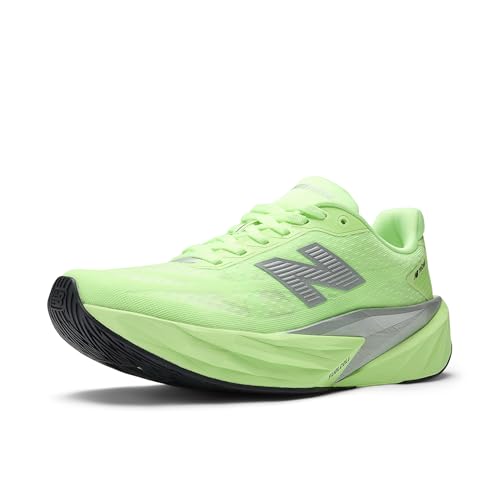
For runners seeking a running foot pod for indoor training, the New Balance FuelCell Rebel V5 is a lightweight road-and-treadmill shoe built around a responsive feel. Its FuelCell foam, breathable mesh upper, and wider geometric midsole balance propulsion, cushioning, and stability for varied workouts.
Best For: Treadmill sessions, everyday road running, and runners who prefer a responsive, highly cushioned neutral shoe.
Pros:
FuelCell foam provides a propulsive, energetic underfoot feel.
Wider geometric midsole adds cushioning and stability.
FantomFit bonded support helps create a secure feel without much bulk.
Breathable mesh upper suits active running sessions.
Cons:
It is not water resistant.
Its neutral design does not provide pronation correction.
The Rebel V5 is a strong choice when indoor training calls for a versatile shoe that feels quick while retaining substantial cushioning. It is best suited to runners who want one trainer for both steady runs and shorter efforts.
The PUMA Softride Sophia is a practical option for anyone comparing a running foot pod for indoor training with a more comfort-focused running shoe. Softride foam supplies substantial cushioning, while the bootie construction and cage-inspired upper details support an easy, secure fit.
Best For: Treadmill training, comfortable everyday wear, and runners who prioritize maximum cushioning.
Pros:
Softride foam is designed for pronounced cushioning and all-day comfort.
Bootie construction supports easy slip-on comfort.
Zoned heel and toe rubber provide traction during training.
Caging details add a distinctive lacing structure and mixed-material look.
Cons:
It is not water resistant.
The platform-style design may feel less performance-focused than a lightweight trainer.
Choose the Softride Sophia if cushioning and comfort matter more than a streamlined racing feel. Its road-and-treadmill surface recommendation makes it suitable for indoor workouts, especially when a softer, more fashion-oriented trainer is preferred.
For indoor training where balance and ground awareness matter, the Vibram FiveFingers KSO offers a minimalist alternative to conventional running shoes. Its zero-drop platform, five-toe geometry, and 3.5 mm XS Trek rubber outsole are designed for flexible, close-to-the-surface movement.
Best For: Indoor gym training, balance-focused movement, and users comfortable with minimalist, zero-drop footwear.
Pros:
Zero-drop construction supports a flat heel-to-forefoot platform.
Five-toe geometry allows individual toe separation.
XS Trek rubber with razor siping is designed for multidirectional traction.
Breathable mesh and nylon materials keep the shoe lightweight and ventilated.
Cons:
The moderate cushioning and thin 3.5 mm outsole provide less protection than conventional trainers.
The toe-pocket design may require an adjustment period.
It is not water resistant.
The KSO stands apart from cushioned running shoes by emphasizing flexibility, stability, and ground connection. It is a better fit for experienced minimalist-shoe users and gym sessions than for runners seeking maximum impact absorption.
How We Picked the Best Running Foot Pod for Indoor Training
We evaluated these products by the type of indoor training problem they solve: measuring treadmill distance, tracking heart rate, supporting reaction and agility drills, recording basic runs, or improving ground feel and movement control. We also considered ease of setup, compatibility, training versatility, and whether each product has a clear use case for indoor workouts.
Because the selection includes sensors, watches, smart training pods, and running shoes, the best choice depends more on your training goal than on a single overall ranking. A foot pod may improve pace and distance data, while a heart-rate monitor or reaction system serves a different purpose.
Quick Comparison
Training need
Best product type
What to prioritize
Treadmill distance and pace
Running sensor or GPS watch
Indoor calibration and reliable motion data
Heart-rate tracking
Chest strap monitor
Comfort, connectivity, and accurate readings
Reaction and agility drills
Smart light pods
App variety, brightness, portability, and expandability
Natural movement and foot strength
Minimalist running shoe
Fit, flexibility, transition time, and surface comfort
General indoor running
Running shoe or basic GPS watch
Cushioning, stability, simplicity, and fit
Key Buying Factors for a Running Foot Pod for Indoor Training
Compatibility and Connectivity
Check whether the sensor pairs with your watch, treadmill app, phone, or fitness platform. ANT+, Bluetooth, and manufacturer-specific features may not work equally across devices. If you already use a Garmin, COROS, or another ecosystem, staying within that system can simplify setup and data syncing.
Accuracy and Calibration
A Running Foot Pod for Indoor Training should provide consistent pace and distance when GPS is unavailable. Calibration, stride changes, treadmill incline, and running form can affect results. Look for products that support calibration or use motion data designed specifically for indoor running.
Heart-Rate and Workout Feedback
For interval sessions, a chest strap can offer more responsive heart-rate data than many wrist-based trackers. Consider battery life, cleaning requirements, strap adjustment, and whether the monitor broadcasts to your preferred watch or training app.
Training Format and Space
Smart pods are useful when you have room for lateral movement, acceleration, and reaction drills. Confirm that the kit’s exercises match your available space and coaching needs. For a small home gym, a treadmill sensor or compact wearable may be more practical.
Shoe Fit and Transition
Minimalist and barefoot-style shoes require a gradual transition, especially if you normally train in heavily cushioned footwear. For treadmill running, prioritize a secure fit and comfortable upper before choosing based solely on weight or flexibility.
Who Should Buy Which Running Foot Pod for Indoor Training?
Choose a running sensor if your priority is more useful treadmill pace and distance data. Choose a chest-strap monitor if heart-rate accuracy matters for intervals, conditioning, or zone-based training.
Choose smart reaction pods for athlete development, group sessions, soccer drills, or cognitive agility work. Choose a GPS running watch if you want a straightforward device for recording workouts and basic training metrics.
Choose minimalist shoes if you specifically want more ground feel and are prepared to adapt gradually. For general indoor miles and everyday comfort, a conventional cushioned running shoe is usually the safer starting point. Before buying, match the product to your equipment, training surface, and measurable goal rather than choosing by brand or appearance alone.