Running parachutes can add progressive drag to sprints, helping athletes practice acceleration, top-end speed, and powerful running mechanics without bulky gym equipment.
We compared 10 popular resistance chutes by size, adjustability, belt design, portability, and intended user so you can choose the right training aid for solo workouts, team practice, or youth development.
Best 10 Running Parachutes for Outdoor Training Picks for 2026
Heavy-Resistance Pick

- 25–50 pounds of stated resistance
- Adjustable belt with 360-degree rotation
- Includes bag and one-year warranty
Best For: Higher-resistance sprint and explosive-power drills
Medium-Resistance Value
ND Sports 48-Inch Sprint Chute

- 48-inch medium-resistance design
- Adjustable waist harness
- Built for speed and strength drills
Best For: Simple sprint training on flat outdoor surfaces
Multidirectional Training Pick

- 15-pound stated resistance
- 360-degree free-motion rotation
- Mesh panels help limit tangling
Best For: Acceleration and directional drills across multiple sports
Portable Training Option

- 48-inch chute for running and sports
- Supports speed and acceleration work
- Includes a carrying bag
Best For: Portable general-purpose speed and conditioning sessions
Best All-Around Control

- 360-degree rotating belt supports directional sprints
- Quick-release buckle for acceleration bursts
- Mesh panels help stabilize the chute
Best For: Multi-sport athletes seeking versatile sprint drills
Best Lightweight Option

- Approximate resistance range of 12-33 pounds
- 20-42-inch adjustable waist belt
- Includes a lightweight carrying bag
Best For: Portable acceleration training for varied users
Best Durable Training Chute

- Approximately 15-30 pounds of resistance
- Waterproof, sun-blocking, quick-drying cover
- Mesh panel helps prevent cord tangling
Best For: Outdoor sprint sessions in variable conditions
Best Adjustable Drag Chute
56-Inch Speed Training Parachute

- 15–30 pounds of stated drag
- Velcro belt fits 20–42-inch waists
- Lightweight design with carrying pouch
Best For: Portable resisted sprint training for athletes and field-sport drills
Best Budget Chute for Kids
48-Inch Football Speed Trainer

- Made for children’s speed training
- 360-degree rotating belt
- Folds into a carrying bag
Best For: Youth soccer and football drills in parks or on outdoor fields
Best High-Resistance Option
FORZA Adjustable Speed Parachute
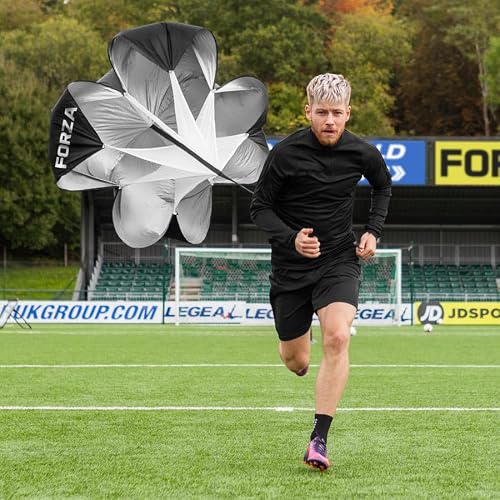
- Up to 50 pounds of stated resistance
- Quick-release belt for drill transitions
- One-year warranty and carry bag included
Best For: Advanced sprint, rugby, football, and conditioning sessions
Heavy-Resistance Pick – KUYOU 56-Inch Speed Chute
For runners comparing running parachutes for outdoor training, the KUYOU Speed Chute stands out for its larger 56-inch design and stated 25–50 pounds of resistance. Its adjustable belt and 360-degree rotation are useful for acceleration work, explosive-power drills, and directional movement.
Best For: Athletes who want stronger resistance for sprint, football, soccer, basketball, or general fitness training.
Pros:
- 56-inch chute provides 25–50 pounds of stated resistance.
- Adjustable 2-inch nylon belt fits almost any athlete.
- 360-degree belt rotation supports multidirectional running.
- Includes a carrying bag and one-year warranty.
Cons:
- Its stronger resistance may be more than beginners need.
- The listing describes a two-resistance-parachute style, which may add setup complexity.
The KUYOU is a practical choice when resistance intensity is a priority. The quick-release buckle and rotating belt add versatility for burst training and changes of direction.
Medium-Resistance Value – ND Sports 48-Inch Sprint Chute
ND Sports 48" Sprint Chute - Running Drill Parachute - Medium Resistance - Black - 1 Pack
Check Price On AmazonThe ND Sports 48-inch Sprint Chute is a straightforward option for running parachutes for outdoor training. It opens behind the runner to create wind resistance and is designed to provide an overload stimulus for speed and strength work.
Best For: Runners and field-sport athletes seeking a simple medium-resistance chute for sprint drills.
Pros:
- 48-inch design offers medium resistance.
- Designed to support speed and strength development.
- Adjustable waist harness is included in the design.
- Provides a hill-running-style resistance stimulus on flat ground.
Cons:
- No additional components are listed as included.
- The notes do not specify a carrying bag or warranty.
This ND Sports model keeps the concept simple: attach the harness, run, and work against the chute as it catches the wind. It suits buyers who want medium resistance without extra listed features.
Multidirectional Training Pick – SKLZ Speed Chute
SKLZ Speed Chute Resistance Parachute for Speed and Acceleration Training Grey / Black, 54-Inch
Check Price On AmazonThe SKLZ Speed Chute is a compact choice among running parachutes for outdoor training, with a 54-inch chute and stated 15-pound resistance. Its free-motion ring, quick-release buckle, and mesh panels make it particularly suited to structured acceleration and movement drills.
Best For: Multi-sport athletes who want lighter resistance and the ability to train in different directions.
Pros:
- 360-degree rotation supports movement in any direction.
- Quick-release buckle helps with acceleration bursts.
- Adjustable belt fits most athletes.
- Mesh panels help reduce string tangling and stabilize the chute.
Cons:
- Its stated 15-pound resistance is lighter than some larger-resistance models.
- No warranty is listed.
With one listed resistance level and a lighter 15-pound load, the SKLZ model is well suited to athletes emphasizing technique, acceleration, and directional changes rather than maximum drag.
Portable Training Option – LucaSng 48-Inch Power Chute
The LucaSng 48-inch Power Chute offers a basic, portable approach to running parachutes for outdoor training. It is designed to help develop speed, stamina, strength, and acceleration, and it comes with a carrying bag for transport between workouts.
Best For: Runners who want a lightweight chute for general speed and conditioning sessions.
Pros:
- 48-inch medium-size design for running and sports training.
- Intended to support speed, stamina, strength, and acceleration.
- Made with parachute cloth and netting.
- Includes a handy carrying bag.
Cons:
- The notes do not specify the resistance amount or adjustment levels.
- Specific belt features are not provided.
The LucaSng is a sensible pick for buyers focused on portability and core resistance-chute functionality. Consider it when a carrying bag matters more than detailed resistance customization.
Best All-Around Control – JAWKU Speed Parachute
For athletes comparing running parachutes for outdoor training, the JAWKU Speed Parachute combines adjustable resistance with freedom to sprint in different directions. Its rotating belt, mesh stabilization panels, and quick-release design support drills focused on acceleration, stamina, and explosive power.
Best For: Multi-sport athletes who want versatile directional sprint training.
Pros:
- Fully adjustable 2-inch nylon belt with a 360-degree rotating ring.
- Supports linear or parallel starts and directional sprinting.
- Quick-release buckle enables acceleration bursts and overspeed training.
- Mesh panels help reduce cord tangling and stabilize the chute.
Cons:
- The notes describe the resistance as mild, so it may not suit athletes seeking a very heavy load.
- No specific resistance range is provided.
This is a flexible choice for outdoor speed sessions when comfort, maneuverability, and multiple drill setups matter more than a specified resistance level.
Best Lightweight Option – Bfsmile 56-Inch Speed Chute
The Bfsmile 56-inch chute is a lightweight option for running parachutes for outdoor training, with an adjustable waist belt and carrying bag for simple transport. Its stated 12-33 pounds of resistance increases with running speed, making it suitable for progressive acceleration work.
Best For: Kids, youth, and adults who need a portable chute with a broad adjustable belt range.
Pros:
- 56-inch canopy is designed to produce approximately 12-33 pounds of resistance.
- Adjustable nylon belt fits waists from 20 to 42 inches.
- 360-degree rotating metal D-ring supports sprinting in any direction.
- Lightweight design includes a carrying bag for convenient storage and transport.
Cons:
- The product notes identify the target audience as adult despite describing use for children and youth.
- Hand-wash care is specified, requiring manual cleaning.
With its clearly stated resistance range, wide belt adjustment, and low carry weight, this chute is a practical pick for varied users and mobile training sessions.
Best Durable Training Chute – 56-Inch Powerchute
For runners and field-sport athletes choosing running parachutes for outdoor training, this 56-inch Powerchute pairs approximately 15-30 pounds of resistance with a portable storage bag. Its waterproof, sun-blocking, quick-drying cover and mesh panel are useful features for repeated outdoor sessions.
Best For: Outdoor sprint training where weather-ready materials and easy setup are priorities.
Pros:
- Provides approximately 15-30 pounds of resistance for strength and speed work.
- Premium cover is described as waterproof, sun-blocking, and quick-drying.
- Built-in mesh panel helps stabilize the chute and prevent cord tangling.
- Fully adjustable belt and included portable bag simplify use and transport.
Cons:
- The notes do not specify the belt’s waist-size range.
- Its resistance range may be less suitable for athletes wanting a very light or very heavy load.
This model stands out for practical outdoor use, offering a defined moderate resistance range and materials intended to handle changing training conditions.
Best Adjustable Drag Chute – 56-Inch Speed Training Parachute
For athletes comparing running parachutes for outdoor training, this 56-inch model combines adjustable waist support with a lightweight, portable design. Its stated 15–30 pounds of drag is intended to support acceleration, stride-frequency, and velocity drills for sports such as football, soccer, and track.
Best For: Athletes who want a compact, adjustable drag chute for sprint and interval training.
Pros:
- Provides approximately 15–30 pounds of drag for resisted sprint work.
- Adjustable Velcro belt fits waist sizes from 20 to 42 inches.
- Mesh panel helps keep lines organized and reduce tangling.
- Weighs about 160 grams and includes a carrying pouch.
Cons:
- It has no listed warranty.
- The supplied details describe the material as plastic, which may offer less premium feel than specialized technical fabrics.
This is a practical choice for athletes who prioritize portability and a broad waist adjustment range. The included pouch and tangle-control mesh make it convenient for taking between fields, parks, and gyms.
Best Budget Chute for Kids – 48-Inch Football Speed Trainer
This 48-inch model is a straightforward option among running parachutes for outdoor training, especially for younger athletes. The rotating belt supports sprinting in different directions, while resistance increases with speed for combined strength and speed work.
Best For: Kids’ soccer, football, and outdoor speed drills where simple setup and portability matter.
Pros:
- Designed for children and measures 48 inches in diameter.
- Waist belt rotates 360 degrees for multidirectional sprinting.
- Waterproof, sun-blocking, quick-drying polyester construction is described in the notes.
- Folds into the included carrying bag for outdoor use.
Cons:
- The manufacturer-recommended age range is 0–12 years, so it may not suit adult athletes.
- The listed maximum weight recommendation is 20 pounds.
- Using multiple chutes together is suggested, but that may require additional purchases.
With its child-focused specifications and rotating belt, this chute is best viewed as an introductory training aid rather than a high-load adult trainer. Its foldable format makes it easy to bring to practices and parks.
Best High-Resistance Option – FORZA Adjustable Speed Parachute
For athletes seeking running parachutes for outdoor training with a higher stated resistance ceiling, the FORZA chute is designed to add up to 50 pounds during sprint sessions. Its adjustable belt and quick-release mechanism support transitions between resisted runs and full-speed acceleration drills.
Best For: Adult and teen athletes, teams, and trainers seeking adjustable resistance for demanding speed and conditioning sessions.
Pros:
- Provides up to 50 pounds of stated resistance.
- One-size-fits-all adjustable belt accommodates a range of athletes.
- Quick-release system enables fast transitions between drills.
- Includes a drawstring carry bag and a one-year warranty.
Cons:
- At 2 pounds, it is heavier than the 160-gram model in this roundup.
- The higher resistance may be more than beginners need.
- The notes list a 54-inch size, but do not specify a method for adjusting resistance.
The FORZA stands out for its stated resistance capacity and quick-release belt. It is a strong fit for structured training programs that alternate resisted acceleration with unresisted speed work and need equipment suitable for repeated outdoor use.
How We Picked the Best Running Parachutes for Outdoor Training
We focused on the features that matter during repeated outdoor sprints: canopy size, resistance potential, belt comfort, attachment security, adjustability, and portability. A good chute should deploy consistently, stay connected during hard acceleration, and pack down easily between drills. We also considered whether each design is better suited to adults, young athletes, casual users, or structured team training.
Because wind, running speed, and canopy position affect the actual load, advertised resistance figures should be treated as general guidance rather than an exact strength measurement. Adjustable straps and quick-release systems are especially useful when multiple athletes share one training chute.
Quick Comparison
- 48-inch chutes: Often a practical choice for youth athletes, beginners, and moderate-resistance sprint drills.
- 56-inch chutes: Provide a larger canopy and can create more noticeable drag for stronger athletes, depending on wind and running speed.
- Adjustable designs: Make it easier to fit different users and vary training intensity.
- Quick-release belts: Help athletes detach the chute rapidly at the end of a rep or during certain drills.
- Carry bags: Improve portability for coaches, runners, and athletes who train at multiple locations.
Key Buying Factors for Running Parachutes for Outdoor Training
Canopy Size and Resistance
Larger canopies generally catch more air, but they are not automatically better. Choose a size that matches the athlete’s strength, sprint ability, and training goals. Beginners and younger runners may benefit from a smaller or medium-resistance chute, while advanced athletes may prefer a larger model for powerful acceleration work.
Belt Fit and Attachment
Look for a padded or secure waist belt that stays in place without restricting movement. Adjustable sizing is important for shared equipment. Check the connection point and harness stitching regularly, particularly if the chute will be used for frequent high-speed repetitions.
Weather and Training Surface
Resistance chutes work best in open outdoor spaces with enough room to accelerate safely. Wind can make the load unpredictable, so avoid crowded areas, wet or slippery surfaces, and conditions where the canopy could snag. Allow plenty of distance for deceleration after each run.
Portability and Durability
A lightweight chute with a storage bag is easier to carry to fields, tracks, and parks. Reinforced seams, durable fabric, and strong straps are worthwhile for teams or athletes who train often.
Who Should Buy Which Running Parachutes for Outdoor Training?
Beginners and recreational runners: Choose a compact, moderate-resistance model with a comfortable adjustable belt and simple setup.
Youth athletes: Prioritize a manageable 48-inch design, secure fit, and easy handling. Adult supervision is recommended during sprint drills.
Competitive sprinters and field-sport athletes: Consider a larger canopy or adjustable resistance system that supports progressive acceleration training.
Coaches and teams: Look for durable construction, quick-release functionality, adjustable sizing, and a carry bag so one chute can serve athletes with different body sizes and training needs.
Related Posts: