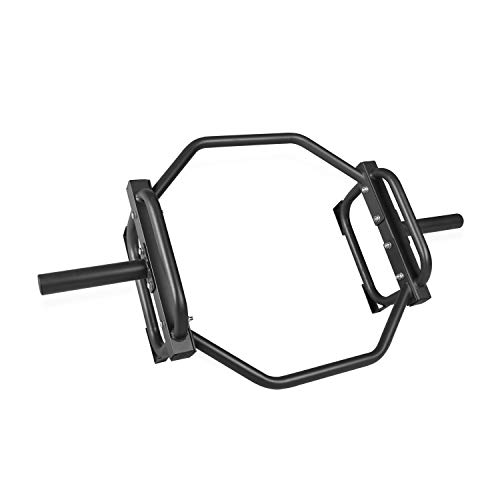
A good safety squat bar with handles can make heavy squats feel more stable, more comfortable, and easier to repeat with good form.
In this roundup, we focus on rackable options, load limits, handle design, and overall value so you can choose the right bar for your training style and setup.
Best 5 Safety Squat Bar with Handles Picks for 2026
If you want a safety squat bar with handles that feels built for hard training, this Titan Fitness option is a strong fit. Its rackable 50-inch length works with many power racks, while the 5-inch camber drop helps keep reps controlled and more comfortable for lifters who want to squat without as much shoulder stress.
Best For: Lifters who need a rackable safety squat bar with handles for heavy home-gym squats, accessory work, and more comfortable training around shoulder or back limitations.
Pros:
1,500 lb capacity and 58 lb bar weight for serious strength work
35mm rubber handles provide a secure, easy-grip feel
HeftyGrip shoulder and arm padding adds comfort and stability
Olympic sleeves and 14.75-inch loadable length per side
Cons:
Heavier and more specialized than a standard barbell
Not the most compact choice for smaller storage areas
May feel overbuilt if you only need light accessory work
This is a practical pick if you want a durable safety squat bar with handles that can handle big loads and still improve comfort under the bar. The cambered design and padded contact points make it especially appealing for lifters who need a little more joint-friendly support without giving up training intensity.
If you want a practical safety squat bar with handles alternative for deadlifts, this CAP trap bar is built for neutral-grip lifting, reduced back strain, and compact home-gym use. Its raised sleeves, sturdy tubular steel frame, and integrated feet make loading easier and more stable than a standard straight bar.
Best For: Lifters who want a space-saving trap bar for deadlifts, shrugs, and full-body strength work at home.
Pros:
Neutral handles offer a more comfortable pulling position
Integrated feet help protect floors and improve stability while loading
Compact 28 lb design fits well in smaller home gyms
500 lb suggested capacity supports most recreational lifters
Cons:
Not a true safety squat bar with handles for squatting movements
Loadable sleeve length is relatively short at 9.5 inches
May not suit very heavy advanced deadlift setups
This is a solid pick if your priority is a simple, durable trap bar rather than a specialized safety squat bar with handles. It delivers a comfortable neutral grip and easy storage, making it a smart choice for basic strength training.
If you want a safety squat bar with handles that feels stable under load, this 7-foot option is built for straightforward strength work. The 700 lb capacity, knurled grips, and padded neck support make it a practical pick for lifters who want comfort and control during squats and other barbell movements.
Best For: Lifters who want a simple, heavy-duty safety squat bar for squat-focused strength training with added handle grip and neck comfort.
Pros:
700 lb capacity suits serious free-weight training
Knurled handles improve grip and help reduce wrist strain
Comfortable neck pad adds cushioning for longer sessions
Curved sleeves support better balance and movement tracking
Cons:
May be more bar than casual home gym users need
At 7 feet long, it requires enough rack and storage space
Primarily focused on squat work, so it is less specialized for other lifts
This is a solid choice if you value a safety squat bar with handles that emphasizes grip, comfort, and dependable load capacity over extra bells and whistles. It is geared toward lifters who want a durable training tool for consistent lower-body strength work.
If you want a safety squat bar with handles that can do more than one job, this VEVOR setup is worth a look. It combines a safety squat bar and a hex trap bar, giving you a practical option for squats, deadlifts, lunges, and rehab-focused training without buying separate bars.
Best For: Lifters who want one bar for lower-body strength work, accessory lifts, and joint-friendly training at home or in a garage gym.
Pros:
Dual-purpose design covers both safety squats and trap-bar-style deadlifts.
High stated load capacities suit a wide range of training needs.
Handles and centered loading can make lifting feel more stable and controlled.
Good fit for rehab, unilateral work, and lower-body accessories.
Cons:
Bulkier than a standard straight bar, so storage space matters.
May be more bar than casual lifters need if they only squat occasionally.
Two-in-one design can mean compromises versus a dedicated specialty bar.
Overall, this is a smart pick if you want a safety squat bar with handles that adds versatility to a home gym setup. It is especially appealing when you value comfort, variety, and a single tool that can support multiple lower-body movements.
If you want a safety squat bar with handles-style setup for deadlifts and full-body strength work, this Olympic hex bar offers a simple, stable way to train with a more natural grip. The swivel handles, knurled texture, and included safety clips make it a practical pick for lifters who want comfort and control on rows, presses, shrugs, and squat variations.
Best For: Home gym lifters who want a versatile trap bar with rotating handles, secure sleeve loading, and a manageable 400 lb capacity for compound lifts.
Pros:
Swivel handles let you choose a vertical or horizontal grip
Knurled grips add control without feeling overly harsh on the hands
Safety clips help keep plates secure during heavy pulling sessions
400 lb max load covers most home strength routines
Cons:
Not a true safety squat bar design, so front-loaded squat comfort may vary
400 lb capacity may be limiting for very advanced lifters
Best suited to trap-bar movements rather than specialty squat work
For lifters who want a safety squat bar with handles alternative that feels versatile and easy to control, this Sunny hex bar is a solid all-around training tool. It leans more toward deadlifts and general strength work than pure squat specialization, but the grip options and secure setup make it a smart value for home gyms.
How We Picked the Best Safety Squat Bar with Handles
We prioritized bar design, stated load rating, sleeve compatibility, shoulder pad comfort, handle position, and whether the bar works well in a typical home or garage gym. We also looked for options that support squat-focused training without forcing awkward wrist or shoulder positions.
Quick Comparison
Some bars in this list are true rackable safety squat bars built for squats, while others are trap or hex bars that may help with deadlifts, shrugs, and general strength work. If your main goal is squatting, choose the bars designed specifically for that movement and confirm rack height, bar length, and sleeve fit before buying.
Key Buying Factors for a Safety Squat Bar with Handles
Load Capacity and Build Quality
Check the published weight rating and look for solid welds, durable sleeves, and a frame that matches your strength level. Higher capacity is especially important if you train heavy or expect long-term use.
Handle Design and Grip
Fixed versus angled handles can change how the bar feels on your upper back and during the descent. Look for comfortable grip texture and a handle position that lets you stay upright without pinching the shoulders or wrists.
Pad Comfort and Camber
A deep neck pad, balanced camber, and stable front loading can improve comfort and control. The right setup should reduce strain, not shift it to another weak point.
Rackability and Dimensions
If you use a power rack, verify that the bar is rackable and that the sleeve length and overall width fit your equipment. This matters more than many buyers expect, especially in tighter spaces.
Who Should Buy Which Safety Squat Bar with Handles?
Choose a Safety Squat Bar with Handles if you want a more joint-friendly squat variation, need a tool for quad-focused training, or have shoulder mobility limits. Home gym lifters should lean toward rackable models with clear dimensions and higher load ratings. If you mainly want deadlifts, shrugs, or mixed pulling movements, a trap or hex bar may be the better fit than a dedicated squat bar.
For most buyers, the best choice is the bar that matches your lifting goals first, then your rack, floor space, and comfort needs.