A ski trainer machine can bring ski-inspired cardio, strength work, or balance practice indoors—but these machines do not all train the same way. Some emphasize repeated pole pulls, while others use gliding platforms or cables to simulate different movements.
Our 10 selected listings span those formats, including two Concept2 SkiErg listings. Use the guide below to narrow your choices by training goal, available space, and the specifications worth checking before you buy.
If you want a ski trainer machine that also handles cable exercises, the Efficraft combines simulated ski pulls with adjustable dual arms for strength work and stretching. Its manual, self-powered design needs no outlet.
Best For: Home gyms that need one machine for ski-style cardio and varied cable exercises.
Pros:
Dual arms adjust for height and angle, with 20 resistance levels.
Supports exercises such as cable flys and lat pulldowns alongside ski-style pulls.
Self-powered operation offers flexible placement away from outlets.
Cons:
At 122 pounds and 87.4 inches tall, it requires planning for delivery and ceiling clearance.
The stated warranty is 180 days.
Choose this for exercise variety rather than a dedicated ski-only setup; check the 50.3-by-23.6-inch footprint against your available space.
The Concept2 SkiErg is a ski trainer machine focused on Nordic-style exercise, supporting both double-pole and alternating-arm technique. This listing includes the PM5 performance monitor and smartphone cradle.
Best For: Buyers who want a dedicated ski-training movement with a performance monitor.
Pros:
Supports double-pole and classic alternating-arm technique.
Includes a PM5 monitor, smartphone cradle, and assembly tools.
Can be wall-mounted or paired with an optional floor stand.
Cons:
The floor stand is optional rather than included.
Wall mounting requires a suitable location.
Its ski-specific design makes sense if technique and tracked sessions matter more to you than cable-exercise versatility. Decide whether wall mounting or buying the separate stand works better for your space.
The GMWD ski trainer machine pairs fan and magnetic resistance with 10 adjustment levels. It includes a monitor for workout metrics and can be installed using the supplied wall-mount kit or vertical bracket.
Best For: Buyers who want adjustable resistance and workout readouts in a ski-style trainer.
Monitor displays time, distance, watts, calories, and strokes.
Wall-mounting hardware and a vertical bracket are described as included.
Cons:
At 122 pounds, moving and assembling it may take planning.
Its listed 87.4-inch height calls for a ceiling-clearance check.
This is a practical option if adjustable pulls and visible workout data are priorities. Confirm the installation arrangement and available floor space before ordering.
This Concept2 SkiErg listing identifies a ski trainer machine with an aluminum build, manual operation, and a 16-by-20.5-inch listed footprint. Its supplied details are limited, so compare the listing carefully before buying.
Best For: Buyers comparing a specific Concept2 SkiErg listing who can verify its included equipment.
Pros:
Listed footprint is 16 by 20.5 inches.
Aluminum construction is specified.
Two D batteries are listed as included.
Cons:
The supplied details do not identify a monitor or mounting accessories.
The warranty description gives no specific coverage terms.
At a listed 61 pounds and 85 inches tall, this version warrants a space check. Verify the monitor, mounting setup, and warranty details on the product page rather than assuming they match another SkiErg listing.
The Marcy ski trainer machine uses air resistance and a wall-mounted design for ski-style pulling workouts without a large floor platform. Its 10-position damper and LCD monitor make it a practical choice if you want adjustable effort and workout feedback.
Best For: Home gyms with a suitable mounting wall and users who want ski-erg workouts with performance tracking.
Pros:
10-position damper adjusts airflow resistance.
LCD displays distance, speed, pace, calories, and watts.
Steel frame, ergonomic handles, and included wall-mounting hardware.
Cons:
Requires a suitable wall for the included mounting setup.
Optional base platform is sold separately.
This is the pick for measured, adjustable pulling sessions rather than side-to-side ski simulation. Check your wall space and mounting plans before buying.
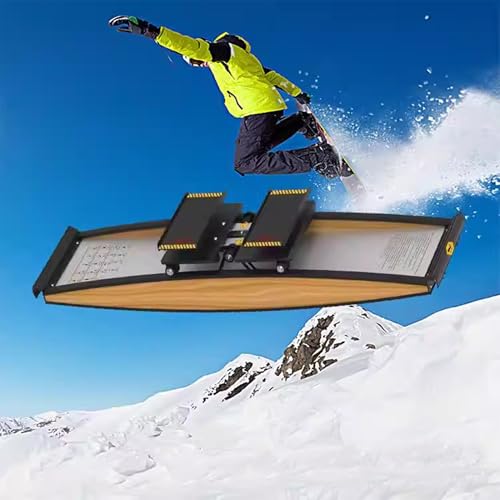
This ski trainer machine focuses on side-to-side movement rather than ski-erg pulls. Its adjustable resistance, included poles and mat, and rubber rollers make it worth considering for indoor balance, coordination, and leg-focused exercise.
Best For: Users who want lateral ski-style movement for balance, core, and leg training.
Pros:
Side-to-side motion targets balance and coordination.
Listed 0–100 kg adjustable resistance range supports varied workouts.
Rubber rollers are designed for smoother, quieter movement; listed capacity is 150 kg (330 lb).
Cons:
Does not provide the pulling motion or performance display described for a ski erg.
Resistance is specified in kilograms, not discrete settings, so adjustments may take some experimentation.
Choose this model if practicing lateral control matters more to you than tracking cardio metrics. Its oak-and-steel construction and included accessories round out the home-training setup.
This ski trainer machine uses elastic ropes and ski-inspired footboards to create a side-to-side training motion. You change resistance by adding or removing ropes, making it an option for shoppers who prefer a mechanical adjustment system.
Best For: Users interested in ski-style footwork with adjustable elastic-rope tension.
Pros:
Resistance changes by varying the number of elastic ropes.
Angled footboard design is intended to follow a skiing stance.
Pulley is described as smooth and quiet.
Cons:
Ropes must be adjusted evenly on both sides to maintain balanced tension.
Supplied notes do not specify a display or workout tracking.
The rope-based setup offers a different feel from an air-resistance ski erg. Consider whether you are comfortable adjusting and balancing the ropes when changing workout intensity.
This ski trainer machine is designed to simulate downhill movements while working balance, coordination, and the waist, abdomen, and legs. It comes with ski poles and mats for a more complete home setup.
Best For: Home users who want ski-style movement practice with poles and mats included.
Pros:
Designed for balance, coordination, and full-body exercise.
Includes ski poles and mats.
Features an oak construction and a stated 150 kg load capacity.
Cons:
The notes mention multiple modes but do not specify their settings or resistance range.
Product details list the material as synthetic despite the oak construction claim.
Consider this model if the included accessories matter to you, but verify its materials and available adjustments before buying.
This ski trainer machine pairs a sliding ski-style motion with a stated 0–100 kg adjustable resistance range. Its listed 52-by-10-inch footprint and 33-pound weight are useful details for planning a home workout space.
Best For: Users who want to vary the intensity of ski-style balance and strength sessions.
Pros:
Advertises a 0–100 kg resistance range.
Includes ski poles and mats according to the product title.
Lists a 330-pound maximum user weight and a 33-pound machine weight.
Requires no power source.
Cons:
The specifications list one resistance level, which conflicts with the advertised adjustable range.
No warranty terms are provided in the supplied details.
The size and weight figures make this one easier to assess for a home gym, though the conflicting resistance specifications are worth confirming with the seller.
This ski trainer machine focuses on simulated slope movements for balance, coordination, and full-body exercise. Ski poles are included, and the listing describes adjustable resistance for varying workouts.
Best For: Ski enthusiasts seeking a home balance-and-strength trainer with poles included.
Pros:
Designed for ski-style balance and coordination practice.
Listing describes adjustable resistance.
Includes ski poles and states a 150 kg load capacity.
Cons:
No specific resistance range is supplied.
The provided dimensions are for the package, not the assembled machine.
At a listed package weight of 39.6 pounds, this is a model to check carefully for setup space and adjustment details before ordering.
We organized the 10 selected listings around the type of movement each appears to offer: SkiErg-style pulling, multifunction cable training, or simulated skiing on a moving platform. We also considered practical buying questions such as resistance adjustment, mounting or stand requirements, included accessories, and storage space. This is a comparison of listed options, not a claim that every machine has been independently tested.
The selection includes two Concept2 SkiErg listings. Check whether their prices reflect different sellers, packages, or mounting options before treating them as separate choices.
Quick Comparison: Which Style Fits Your Goal?
SkiErg-style machines: Best suited to repeated upper-body and core-driven pulls for conditioning. They do not recreate downhill turns.
Cable-based trainers: Useful if you want adjustable pulling exercises alongside ski-inspired workouts. Check the available exercises and resistance range.
3D ski simulators and cross trainers: Better aligned with side-to-side movement and balance practice. Their motion may feel different from skiing on snow.
Key Buying Factors for a Ski Trainer Machine
Movement and Resistance
Decide what you want to practice first. For cardio intervals, look for a smooth, repeatable motion and resistance you can manage throughout a session. For ski-specific balance work, examine how the platform moves and whether you can control that movement as your skills improve. Resistance figures alone do not tell you how a machine will feel.
Space, Setup, and Stability
Measure the machine’s footprint and the clearance needed to move your arms, poles, or platform safely. A wall-mounted pull trainer and a freestanding simulator have very different setup needs. Check whether a stand, base, poles, or mats are included; bundle names do not guarantee the same contents across sellers. Confirm the stated user-weight limit and follow the manufacturer’s floor and installation guidance.
Tracking and Long-Term Use
If you plan structured workouts, check what the display actually records and whether it supports the training data you care about. Also review warranty terms, replacement-part availability, and return conditions—especially for larger machines that may be difficult to ship back.
Who Should Buy Which Ski Trainer Machine?
Choose a SkiErg-style machine if your priority is measurable pulling workouts rather than practicing turns. Consider a multifunction cable trainer if you want one station for several strength exercises. A 3D ski simulator makes more sense if lateral movement and balance are your main goals. For any option, favor the machine whose movement, setup, and included parts match your routine—not simply the listing with the highest claimed resistance or load capacity.