The best waterproof heart rate monitors help you track effort through sweat, rain, pool sessions, and demanding workouts without constant sensor concerns.
This roundup compares chest straps, armbands, and fitness trackers across accuracy, connectivity, battery life, comfort, and water resistance so you can choose the right fit for your training.
Best 10 Waterproof Heart Rate Monitors Picks for 2026
Precision Pick
- Fully waterproof chest-strap design
- Bluetooth, ANT+, and 5 kHz connectivity
- Up to 400 hours of battery life
Best For: Athletes who prioritize accuracy and broad device compatibility
Comfort-Focused Choice

- Soft, breathable armband design
- Pairs with up to three Bluetooth devices
- 38 hours of operation per charge
Best For: Users who prefer an armband for sports and workouts
Everyday Value
- High-accuracy heart rate sensor
- Works with HRM-compatible equipment
- Up to 400 hours of battery life
Best For: Everyday exercisers seeking a simple, compatible chest strap
Budget Connectivity Pick
- IP67 waterproof chest strap
- Bluetooth and ANT+ transmission
- Up to 300 hours of battery life
Best For: Connected training with sports watches, bike computers, and apps
Best All-Day Smartwatch

- 5 ATM waterproof design
- 24/7 heart rate and wellness tracking
- Up to 10–14 days of regular-use battery life
Best For: Everyday users wanting broad health tracking and long battery life
Best for Connected Training
Bluetooth ANT+ Heart Rate Armband
- Bluetooth and ANT+ connectivity
- Connects with up to three devices
- Up to 60 hours of battery life
Best For: Runners and cyclists using multiple training platforms
Best for Sport Variety
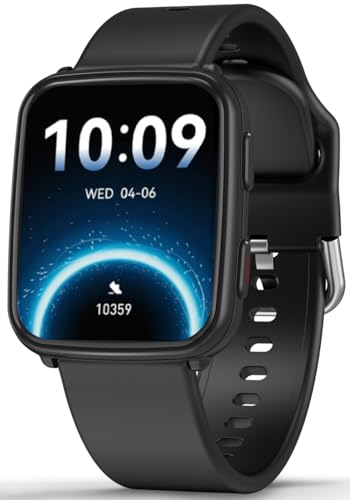
- 120+ sport modes
- IP68 water resistance
- Heart rate, sleep, and cycle tracking
Best For: Users wanting broad activity and lifestyle features
Best with Extra Features

- ECG-based tracking with HRV support
- Bluetooth and ANT+ connectivity
- IPX7 rating and 500-hour battery
Best For: Structured training and precise heart rate analysis
Best Armband Option

- IP68 protection for sweat and rain
- Wearable on forearm, bicep, or tricep
- Bluetooth, ANT+, and HRV app support
Best For: Comfort-focused runners and gym users
Best Battery Value

- Up to 800 hours of battery life
- ANT+ and Bluetooth compatibility
- IP67 rating with LED status indicator
Best For: Long-term training with minimal battery changes
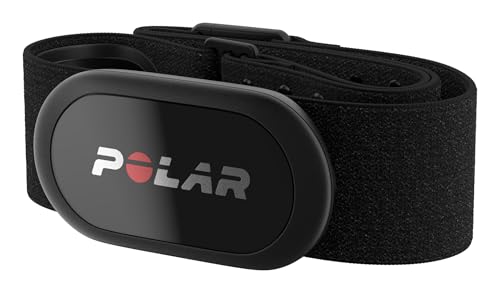
Precision Pick – Polar H10
The Polar H10 is a strong choice for shoppers comparing waterproof heart rate monitors, especially when measurement precision and broad device compatibility matter. It supports Bluetooth, ANT+, and 5 kHz connections, with simultaneous Bluetooth pairing options and internal memory for multiple hours of data.
Best For: Athletes and fitness users who want a highly accurate, versatile chest-strap monitor for connected equipment and apps.
Pros:
- Fully waterproof for training in wet conditions.
- Supports Bluetooth, ANT+, and 5 kHz connectivity.
- Can connect to two Bluetooth devices simultaneously and use Bluetooth and ANT+ at the same time.
- Offers up to 400 hours of battery life and internal memory.
Cons:
- Requires a CR2025 battery; other battery sizes may cause damage or malfunction.
- A chest strap may be less appealing than an armband for users prioritizing casual comfort.
With its waterproof design, extensive connectivity, and accuracy-focused sensor, the H10 is a well-rounded option for structured workouts and multisport training.
Comfort-Focused Choice – COROS Heart Rate Monitor
For shoppers seeking waterproof heart rate monitors without a traditional chest strap, the COROS Heart Rate Monitor offers a soft, breathable armband design. It connects via Bluetooth only, pairs with up to three devices, and automatically powers on or off when it detects that it is being worn.
Best For: Workout users who prefer an easy-to-wear armband for sports watches, indoor trainers, phones, and compatible apps.
Pros:
- Soft, breathable fabric band designed for comfortable wear.
- Automatically connects to paired devices and detects when it is worn.
- Can pair with up to three devices at once.
- Provides 38 hours of operation or up to 80 days of standby per charge.
Cons:
- Uses Bluetooth only and is not compatible with ANT+.
- Designed for sports and activities rather than daily heart rate tracking.
- The package includes a USB charging cable but not a Type-C adapter.
The COROS armband is a practical alternative to chest straps, combining wear detection and quick-cleaning convenience with reliable workout connectivity.
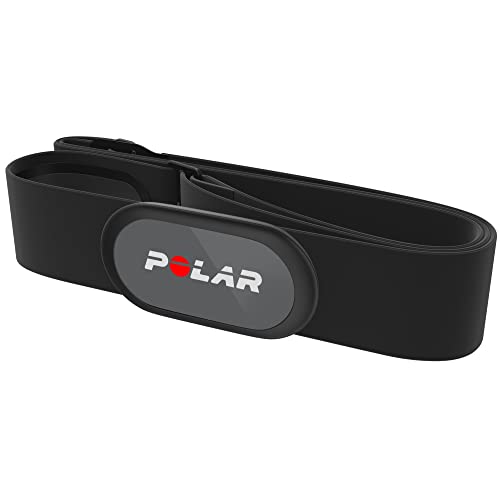
Everyday Value – Polar H9
Polar H9 Heart Rate Sensor – ANT + / Bluetooth - Waterproof HR Monitor with Soft Chest Strap, M-XXL
Check Price On AmazonThe Polar H9 is an affordable, straightforward option for shoppers comparing waterproof heart rate monitors for regular workouts. It uses a high-accuracy sensor, works with HRM-compatible equipment, and connects with popular smartphone apps for convenient training data.
Best For: Everyday exercisers who want a dependable chest-strap monitor with broad compatibility and long battery life.
Pros:
- Works with all HRM-compatible equipment according to the supplied product information.
- Connects with smartphones and popular fitness apps.
- Provides up to 400 hours of battery life.
- Available in sizes including XS-S and M-XXL.
Cons:
- The supplied notes do not specify a waterproof rating.
- Uses a replaceable CR2025 button cell and requires the correct battery type.
- Offers fewer listed connectivity options than the Polar H10.
The H9 keeps the essentials simple: accurate heart rate tracking, wide equipment compatibility, and a long-lasting battery make it a sensible everyday pick.
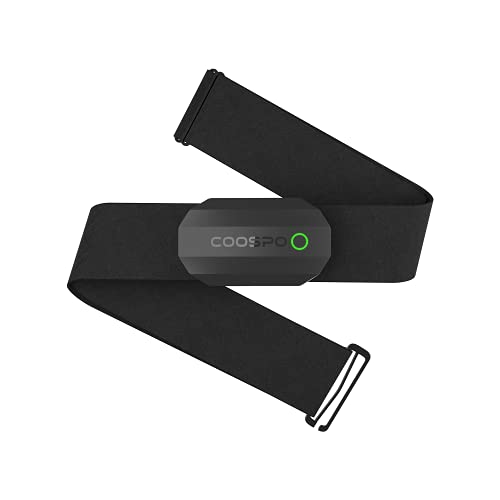
Budget Connectivity Pick – COOSPO H808S
The COOSPO H808S is a budget-friendly choice among waterproof heart rate monitors, combining an IP67 waterproof rating with Bluetooth and ANT+ transmission. Its compatibility with sports watches, bike computers, and apps makes it useful for connected training.
Best For: Cyclists, indoor-training users, and fitness enthusiasts who want dual-mode connectivity and a replaceable-battery chest strap.
Pros:
- IP67 waterproof heart rate monitor design.
- Supports both Bluetooth 4.0 and ANT+ connections.
- Works with listed platforms and devices including Peloton, Strava, Wahoo Fitness, Polar Beat, and Zwift.
- Offers up to 300 hours of battery life with a replaceable CR2032 battery.
Cons:
- The chest strap should be moistened at the electrode zones before use.
- The supplied guidance recommends replacing the strap every six months or 300 washes.
- Users must connect through the app rather than the phone’s standard Bluetooth settings.
With dual wireless modes, strong app compatibility, and IP67 protection, the H808S is a practical value option for connected exercise sessions.
Best All-Day Smartwatch – Zeacool 5 ATM Fitness Tracker
If you want waterproof heart rate monitors with broader wellness tracking, the Zeacool combines 24/7 heart rate monitoring with blood oxygen, blood pressure, sleep, temperature, and activity data. Its 5 ATM rating makes it suitable for swimming and everyday water exposure, while the long battery life supports regular wear.
Best For: Everyday users who want a waterproof fitness tracker with extended battery life and multiple health metrics.
Pros:
- 5 ATM waterproof design for swimming, bathing, rain, and hand-washing.
- Tracks heart rate, blood oxygen, blood pressure, sleep, temperature, steps, distance, and calories.
- Offers 25 sport modes, a 1.10-inch AMOLED display, and up to 10–14 days of regular-use battery life.
Cons:
- The supplied notes do not identify the accuracy or medical validation of health readings.
- Some features require the Keep Health app and a compatible smartphone.
The Zeacool is a versatile choice if water resistance and broad day-to-day tracking matter more than specialized workout connectivity. Its 5 ATM rating and lengthy battery life make it especially practical for continuous wear.
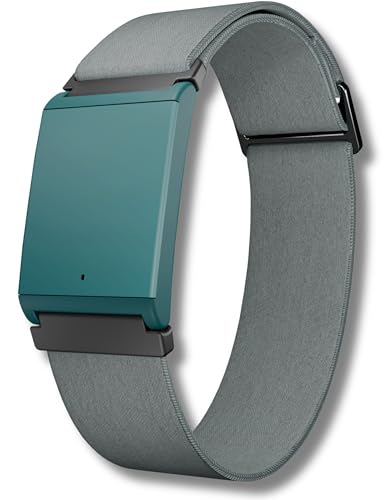
Best for Connected Training – Bluetooth ANT+ Heart Rate Armband
For workout-focused shoppers comparing waterproof heart rate monitors, this rechargeable armband emphasizes real-time training data rather than smartwatch features. Its optical sensor transmits over Bluetooth and ANT+, connects with up to three devices, and carries an IPX67 sweat- and waterproof rating.
Best For: Runners, cyclists, and indoor-training users who need a lightweight heart rate sensor that works across fitness apps and equipment.
Pros:
- Supports Bluetooth and ANT+ connectivity with Peloton, Wahoo, Strava, Zwift, Garmin Connect, and other platforms.
- Can connect to up to three devices at once.
- Lightweight 20-gram design with a soft-touch silicone strap and up to 60 hours of battery life.
Cons:
- IPX67 protection is intended for sweat and water exposure, but the notes do not describe it as suitable for swimming.
- It is an armband sensor, not a standalone smartwatch with a built-in display.
This armband is the most training-specific option in the group. Choose it when reliable app and equipment connectivity, low weight, and extended workout use are more important than on-wrist notifications or wellness extras.
Best for Sport Variety – MorePro IP68 Fitness Tracker
The MorePro is a practical pick among waterproof heart rate monitors for users who want a smartwatch-style tracker with extensive activity options. It combines 24/7 heart rate monitoring with blood pressure, on-demand blood oxygen, sleep, cycle, and daily fitness tracking in an IP68-rated design.
Best For: Users who want many sport modes, everyday smart features, and women’s health tracking in one wearable.
Pros:
- Offers 120+ sport modes and tracks steps, distance, calories, heart rate, and training time.
- IP68 waterproof design handles sweat, rain, and hand-washing.
- Includes sleep tracking, cycle tracking, notifications, weather, music and camera controls, and up to seven days of normal-use battery life.
Cons:
- The notes state that the health features are not for medical use.
- It is not compatible with PCs or tablets.
- Charging takes about two hours.
The MorePro stands out for breadth: it provides more sport modes and lifestyle tools than a basic heart rate band. It is a strong fit for users who want one wearable for workouts, notifications, and routine wellness tracking.
Best with Extra Features – CYCPLUS H2Pro Chest Strap
If you want a waterproof heart rate monitor for structured training, the CYCPLUS H2Pro combines ECG-based tracking with Bluetooth and ANT+ connectivity. Its IPX7 rating, lightweight strap, and long battery life make it a practical choice for cycling, running, and gym equipment.
Best For: Athletes who prioritize precise heart rate and HRV data, broad device compatibility, and minimal battery maintenance.
Pros:
- ECG algorithm is designed to reduce interference from movement, breathing, muscle tension, and sweat.
- Supports Bluetooth and ANT+ connections with phones, watches, cycling computers, and fitness equipment.
- Offers up to 500 hours of battery life and an IPX7 waterproof, dustproof design.
- Soft, breathable materials and an adjustable strap support a comfortable fit.
Cons:
- Chest-strap design may feel less convenient than an armband for some users.
- It uses a replaceable CR2032 coin-cell battery rather than rechargeable power.
The H2Pro stands out when measurement precision and training data matter most. Its ECG-based approach and HRV support are especially useful for users who want more than basic workout heart rate readings.
Best Armband Option – Scosche Rhythm+ 2.0
The Scosche Rhythm+ 2.0 is a waterproof heart rate monitor designed for users who prefer an optical armband over a chest strap. It tracks heart rate through Bluetooth or ANT+ and is built for running, cycling, gym sessions, and high-intensity workouts.
Best For: Users seeking a comfortable, flexible alternative to a chest strap with HRV features and broad app compatibility.
Pros:
- IP68 waterproof construction helps protect against sweat and rain.
- Adjustable band can be worn on the forearm, bicep, or tricep.
- Supports Bluetooth and ANT+ devices, including watches, fitness equipment, and apps.
- Provides up to 24 hours of continuous battery life and streams RR interval data to compatible HRV apps.
Cons:
- Its 24-hour battery life is much shorter than the chest-strap options in this roundup.
- Optical armband readings may not suit users specifically seeking ECG-based sensing.
Choose the Rhythm+ 2.0 if wearing comfort and placement flexibility are more important to you than multi-hundred-hour battery life. Its IP68 rating and app support make it a versatile workout companion.
Best Battery Value – GEOID HS500 Chest Strap
The GEOID HS500 is a waterproof heart rate monitor for users who want long operating time and straightforward ANT+ or Bluetooth connectivity. Its IP67 rating, replaceable CR2032 battery, and connection indicator suit regular running, cycling, fitness, and indoor training.
Best For: Budget-conscious athletes who want extended battery life, visible connection feedback, and compatibility with common training platforms.
Pros:
- Provides up to 800 hours of battery life, with a replaceable CR2032 cell.
- Supports ANT+ and Bluetooth connections with phones, watches, bike computers, treadmills, and apps.
- IP67 waterproof design helps handle workout conditions, while the flashing LED confirms readiness and connection.
- Hardware and algorithms are designed to reduce noise from movement and sweating.
Cons:
- The manufacturer does not recommend using it for swimming.
- It uses a chest-strap format, which may not appeal to users who prefer armbands.
- Its IP67 rating is below the IP68 protection offered by the Scosche model.
The HS500 is a strong practical pick when battery longevity is a priority. It offers the longest stated battery life here, while maintaining broad connectivity and a useful LED status indicator.
How We Picked the Best Waterproof Heart Rate Monitors
We focused on the factors that matter during real workouts: heart-rate accuracy, sensor placement, wireless compatibility, water resistance, battery life, comfort, and ease of use. The selection includes chest straps for highly responsive readings, optical armbands for easier wear, and fitness trackers for broader health and activity monitoring.
We also considered compatibility with common training platforms and devices, including Bluetooth and ANT+ support. Because water-resistance claims vary, check the manufacturer’s rating and usage limits before using any monitor for swimming or submersion.
Quick Comparison
| Type | Best For | Main Advantage | Potential Limitation |
|---|---|---|---|
| Chest strap | Structured training | Fast, consistent readings | Less comfortable for some users |
| Armband | Running and gym workouts | Comfortable optical sensing | May respond less quickly during intervals |
| Fitness tracker | Everyday wellness | Heart rate plus activity metrics | Usually less specialized for training |
Key Buying Factors for Waterproof Heart Rate Monitors
Sensor Type and Accuracy
Chest straps generally provide the quickest response to changing intensity and are a strong choice for interval training, cycling, and performance-focused workouts. Armbands can be more comfortable while still delivering useful optical readings. Wrist-based trackers are convenient for all-day monitoring but may be affected by movement, fit, or skin contact.
Water Resistance
Look for a clearly stated IP rating or ATM rating. IP67 can protect against dust and temporary water exposure, while a 5 ATM rating is commonly associated with swimming-level water resistance. Neither rating automatically means a device is suitable for diving, hot tubs, or high-pressure water.
Connectivity and Battery Life
Bluetooth is useful for phones, tablets, and many exercise apps; ANT+ is valuable for compatible bike computers, watches, and gym equipment. Review pairing limits if you want to connect to multiple devices. Rechargeable models reduce battery waste, while replaceable-cell straps may offer longer operation between changes.
Fit and Maintenance
A chest strap should sit securely below the chest muscles without restricting breathing. Armbands need firm skin contact but should not pinch. Rinse sensors after sweaty or chlorinated sessions, allow them to dry fully, and follow the care instructions to preserve the contact points and seals.
Who Should Buy Which Waterproof Heart Rate Monitors?
Choose a chest strap if precise, responsive workout data is your priority. These models suit serious runners, cyclists, triathletes, and anyone training by heart-rate zones.
Choose an armband if you want a less restrictive alternative to a chest strap while retaining Bluetooth or ANT+ connectivity for training apps and equipment.
Choose a fitness tracker if you want heart rate alongside steps, sleep, blood oxygen, and general wellness metrics in one wearable. These are best for everyday users who value convenience over laboratory-level training precision.
Finally, match the monitor’s water rating and connection standards to your equipment before buying. The best option is the one you will wear consistently, pairs reliably with your devices, and fits the way you actually train.
Related Posts: