The right weighted vest can make bodyweight squats, push-ups, step-ups, walking, and conditioning drills more challenging without requiring a full rack of equipment. The best options balance adjustable resistance with a secure, comfortable fit that stays stable as you move.
This roundup compares 10 weighted vests across light, moderate, and heavy load ranges, with attention to adjustability, weight distribution, comfort features, and suitability for different home-training goals.
Best 10 Weighted Vests for Home Workouts Picks for 2026
Best Adjustable Range

- Multiple weight options from 6 to 30 pounds
- Even iron-sand distribution
- Reflective stripe and adjustable fit
Best For: Progressive home workouts and mixed training
Best for Heavy Progression
RUNmax Adjustable Weighted Vest
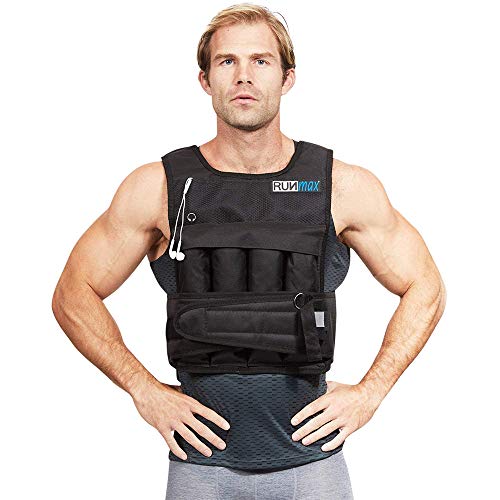
- Adjustable from 20 to 150 pounds
- Removable weights and secured pockets
- Breathable mesh with optional shoulder pads
Best For: Progressive overload and advanced conditioning
Best for Storage

- Weight options from 6 to 30 pounds
- Rear mesh pocket and armband pouch
- Adjustable fit with reflective strips
Best For: Home workouts and walks with small essentials
Best for Beginners

- Eight weight options from 6 to 30 pounds
- Padded shoulders and adjustable buckle
- Neoprene body with reinforced seams
Best For: Starting light and building workout intensity gradually
Comfort-Focused Pick
BAGAIL Comfort-Fit Weighted Vest
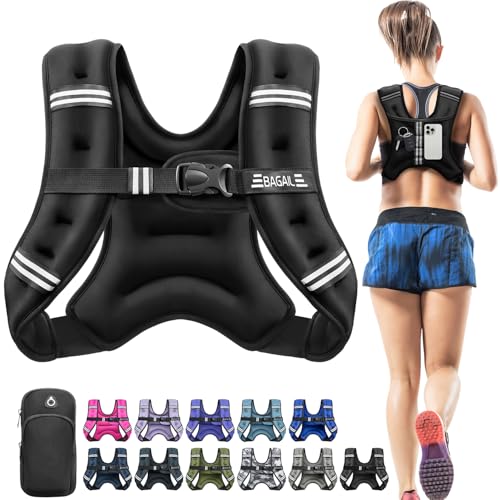
- Evenly distributed iron-sand filling
- 5–30 lb options with close fit
- Phone pouch, mesh pocket, and reflective strips
Best For: Comfort-conscious home and outdoor training
Heavy-Duty Progression Pick

- Adjusts from 0 to 35 lb
- Includes 16 removable iron weights
- Reinforced stitching and heavy-duty buckles
Best For: Progressive strength training and rucking
Beginner-Friendly Pick
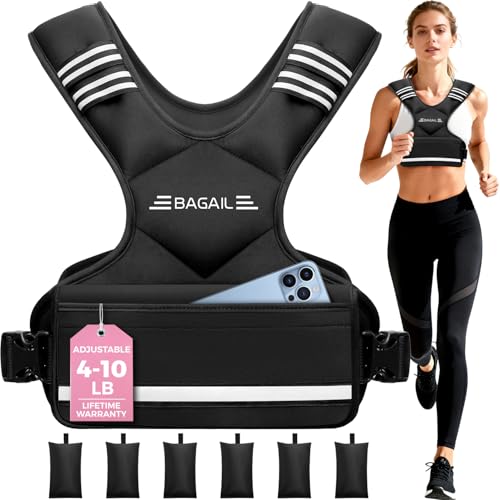
- Starts at 4 lb with six removable 1-lb bags
- U-neck and wide straps support comfort
- Large pocket and 360° reflective coverage
Best For: Beginners and light home training
Balanced Resistance Pick
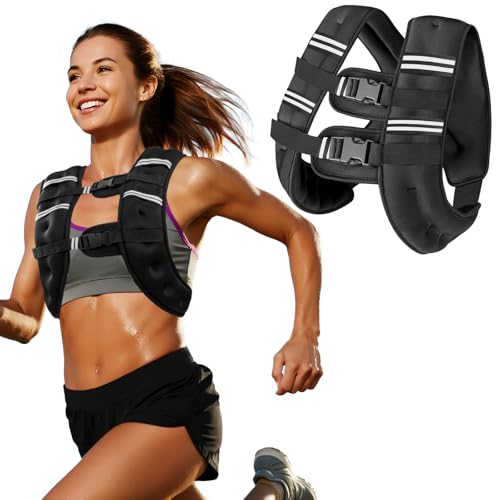
- Fixed 12-pound iron-sand load
- Adjustable straps and balanced distribution
- Reflective strips for low-light visibility
Best For: Strength, walking, running, and cross-training
Most Flexible Load
APEXUP Adjustable Weighted Vest

- Six removable sandbag weights
- Three selectable weight ranges
- Front mesh pocket for essentials
Best For: Progressive training and versatile cardio workouts
Comfort-Focused Training

- 5–30-pound weight options
- Padded straps and breathable mesh back
- Reflective details and 12-month warranty
Best For: Longer strength, walking, running, and HIIT sessions
Best Adjustable Range – Poudee 6–30 lb Weighted Vest
The Poudee weighted vest offers several weight options, from 6 to 30 pounds, making it a flexible choice for home workouts. Its adjustable fit, breathable materials, reflective stripe, and even iron-sand distribution support strength training, walking, jogging, and other bodyweight exercises.
Best For: Home users who want one vest with multiple weight options for gradually increasing resistance.
Pros:
- Available in weight options from 6 to 30 pounds.
- Even iron-sand distribution helps balance the load.
- Adjustable straps, breathable materials, and reflective detailing support comfortable use.
- Works for strength training, running, hiking, walking, and CrossFit-style workouts.
Cons:
- The supplied details do not specify the exact weight included with every listing variation.
- Hook-and-loop closure may require readjustment between users or activities.
Choose this model if versatility is your priority. The broad weight range makes it useful for progressing from lighter home sessions to more demanding training, while the reflective stripe adds visibility for outdoor use.
Best for Heavy Progression – RUNmax Adjustable Weighted Vest
RUNmax rf20nop Run Fast 12lb-140lb Weighted Vest (without Shoulder Pads, 20lb),Black
Check Price On AmazonFor home workouts that may eventually require substantial resistance, the RUNmax weighted vest supports adjustable loading from 20 to 150 pounds. Removable weights, individual secured pockets, breathable mesh, and an adjustable 28–48-inch chest fit make it suited to progressive strength and conditioning work.
Best For: Experienced users seeking a highly adjustable vest for progressive overload, calisthenics, and demanding conditioning.
Pros:
- Adjustable capacity ranges from 20 to 150 pounds using removable weights.
- Individual weight pockets with Velcro closures help prevent shifting.
- Breathable mesh and optional padded shoulders support comfort.
- Includes reflective strips and a stated lifetime warranty against defects.
Cons:
- The high maximum capacity may be excessive for beginners or light home workouts.
- The base listing is described as a 20-pound vest, so included weight should be confirmed before purchase.
This is the most expansion-oriented option in the group. Its removable weights allow gradual progression, but its large capacity makes it better suited to users who already have a clear plan for heavier training.
Best for Storage – ZELUS 6–30 lb Weighted Vest
The ZELUS weighted vest adds resistance to home workouts while keeping small essentials close at hand. Evenly distributed iron sand, adjustable buckle straps, a rear mesh pocket, and an armband pouch make it practical for strength training, jogging, rope skipping, and walking.
Best For: Users who want a moderate-weight vest with convenient storage for a phone, keys, wallet, or snacks.
Pros:
- Available in weights from 6 to 30 pounds.
- Adjustable straps fit stated chest sizes from 31.5 to 45 inches.
- Includes a rear mesh pocket and armband pouch.
- Reflective strips improve visibility for outdoor sessions.
Cons:
- The supplied fit range may not suit users outside 31.5–45-inch chests.
- The vest is cleaned by wiping with a damp cloth rather than machine washing.
Consider the ZELUS when convenience matters as much as resistance. Its storage features distinguish it from simpler vests, while the range of weight choices supports gradual increases in workout intensity.
Best for Beginners – Zeerun Neoprene Weighted Vest
The Zeerun weighted vest is designed for gradual progression, with options from 6 to 30 pounds and a beginner-friendly focus. Skin-friendly neoprene, thickened shoulder pads, an elastic band, and an adjustable buckle are intended to create a snug fit for walking, running, strength training, and physical-therapy-oriented exercise.
Best For: Beginners who want to start with lighter resistance and increase weight over time.
Pros:
- Offers eight weight options from 6 to 30 pounds.
- Neoprene construction is described as skin-friendly and non-chafing.
- Thickened shoulder pads help disperse pressure.
- Double-stitched seams and reflective stripes support durability and visibility.
Cons:
- The vest uses fixed weight options rather than an internally adjustable loading system.
- The supplied details do not state a chest-size range.
This model is a practical starting point for weighted vests for home workouts, particularly when you want a lighter entry weight and a clear path toward heavier resistance. Its padded, snug design may also appeal to users prioritizing stability.
Comfort-Focused Pick – BAGAIL Comfort-Fit Weighted Vest
For home workouts that include walking, cardio, strength training, or rucking, this BAGAIL vest emphasizes a close, low-bounce fit. It uses evenly distributed iron sand, breathable neoprene, upgraded straps, and smooth-stitched edges to help limit bulk and chafing. Available weight options range from 5 to 30 pounds.
Best For: Users who prioritize comfort, reflective visibility, and convenient storage for home or outdoor training.
Pros:
- Even weight distribution and a body-hugging fit are designed to reduce bounce and chafing.
- Available in multiple weight options from 5 to 30 pounds.
- Reflective strips, a detachable phone pouch, and a rear mesh pocket add practical utility.
- Unconditional lifetime support is included.
Cons:
- The vest must be wiped clean rather than machine washed.
- The supplied details do not specify a built-in weight-adjustment system for the vest itself.
This is a strong all-around choice if comfort and organization matter as much as adding resistance. Its reflective details and storage make it especially versatile for workouts that move between the home and outdoors.
Heavy-Duty Progression Pick – MVRK Adjustable Weighted Vest
For demanding home workouts, this MVRK vest is built around removable iron weights and a reinforced nylon construction. The included weight blocks let you train from 0 to 35 pounds, while the compact design is intended to preserve range of motion during calisthenics, HIIT, strength work, and rucking.
Best For: Experienced users who want a durable vest with substantial, adjustable loading for progressive strength and conditioning.
Pros:
- Removable weights allow progression from 0 to 35 pounds.
- Sixteen iron weights are included, distributed across the front and back.
- Reinforced stitching, heavy-duty buckles, and sweat-resistant materials support intensive use.
- Compact construction is designed to reduce bulk and preserve movement.
Cons:
- At its maximum, 35 pounds may be more load than beginners need.
- Weights must be removed before hand washing, and the vest should be hang dried.
The MVRK is the most training-focused option here for users who expect to increase resistance over time. Its removable weight system is useful for scaling workouts, though the heavier capacity makes careful fitting and gradual progression important.
Beginner-Friendly Pick – BAGAIL Adjustable U-Neck Vest
For beginners choosing weighted vests for home workouts, this BAGAIL model offers a gentler way to build resistance. It starts with a 4-pound base and uses six removable 1-pound ironsand bags, while the U-neck, X-shaped fit, and wide adjustable straps are designed for comfortable walking, jogging, yoga, Pilates, and light training.
Best For: Beginners, women, and seniors who want gradual loading with comfort-focused fit and visibility features.
Pros:
- Six removable 1-pound weights support gradual progression from a 4-pound base.
- U-neck and body-contouring design help relieve pressure and distribute weight across the torso.
- A large front pocket accommodates a phone and small essentials.
- 360-degree reflective coverage improves visibility during low-light walks.
Cons:
- The lighter loading range is less suited to advanced heavy resistance training.
- Care is limited to wiping clean; machine washing is not recommended.
This vest is a practical entry point for adding modest resistance to home-based movement and walking routines. Its removable weights make it easier to start conservatively and increase the challenge as comfort and fitness improve.
Balanced Resistance Pick – Zikopomi Weighted Vest
For shoppers comparing weighted vests for home workouts, the Zikopomi offers a fixed 12-pound load with even iron-sand distribution. Adjustable elastic straps, reinforced construction, and reflective strips make it suitable for strength work, walking, running, and other training sessions.
Best For: Men and women who want a straightforward, evenly distributed vest for strength training, cardio, or cross-training.
Pros:
- Evenly distributed iron-sand weight helps reduce concentrated pressure.
- Adjustable straps accommodate different body and chest shapes.
- Reflective strips improve visibility during low-light workouts.
- Double-stitched neoprene construction is designed for repeated use.
Cons:
- The listed version is a fixed 12-pound vest rather than an adjustable-load design.
- It may have a slight new-product odor that requires ventilation for one to two days.
The Zikopomi is a practical choice when you already know a 12-pound load suits your routine. Its balanced filling and adjustable straps support varied home workouts, while the reflective details add utility for outdoor sessions.
Most Flexible Load – APEXUP Adjustable Weighted Vest
The APEXUP stands out among weighted vests for home workouts because its included six sandbags let you adjust resistance as your training changes. It also adds a front mesh storage pocket, making it useful for walking, running, cycling, and strength sessions at home or in the gym.
Best For: Beginners and progressing users who want multiple load settings without buying several separate vests.
Pros:
- Adjustable ranges are available in 4–10, 12–18, or 20–32 pounds.
- Six removable iron-sand weights support gradual progression.
- Large front mesh pocket holds essentials such as a phone, keys, or wallet.
- Neoprene construction, reinforced stitching, and reflective straps support regular use.
Cons:
- The vest’s load range depends on which size option is selected.
- Adding or removing sandbags is less immediate than using a fixed-weight vest.
Choose the APEXUP if adjustability is your priority. Its modular weight system can accommodate changing fitness levels, while the storage pocket is a useful extra for walking or cardio sessions.
Comfort-Focused Training – NATURELUX Weighted Vest
NATURELUX Weighted Vest with Reflective Stripe and Adjustable Buckle Straps, Black, 10 lbs
Check Price On AmazonFor weighted vests for home workouts that emphasize fit and longer sessions, the NATURELUX combines iron-sand filling with padded shoulder straps, a waist belt, and a breathable mesh back. Its quick-adjust clips and elastic straps help create a secure fit for strength training, walking, running, and HIIT.
Best For: Adults who prioritize padding, ventilation, and a secure fit during extended workouts or hikes.
Pros:
- Available in 5–30-pound weight options.
- Padded shoulder straps and a waist belt help reduce pressure.
- Breathable mesh back and chafe-free fabric support comfort.
- Reflective strips improve visibility, and the product includes a 12-month warranty.
Cons:
- The vest is selected by weight option rather than described as incrementally adjustable.
- Its comfort-oriented design may be more than needed for short, simple workouts.
The NATURELUX is a strong fit for users who expect to wear a vest for longer periods. The padded contact points, breathable back, and adjustable closure prioritize comfort while maintaining balanced resistance.
How We Picked the Best Weighted Vests for Home Workouts
We evaluated these weighted vests by comparing their listed load ranges, adjustment systems, fit-oriented features, and intended uses. Important considerations included removable weights, weight distribution, shoulder padding, reflective details, pockets, and whether each design appears better suited to walking, running, bodyweight strength work, or heavier rucking.
Because fit varies by body shape and training style, product specifications should be checked carefully before ordering. A vest that works well for short home circuits may not be the best choice for long walks or high-impact exercise.
Quick Comparison
| Best For | Look For | Typical Load |
|---|---|---|
| Beginner home workouts | Light, removable weights | 4–12 lb |
| General strength and conditioning | Adjustable midrange resistance | 12–30 lb |
| Walking and rucking | Secure fit and balanced loading | 15–35 lb |
| Advanced strength training | Heavy-duty construction and padded shoulders | 35 lb and above |
Key Buying Factors for Weighted Vests for Home Workouts
Adjustability and Progression
Choose a vest with a load range that matches both your current ability and your likely progression. Removable or modular weights let you begin conservatively and add resistance gradually, which is more practical than starting with a fixed heavy load.
Fit and Weight Distribution
A close, stable fit matters for squats, lunges, push-ups, and step-ups. Look for adjustable straps, a design that sits securely against the torso, and even front-and-back distribution. Excess movement can cause chafing, alter exercise technique, or make running uncomfortable.
Comfort and Construction
Padding, breathable materials, wide shoulder areas, and smooth edges can improve longer sessions. Heavy models should have especially strong closures and supportive shoulder design. Reflective accents are useful if your home workout routine includes outdoor walks or runs in low light.
Load Capacity and Exercise Type
Light vests are generally more versatile for cardio and beginner bodyweight training. Medium loads suit strength circuits and progressive calisthenics, while very heavy vests are better reserved for experienced users who understand safe loading and movement control.
Who Should Buy Which Weighted Vests for Home Workouts?
Beginners and casual exercisers: Start with a lightweight adjustable vest so you can build tolerance without compromising form. General home strength users: Choose a midrange model with removable weights for squats, lunges, push-ups, and step-ups. Walkers and runners: Prioritize a secure, low-bounce fit, comfortable shoulder contact, and reflective details over maximum capacity. Experienced lifters and ruckers: Consider a heavy-duty vest only if its construction, fit, and load adjustment system support the demands of your training.
For any of these Weighted Vests for Home Workouts, begin with a manageable load, keep movements controlled, and increase resistance only when your technique remains consistent.
Related Posts: