Teeter FreeStep is a strong pick if you want the cardio effect of a cross trainer without the upright stress that pushes some buyers away from regular machines.
This Teeter FreeStep Recumbent Cross Trainer Stepper review looks at where the design helps, where it asks for compromise, and whether it is worth it for your home.
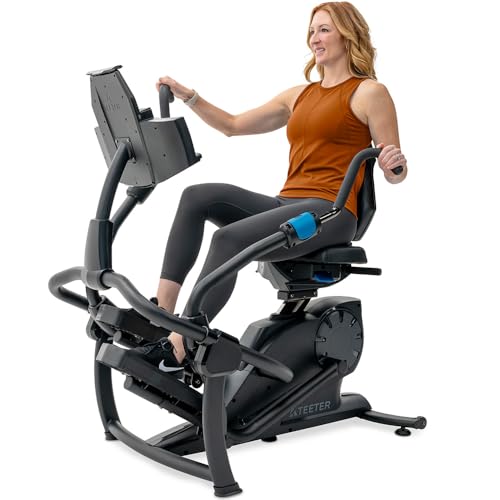
Teeter FreeStep Review Summary
The Teeter FreeStep is best for buyers who care more about joint-friendly motion, seated stability, and whole-body exercise than about the compact footprint of a basic pedal machine.
It is built around a patented natural stride licensed from commercial physiotherapy steppers, and that design choice is the whole story: if your priority is gentler movement for knees, hips, and back, this product has a clear edge over standard recumbent bikes and typical steppers.
It is not a minimalist fitness gadget.
It is a full-featured home machine with dual power motion, multiple resistance levels, pre-programmed workouts, a console, and convenience extras.
That makes it appealing for regular use, but also means buyers should expect a real piece of equipment rather than a simple under-desk or fold-away device.
Review Scorecard
| Category | Score | Rationale |
|---|---|---|
| Joint-Friendly Motion | 10/10 | The product is explicitly built for low-impact use with a natural stride and seated position. |
| Full-Body Training | 9/10 | Dual power motion engages both upper and lower body, with the option to isolate limbs. |
| Home Workout Convenience | 8/10 | Quiet operation, transport wheels, cup holders, and app support improve day-to-day usability. |
| Resistance and Control | 8/10 | 20 resistance levels and console quick-keys give meaningful adjustment for different sessions. |
| Comfort and Fit | 8/10 | The extra-large seat and adjustable setup support a broad user range, though size still matters. |
| Console and Guidance | 7/10 | Tracking metrics and preset workouts are useful, but the display is more functional than flashy. |
| Overall Buyer Value | 8/10 | Strong feature set for the right buyer, especially if gentler cardio is more important than compactness. |
Key Features and Specifications of Teeter FreeStep
Teeter positions FreeStep as a zero-impact exercise bike alternative with a recumbent stance and a stepped motion.
The company says the machine uses patented physical therapy technology, and the listing emphasizes that it is designed to be easier on the knees and back than typical cycle-motion cardio equipment.
Here are the most useful facts from the product data:
| Feature | Details |
|---|---|
| Brand | Teeter |
| Model | FreeStep Recumbent Cross Trainer Stepper |
| Primary use | Low-impact full-body cardio |
| Motion style | Natural stride, dual power motion |
| Resistance | 20 levels, up to 105 lb via console quick-keys |
| Display | Color LCD screen with 7 tracking metrics |
| Workout content | 21 pre-programmed goal-based workouts |
| Connectivity | Bluetooth heart-rate compatible; Free Teeter Move app |
| App | Subscription-free, iOS and Android compatible |
| User fit | Rated for users 4 ft 11 in to 6 ft 6 in |
| Capacity | Up to 350 lb |
| Convenience | Media rack, USB charging, cup holders, transport wheels, electronic step lock |
The product also highlights an extra-large ComfortMax seat, SureGrip handles, SoftStep pedals, and UltraGlide bearings.
Those are not just marketing flourishes; they point to the kind of machine Teeter wants this to be: stable, smooth, and comfortable enough to use often.
The app support matters because it turns the machine from a passive cardio unit into something with a little more structure.
If you are more likely to exercise when a guided session is ready, the free Teeter Move library can help.
If you already follow your own plan, the built-in workouts and display metrics may be enough.
One practical note: the machine is clearly intended for home use by people who can accommodate a large seated fitness device.
It is not pitched as a lightweight plug-and-play option.
Pros and Cons of Teeter FreeStep
Pros
- Very joint-conscious design. The seated position and natural stride are the central advantage, especially for buyers who want lower stress on knees, hips, and back.
- True upper-and-lower-body work. Dual power motion makes the workout feel more complete than a basic recumbent pedal setup.
- Good resistance range. Twenty levels should be enough for most home users to scale intensity over time.
- Practical home features. The media rack, USB charging, cup holders, and transport wheels make the machine easier to live with.
- Helpful guidance options. Preset workouts plus a subscription-free app give you more structure than a bare-bones console.
Cons
- Not compact. This is a real machine, so small-space buyers may find the footprint a limitation.
- Not the simplest cardio device. Buyers looking for minimal setup or a tiny footprint should probably not start here.
- Console is functional, not premium. The LCD and metrics are useful, but the overall experience is more practical than high-tech.
- Best value depends on your body and goals. If you do not specifically need low-impact seated motion, a simpler alternative may be enough.
The biggest positive is that the design solves a real problem.
Many people want cardio they can tolerate consistently.
FreeStep is built around that issue rather than trying to be the cheapest or most compact machine on the market.
Who Should Buy Teeter FreeStep?
Teeter FreeStep makes the most sense for buyers who want to stay active while being careful with joints or posture.
It is especially compelling if you like the idea of a seated machine that still works both upper and lower body.
It is a good fit for:
- Buyers who want low-impact cardio with less stress than upright stepping or cycling
- People who prefer seated training over standing workouts
- Home users who want guided workouts without paying for a subscription
- Buyers who need a machine that supports a wide user height range and a high capacity
- Anyone who values quiet, repeatable home workouts over a tiny footprint
It is probably not the best choice for:
- Buyers with very limited floor space
- People who want a simple, lightweight, easy-to-store cardio tool
- Shoppers who do not need the joint-friendly design and just want the cheapest way to move
If your main concern is comfort and consistency, FreeStep is much easier to justify.
If your main concern is portability, you are paying for features you may not use.
How Teeter FreeStep Works as a Home Cardio Machine
The Natural Stride
The natural stride is the feature that separates this product from ordinary recumbent equipment.
Teeter says the motion is licensed from commercial physiotherapy steppers, and the goal is to create a smoother, more joint-conscious movement pattern than a standard cycle path.
Dual Power Motion
The dual-action setup lets you use both arms and legs at once, which is one reason the machine can feel more efficient than a basic recumbent bike.
That also gives it flexibility: you can focus on lower-body work, upper-body work, or both depending on the session.
Resistance, Programs, and Tracking
With 20 resistance levels, 21 preset workouts, and 7 tracking metrics, the machine is trying to offer enough structure for regular training without overwhelming the user.
The console is aimed at consistency and progress tracking, not entertainment.
Comfort and Daily Use
The large seat, transport wheels, step lock, cup holders, and media rack are the kind of details that make a difference once a machine is in the house.
They do not change the workout itself, but they make a larger piece of equipment more pleasant to use repeatedly.
Alternatives to Teeter FreeStep
If you like the idea of low-impact cardio but want to compare the category before buying, these are credible Amazon-search alternatives:
- Nautilus recumbent bike
- Schwinn recumbent bike
- Stamina recumbent stepper
- Sunny Health & Fitness recumbent bike
Those options make sense if you want to compare the FreeStep against more traditional recumbent bikes or a simpler seated stepper.
The main question is whether you want the more distinctive dual-motion, whole-body feel Teeter is selling here or a more conventional cardio format.
Is Teeter FreeStep Worth It?
Teeter FreeStep is worth it if you want a serious home cardio machine that prioritizes comfort, joint-friendliness, and full-body motion over compactness or simplicity.
The strongest case for buying it is easy to state: if regular cardio usually feels hard on your knees, back, or hips, this design gives you a better chance of sticking with exercise.
If you do not need that specific advantage, the machine is easier to pass on.
But for buyers who want a seated, low-impact trainer with meaningful resistance, built-in workouts, and practical home features, the Teeter FreeStep is a well-targeted purchase.
Related Posts: