A good sled pulling belt can make resistance training feel more stable, more comfortable, and easier to repeat session after session. Whether you train for strength, conditioning, or athletic speed, the right setup matters.
Below, we focus on practical features that affect real-world use: fit, strap security, adjustability, and how well each option handles sleds, tires, and other pulling drills.
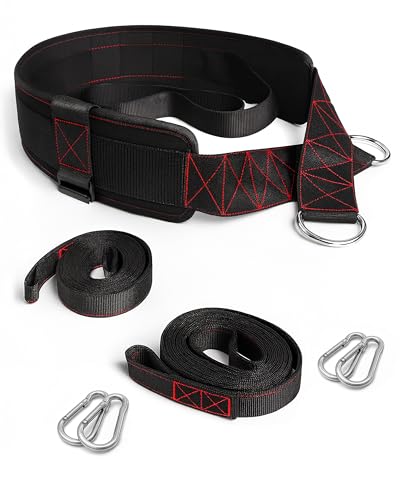
If you want a sled pulling belt built for frequent direction changes, this THEFITGUY option is designed to rotate around your waist so you can switch from back to front pulling without unclipping or re-rigging. It uses a wide padded strap, two included straps, and four hooks to support sled, tire, and resistance training sessions.
Best For: Athletes who want a quick-rotating belt for sled, tire, and resistance work.
Pros:
360° rotation lets you change pulling direction in seconds.
2.75-inch main strap and padded design help it stay in place.
Includes 2 straps and 4 hooks for flexible setup.
Built with 7mm-thick metal rings and cross-stitching for added support.
Cons:
One-size design may not suit every waist equally well.
Focused on sled-style work rather than general gym use.
This is a strong pick if you want a practical training belt that minimizes setup changes during hard sessions. The design is clearly aimed at serious sled work and keeping the belt stable under load.
This sled pulling belt is built around backward sled dragging and ATG-style training, with an 8-foot strap made from industrial-grade polyester webbing. If your priority is a straightforward sled strap for knee-focused workouts, this one keeps the design simple and durable.
Best For: Lifters and athletes focused on backward sled drags and knee-friendly conditioning.
Pros:
8-foot length gives you a practical setup for backward drags.
Industrial-grade polyester webbing is made for durability.
Designed for comfort during longer training sessions.
Includes a heavy-duty D-ring and carabiner hook.
Cons:
More specialized for backward dragging than multi-direction belt use.
No extra pulling straps or hooks beyond the included hardware.
For athletes who mainly want a dedicated backward drag strap, this is a focused and durable choice. Its comfort-first build and simple hardware make it easy to use without extra complexity.
This sled pulling belt is built for athletes who want a comfortable, adjustable belt that can rotate for back, side, or front pulling. It combines padded suede and neoprene materials with a self-locking buckle, making it a practical choice for sled, tire, resistance, and agility work.
Best For: Users who want a highly adjustable belt for multiple pulling directions.
Pros:
Self-locking buckle is designed to stay secure during pulls.
Rotates around the waist for easy direction changes.
Fits waists from 25 to 42 inches.
Includes 2 pulling straps and 4 metal snap hooks.
Cons:
Width and buckle style may feel bulkier than simpler straps.
Best suited to sled-style training rather than casual lifting.
If you want one belt to cover different training angles, this model offers a strong mix of adjustability and included accessories. The self-locking closure and padded construction make it especially appealing for regular training sessions.
For shoppers comparing a sled pulling belt with a strong, no-nonsense build, this POWLIF model uses dual-layer nylon, oversized D-rings, and a self-locking buckle. The trapezoidal shape and fixed waist design are meant to improve comfort and stability during heavy sled work.
Best For: Serious athletes who want a reinforced belt for heavy sled and resistance training.
Pros:
Dual-layer nylon and cross-stitched seams add durability.
Self-locking buckle is designed to stay secure under load.
Trapezoidal waist shape aims to improve fit and protection.
118-inch pulling rope gives you plenty of length for heavy setups.
Cons:
Heavier build may feel more substantial than minimal straps.
One-size format may not be ideal for every user preference.
This is a solid pick when security and reinforcement matter more than simplicity. The heavy-duty materials and larger hardware make it well suited to demanding pulling sessions.
If you want a sled pulling belt for straightforward resistance work, this neoprene waist belt covers the basics well. It’s designed for sled and tire pulling, speed parachute drills, and agility training, with a soft 6.5mm neoprene build and adjustable fit for most athletes.
Best For: Athletes who want a simple, comfortable pulling belt for sled, tire, and speed training.
Pros:
6.5mm neoprene construction feels soft while still offering sturdy support.
Adjusts from 30 to 41 inches for a wider fit range.
Two back D-rings make it easy to attach pulling straps.
Works for sled pulls, tire drags, parachute drills, and agility training.
Cons:
Only includes the belt and does not list extra straps or hooks.
Less feature-rich than full pulling kits.
Overall, this is a practical pick if you mainly need a comfortable waist belt to anchor sled pulling sessions without extra accessories. It focuses on basic support and versatility rather than a complex setup.
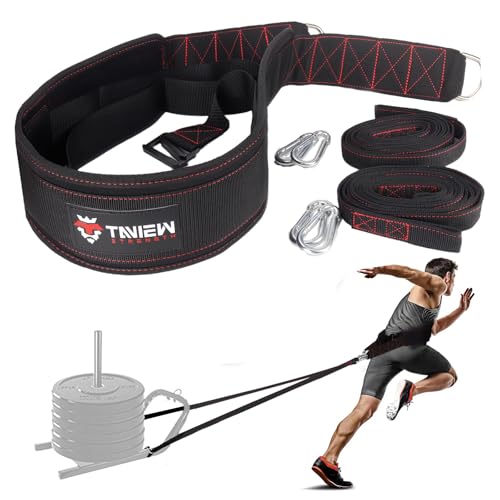
This sled pulling belt is built as a full training setup for resistance work, strength drills, and sport conditioning. The adjustable padded waist belt comes with 2 pulling straps and 4 metal hooks, making it easier to switch between sled pulls, tire drags, backward drags, and other multidirectional exercises.
Best For: Athletes who want an all-in-one sled pulling belt kit with straps and hooks included.
Pros:
Includes 1 belt, 2 pulling straps, and 4 metal hooks.
Supports forward pulls, backward drags, side steps, bear crawls, and sprints.
Adjustable padded waist belt helps distribute pulling force more comfortably.
Reinforced stitching and durable materials are made for demanding workouts.
Cons:
More of a complete kit than a simple belt, so it may be more than some buyers need.
One-size design may not appeal to athletes wanting more size options.
For users who want a sled pulling belt that arrives ready for multiple drills, this kit stands out for convenience and training variety. It’s a strong choice for gym, garage, field, and outdoor sessions where quick setup matters.
These sled pulling straps are a simple, heavy-duty option for resistance and speed training when you already have a compatible waist belt setup. Made from nylon with strong stitching, they’re designed for sled dragging, tire pulling, and parachute drills, and the long 118-inch length gives you plenty of reach.
Best For: Athletes who need long, durable pulling straps for sled and tire training.
Pros:
Nylon construction with strong stitching is built for heavy training use.
118-inch straps provide extra length for sled dragging and other drills.
Suitable for resistance, speed, strength, and agility work.
Comes as a 2-pack for added convenience.
Cons:
Does not include a waist belt or harness.
Pull-on closure means it is less of a complete kit than belt-based options.
This is a good fit if your main need is durable pulling straps rather than a full sled pulling belt system. The extra length and simple design make it useful for athletes who want flexibility in how they set up training.
This sled pulling belt is built for versatile resistance work, with an adjustable fit, breathable materials, and a setup that supports forward, side, and reverse pulls. If you want one belt that can handle sled pulls, agility drills, and general strength training, this option is designed to keep the process straightforward.
Best For: Lifters and athletes who want a comfortable, adjustable sled pulling belt for multi-direction training.
Pros:
Double-layer stitching and premium materials are designed for durability and comfort.
Adjustable design helps it fit different body types and training styles.
Two heavy-duty D-rings help distribute weight more evenly.
Easy to rotate around the waist for changing pull directions.
Cons:
Only one universal size option is listed.
Focuses on basic training versatility rather than specialized features.
Overall, this belt is a practical pick if you want a comfortable sled pulling belt that can move between different pull directions without much fuss. The included straps and hooks make it a useful all-in-one setup for resistance and agility training.
This sled pulling belt is aimed at users who want a wider, thicker waist belt with easy adjustment and quick direction changes. It is built for sled pulling, tire pulling, and general resistance training, making it a solid choice for strength-focused workouts where waist support matters.
Best For: Athletes who want a wider sled pulling belt with strong waist protection and easy setup.
Pros:
Wider, thicker design is meant to improve comfort and waist protection.
Double-layer precision stitching and high tensile strength materials add durability.
Adjustable sides and inner insert buckle help keep the belt in place.
Quick to rotate for front, side, and reverse pulling.
Cons:
Bulky build may feel more substantial than simpler belts.
Only one large-adjustable size is listed.
As a sled pulling belt for hard training sessions, this model stands out for its broader feel and simple adjustability. It is a strong fit if you want something that emphasizes comfort, waist security, and easy transitions between pull angles.
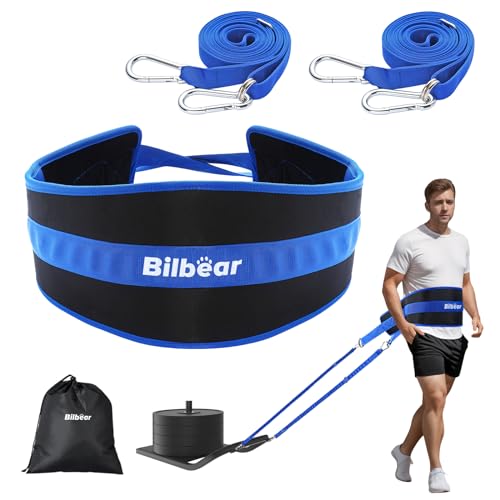
This sled pulling belt offers the same adjustable, multi-direction design as a general training waist belt, with a hook-and-loop closure and a blue finish. It is intended for sled pulling, tire pulling, and strength-focused conditioning where you need a belt that is quick to put on and easy to move through different pull angles.
Best For: Users who prefer a hook-and-loop sled pulling belt with simple adjustability and training versatility.
Pros:
Hook-and-loop closure makes the belt easy to fasten and adjust.
Designed for front, side, and reverse pulling.
Wide application for sled pulling, tire pulling, and team training.
High-quality fabric and double-layer stitching support durability.
Cons:
Uses a hook-and-loop closure instead of a buckle.
Product details do not list multiple size options.
This is a straightforward sled pulling belt for users who want easy setup and broad training use. The closure style and adjustable build make it a convenient option for athletes who value quick changes between exercises.
For this roundup, we looked for Sled Pulling Belt designs that prioritize secure attachment, simple adjustability, and training comfort. We also favored models with multiple straps or hooks where that adds versatility, along with belts that appear suited to both forward and backward drags.
Because these products are used for high-tension work, durability and a stable waist fit matter more than extras. A good belt should stay put, transfer force cleanly, and avoid unnecessary bulk.
Quick Comparison
Most Sled Pulling Belt models fall into a few categories: basic waist belts with one or two straps, more adjustable belts with multiple hooks, and heavier-duty setups intended for mixed use with sleds and tires. Simpler designs can be easier to use, while more adjustable versions may offer better control across different exercises.
Key Buying Factors for a Sled Pulling Belt
Fit and Waist Stability
The belt should sit snugly without pinching or shifting during starts and acceleration. One-size designs can work well if the adjustment range is generous, but check whether the belt is likely to fit over clothing or bulkier training gear.
Strap Length and Connection Style
Strap length affects how much room you have between your waist and the sled. Longer straps can help with larger training areas or certain drag angles, while shorter straps may feel more controlled. Hooks, clips, and rotating attachments can also influence ease of use and how naturally the line moves.
Comfort Under Load
Look for padding, smooth edges, and a belt profile that distributes pressure across the hips and waist. If you do repeated intervals or backward sled drags, comfort becomes a major factor in whether you can train consistently.
Training Versatility
Some belts are built mainly for sled pulling, while others can also support tire pulls, resistance work, or general speed and conditioning drills. If you want one piece of gear for multiple sessions, choose a Sled Pulling Belt with flexible attachments and dependable hardware.
Who Should Buy Which Sled Pulling Belt?
If you want the simplest setup, choose a straightforward belt with easy adjustment and reliable straps. If you train hard, use different drag angles, or want more control over attachment points, look for a more configurable model with multiple hooks or reinforced hardware. Athletes focused on backward dragging should prioritize comfort and a stable waist fit first, since those sessions often create the most friction and belt movement.
In general, the best choice is the one that matches your training space, load level, and preferred movement pattern. A well-fitting Sled Pulling Belt should help you train harder without becoming a distraction.