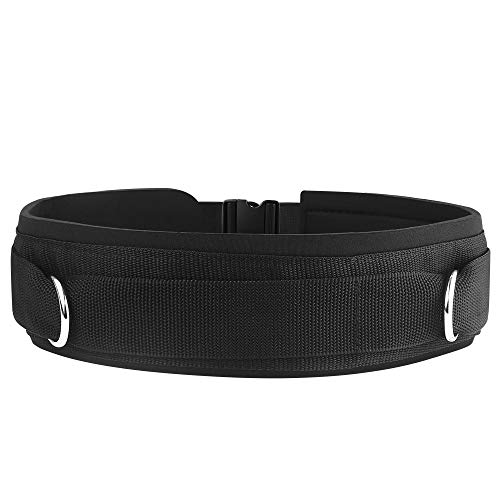
If you want to train legs and add resistance without loading your shoulders or spine, a cable machine squat belt can be a smart solution. The right belt helps keep the weight low, stable, and more comfortable through every rep.
In this roundup, we focus on options that balance support, attachment security, padding, and versatility so you can choose a setup that fits your training style and equipment.
If you want a cable machine squat belt that can also handle dips and hip thrusts, this multi-attachment design is built to cover both worlds. The five attachment points, included straps, and carabiners make it easy to set up for different cable angles without buying extra hardware.
Best For: Lifters who want one belt for cable squats, hip thrusts, weighted dips, and pull-ups.
Pros:
Works for cable squats, hip thrusts, weighted dips, and pull-ups
Five attachment points give more positioning flexibility
Includes 27″ and 40″ straps plus 4 carabiners and a dumbbell loading strap
Fits waist sizes 30″-52″ for a broad one-size range
Cons:
Best fit depends on measuring at the belt line, not the natural waist
Designed to work with many setups, but the user still needs to choose the right pulley position
This is a practical pick if you want a single belt that can move between cable work and bodyweight loading without extra add-ons. Its main appeal is flexibility rather than a highly specialized squat-only design.
For a simple cable machine squat belt alternative, this chain-style dip belt is mainly aimed at heavy loading for dips and pull-ups. The long iron chain and locking carabiners make it easy to add weight, while the reinforced nylon build is focused on durability and comfort.
Best For: Lifters who want a traditional weighted dip belt for dips, pull-ups, and general loaded training.
Pros:
Rated for 550 pounds with a 37″ chain and two locking carabiners
Military-grade nylon and double stitching for durability
Chain length reaches 42″ total with included carabiners
Fits waist sizes from 22″ to 46.3″
Cons:
Chain-based design is less specialized for belt squat machines than dedicated squat belts
Heavier-duty hardware may feel more traditional than padded machine-style belts
This belt is strongest when you want a straightforward loading system with high capacity and a classic dip-belt feel. It is less about machine-specific squat comfort and more about reliable weight attachment.
If your priority is a cable machine squat belt for belt squats and rack work, this model is built specifically to stay low and move cleanly. The padded side straps and structured back are designed to reduce ride-up, improve support, and keep the belt stable through the squat pattern.
Best For: Lifters using belt squat machines, rack attachments, lever arms, and similar squat-focused setups.
Pros:
Low-profile side straps stay flat and help prevent ride-up
Reinforced 5-panel EVA back adds structured lumbar support
Adjustable inner strap and metal buckle help keep the fit secure
Built for belt squat machines, racks, and lever arms
Cons:
Supports up to 350 lbs, which is lower than some chain-style options
More specialized for squat machines than for dips or pull-ups
This is the most purpose-built option in the group if your main use is belt squats. It emphasizes stable positioning and comfort during the movement rather than multi-exercise versatility.
This 3-in-1 option works well if you want a cable machine squat belt that also covers pull-ups, dips, deadlifts, and general strength training. It combines a self-locking buckle, reinforced webbing, and a long chain to support loaded sessions without constant readjustment.
Best For: Multi-purpose lifters who want one belt for squats, pull-ups, dips, and deadlifts.
Pros:
3-in-1 design for weight lifting, dips, and pull-ups
Self-locking metal buckle plus hook-and-loop dual fixation
7.1″ wide lumbar support with breathable EVA sandwich mesh
40.6″ chain and hardware rated up to 350 lbs
Cons:
350 lb capacity is solid, but not the highest in the category
Chain-based setup is less specialized for belt squat machines than dedicated squat belts
This belt is best when you want versatility and a secure closure system in one package. It balances general training use with enough support to cover squat work, but it is not as machine-specific as a dedicated belt squat belt.
If you want a simple cable machine squat belt for pulley work, this padded waist belt is built for adjustable resistance training rather than heavy belt squat loading. The neoprene padding and movable rings make it a practical pick for kickbacks, speed work, and other cable-based exercises where comfort and easy attachment matter.
Best For: Cable kickbacks, resistance training, and agility work with a padded waist belt.
Pros:
5.5mm neoprene padding helps improve comfort during cable work.
Adjustable fit covers waist sizes from 25 to 41 inches.
Two movable rings make it easy to attach to cable machines and resistance trainers.
Wide 3.7-inch belt design supports steady positioning.
Cons:
Not designed as a dedicated belt squat belt with lever-arm support.
Best suited to cable and resistance movements, not heavy barbell loading.
This is a straightforward, comfort-focused option for users who want a cable machine squat belt alternative for accessory work. If your priority is adjustable fit and easy clip-on use, it does the basics well.
For anyone shopping for a cable machine squat belt designed around belt squat setups, this one is the most purpose-built option in the group. It’s made for lever arms and squat machines, with low-profile side straps, padded hip and thigh contact, and back support meant to keep the belt secure through deep squats.
Best For: Belt squat machines, rack attachments, and lifters who want more back support during squats.
Pros:
Designed specifically for squat machines and lever-arm setups.
Five EVA back panels provide added lumbar support.
Low-profile 2.2-inch side straps help keep the belt secure during deep squats.
Adjustable strap and metal buckle fit waist sizes up to 50 inches.
Cons:
Purpose-built for squat stations, so it’s less versatile than a general cable attachment belt.
May be more belt than needed if you only want light cable accessory work.
If your main goal is stable, supported belt squats, this is the strongest match here. The combination of back panels, secure hardware, and squat-machine-friendly layout makes it the most specialized pick.
This dip belt is a stronger fit for lifters who want to add load to bodyweight movements, including belt squats. The steel chain, contoured padding, and secure hook-and-loop fit are all aimed at keeping weight stable while you train dips, pull-ups, chin-ups, or belt squat variations.
Best For: Weighted bodyweight training and belt squats that need a chain-based loading setup.
Pros:
Supports up to 300 lbs for progressive weighted training.
38-inch heavy-duty steel chain makes plate loading fast and secure.
Contoured design and soft back support improve comfort under load.
Can be used for dips, pull-ups, chin-ups, and belt squats.
Cons:
Chain-based design is less specialized for squat machines than dedicated belt squat belts.
Hook-and-loop closure may not feel as rigid as a buckle-style load belt for some users.
As a cable machine squat belt option, this is best for users who want to load exercises rather than sit into a dedicated squat machine. It’s a versatile choice if you also train dips and pull-ups and want one belt for multiple movements.
If you want a cable machine squat belt that stays out of the way while still adding support, this low-profile option is built for smooth lower-body training. The streamlined shape is designed to help you squat deeper, while the padded back panel adds structure for steadier lifts.
Best For: Lifters who want a streamlined belt for belt squats, rack attachment work, and other lower-body strength sessions.
Pros:
Low-profile design supports a fuller range of motion.
Structured padded back panel adds lumbar stability during heavy lifts.
Adjustable strap and durable buckle help create a secure fit.
Soft padding and stitching are made for longer training sessions.
Cons:
One-size design may not suit every lifter equally well.
Focused on lower-body and belt squat use rather than multi-use accessories.
Overall, this belt is a practical pick if your priority is comfort, stability, and freedom of movement during squat-focused workouts. It keeps the profile minimal without ignoring the support side of training.
This cable machine squat belt is built for lifters who want a secure wrap, structured support, and simple adjustment. The complete buckle closure is designed to reduce slipping, while the firm back panel adds lumbar support for weighted squats and other pulling or dipping work.
Best For: Users who want a highly adjustable dip-style belt for belt squats, weighted dips, and pull-ups.
Pros:
Complete buckle closure is designed to help prevent slipping and weight swing.
Structured firm back offers lumbar support during squats, dips, and pull-ups.
45-degree angle rings help encourage a more natural dip and lift position.
One-size fit covers a wide waist range from 32″ to 52″.
Cons:
Hook-and-loop closure may not appeal to lifters who prefer a traditional chain setup.
Best fit still depends on measuring your waist carefully.
As a training belt, this model stands out for adjustability and a secure feel across multiple exercises. It is a strong choice if you want support for belt squats without giving up versatility.
For a cable machine squat belt that leans into heavy-duty construction, this DMoose model is built for serious weighted work. Its thick neoprene padding is meant to reduce lower-back and hip strain, while the steel chain and reinforced hardware are designed for secure loading.
Best For: Lifters who want a padded dip belt for heavy weighted dips, pull-ups, squats, and other plate-loaded training.
Pros:
Supports up to 350 lbs with a robust steel chain.
Thick neoprene padding aims to improve comfort and reduce strain.
Reinforced stitching, carabiners, and nylon strap add durability.
Built for dips, pull-ups, squats, and other weighted exercises.
Cons:
Steel chain setup may be more than some casual users need.
Focuses on heavy loading rather than a minimalist profile.
This is a solid pick if durability and higher load capacity matter most. It is especially appealing for lifters who want one belt for repeated heavy training sessions across multiple exercises.
We looked for Cable Machine Squat Belt options that offer secure attachment points, dependable load capacity, and enough comfort for repeated sets. We also prioritized designs that work beyond one exercise, since many buyers want a single belt for belt squats, dips, pull-ups, and rack-based movements.
Materials, closure style, padding, chain or strap length, and how low the load rides during movement were all important. The best picks should feel stable under tension without digging into the hips or shifting during the descent.
Quick Comparison
Different belts solve different problems. Some are built for heavier strength work with steel chains and reinforced hardware. Others emphasize low-profile support for belt squats and squat machines. A few use straps or pulley-style attachments that are better suited to cable machine work and functional training.
If your priority is pure lower-body loading, choose a belt squat-focused design. If you want broader gym use, a dip belt style with a strong chain or self-locking attachment may be the better all-around option.
Key Buying Factors for a Cable Machine Squat Belt
Support and Ride Height
A good Cable Machine Squat Belt should keep the load low and centered so it does not pull awkwardly on your waist. Low-profile designs with structured back support tend to feel better during squats and repeated sets.
Padding and Fit
Look for padding across the hips and thighs, especially if you plan to use heavier loads. A belt that fits securely without excessive pressure is easier to keep consistent through a workout.
Attachment System
Chains, straps, hooks, and rings all have trade-offs. Chains are common for heavy lifting, while strap-based designs can feel smoother on cable machines and pulley systems. Choose the attachment that matches your equipment and preferred exercises.
Weight Capacity and Durability
Make sure the belt’s stated capacity matches your training goals with some margin to spare. Heavy-duty stitching, steel hardware, and reinforced closure systems are good signs if you plan to progress over time.
Versatility
If you want one accessory for multiple movements, pick a model that can handle belt squats, weighted dips, pull-ups, and machine work. If your focus is mostly lower-body training, a purpose-built belt squat design is usually the better fit.
Who Should Buy Which Cable Machine Squat Belt?
Choose a belt squat-focused model if you want the most stable feel for lower-body strength work and machine-based squats. Choose a chain-based dip belt if you want a more versatile strength accessory for pull-ups, dips, and weighted training.
If you train on a cable machine often, a strap or pulley-friendly Cable Machine Squat Belt may offer the best comfort and movement. For heavier lifters, prioritize secure closures, stronger hardware, and the highest practical capacity over extra features you may not use.