If you want a chest-strap sensor that focuses on compatibility first, the COOSPO H6 is easy to understand.
This COOSPO H6 heart rate monitor review looks at the features that matter most for everyday training.
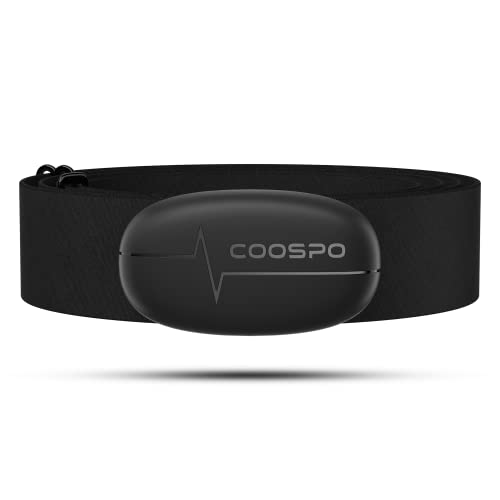
COOSPO H6 Review Summary
The COOSPO H6 is best for buyers who want a straightforward chest-strap heart rate sensor that can talk to both Bluetooth and ANT+ ecosystems.
It is a sensible fit for cyclists, indoor-training users, and athletes who depend on third-party apps or compatible sports watches rather than a single branded platform.
Its appeal is practical rather than flashy.
The listing emphasizes real-time heart rate tracking, dual-mode wireless support, broad app compatibility, and long battery life from a replaceable CR2032 cell.
That combination makes it a strong candidate for anyone who wants one sensor that can move between bike computers, gym machines, and training apps without much friction.
Review Scorecard
| Category | Score | Why it matters |
|---|---|---|
| Connectivity flexibility | 9/10 | Bluetooth and ANT+ support make it easier to pair with phones, watches, bike computers, and compatible gym gear. |
| App compatibility | 9/10 | The listing calls out many third-party apps, which lowers the risk of buying a sensor that only works in one ecosystem. |
| Training usefulness | 8/10 | Chest-strap placement is typically the right choice when the priority is stable heart-rate input during exercise. |
| Convenience | 7/10 | A replaceable battery and broad device support are useful, but a chest strap is still less casual than a wrist wearable. |
| Durability for workouts | 7/10 | IP67 and sweat/rain tolerance are useful for training, but the listing warns against swimming and soaking. |
| Value proposition | 8/10 | The feature set is focused and functional, which should appeal to buyers who care more about compatibility than extras. |
Key Features and Specifications of COOSPO H6
The COOSPO H6 is a chest heart rate sensor built around simple training use.
The product listing highlights ±1 BPM heart rate data, Bluetooth 4.0, and ANT+ transmission, so the unit is aimed at users who want a sensor that can feed data into a broad range of fitness platforms.
The listing also names support for many third-party apps, including Strava, Wahoo Fitness, Polar Beat, DDP Yoga, HR Monitor, Openrider, Zwift, Runtastic, and Coosporide.
That matters because many buyers are not looking for the best standalone chest strap in a vacuum; they are looking for one that fits an existing setup.
Here are the most relevant listed details:
| Feature | What the listing says |
|---|---|
| Product type | Chest heart rate sensor with strap |
| Wireless modes | Bluetooth and ANT+ |
| Accuracy claim | ±1 BPM heart rate data |
| App support | Works with many third-party fitness apps |
| Bike computer support | Compatible with Garmin/CooSpo and other GPS bike computers |
| Sports watch support | Works with most BLE / ANT+ sports watches |
| Gym equipment support | Works directly with Peloton bike, Concept2, Nordic treadmill, Bowflex Max Trainer, Pro-Form treadmill, iFIT treadmill, Echelon, and others |
| Battery | Replaceable CR2032 cell |
| Battery life claim | Up to 300 hours with about one hour of exercise per day |
| Protection | IP67, but not for swimming or soaking |
Two details stand out.
First, the dual-mode Bluetooth and ANT+ setup is the main reason to consider this model over a simpler, single-protocol strap.
Second, the replaceable battery and long runtime claim suggest a low-maintenance product for regular training.
The listing also gives practical usage tips.
It says to moisten the electrode areas before wearing it, connect through the app rather than the phone’s generic Bluetooth menu, separate the sensor from the strap after exercise, and add more moisture in dry winter conditions if signal stability is weak.
Those notes do not sound glamorous, but they are the kinds of details that determine whether a strap works smoothly in daily use.
Pros and Cons of COOSPO H6
Pros
- Broad compatibility across apps, bike computers, watches, and gym equipment
- Bluetooth and ANT+ support make it more adaptable than many basic chest straps
- Long battery-life claim with a replaceable CR2032 cell
- Workout-oriented design that is better suited to training than casual wrist-only heart-rate estimates
- IP67 protection adds some practical resistance to sweat and rainy conditions
Cons
- Chest straps are less convenient than a watch for people who want zero setup
- Not for swimming or soaking, despite the IP67 rating
- Needs correct wear habits such as moistening the electrodes and separating the sensor after use
- Compatibility is broad, but setup still matters because the listing says to connect in the app rather than through the phone’s Bluetooth screen
The overall balance is clear: the strength of the COOSPO H6 is utility, not lifestyle polish.
If you value broad connectivity and steady workout data more than a passive, always-on wearable, the tradeoff makes sense.
Who Should Buy COOSPO H6?
The COOSPO H6 makes the most sense for people who train with apps or devices that already support Bluetooth or ANT+.
Cyclists, indoor riders, treadmill users, and people who want to feed heart-rate data into software like Zwift or Strava are the obvious audience.
It is also a reasonable choice for buyers who use multiple devices.
If one day you want to pair with a phone-based app and another day with a bike computer or compatible sports watch, the dual transmission modes reduce friction.
You should probably skip it if you want the simplest possible fitness experience with no strap, no electrode prep, and no app-pairing steps.
It is also not the right choice if your main use case is swimming.
The listing is explicit that it should not be soaked or used for swimming.
In short, buy it for training versatility, not for convenience theater.
Heart Rate Tracking Behavior of COOSPO H6
Chest Strap Placement Matters
The design assumes you will wear the strap correctly and use it like a training sensor, not like a casual accessory.
That is normal for chest monitors: they tend to work best when the electrodes have good contact and the strap sits securely during movement.
Connection Setup Is Part of the Product
The listing’s setup guidance is a meaningful part of the experience.
Moistening the electrodes and connecting through the app rather than the phone’s generic Bluetooth panel are practical steps that can help avoid the kind of pairing frustration that causes returns.
Best Fit for Multi-Device Training
Because it supports both Bluetooth and ANT+, the COOSPO H6 is naturally positioned as a bridge device.
That is especially useful if you rotate between a workout app, a bike computer, and a sports watch without wanting a different sensor for each one.
Weather and Maintenance Realities
The IP67 rating helps for sweat and rainy-day training, but the listing also sets a boundary: do not swim with it and do not soak it.
The replaceable battery is a plus, yet the strap still asks for light maintenance, especially in dry conditions where extra moisture may help signal stability.
Alternatives to COOSPO H6
If you are comparing options, look at established chest-strap lines that are commonly used for structured training:
- Polar H10 Amazon search
- Garmin HRM-Dual Amazon search
- Wahoo TICKR Amazon search
- CooSpo chest heart rate monitor Amazon search
The relevant comparison point is not brand prestige alone.
It is whether you want the broad compatibility and chest-strap behavior of a sensor like the COOSPO H6, or whether your setup already points you toward a more established ecosystem-specific option.
Is COOSPO H6 Worth It?
Yes, if you want a practical chest-strap heart rate monitor with broad compatibility and a low-maintenance battery setup. The COOSPO H6 is worth considering for cyclists, app-based trainees, and anyone who wants Bluetooth and ANT+ in one sensor.
It is less compelling if you want the simplest possible wearable or if swimming is part of your routine.
But for workout data, multi-device flexibility, and straightforward training use, the COOSPO H6 is a sensible buy.
Related Posts: