The best balance boards for home workouts can make short training sessions more challenging while helping develop balance, coordination, ankle stability, and core control. The right model depends on your experience, available space, and preferred exercises.
We compared these 10 options by design, movement range, weight capacity, surface grip, versatility, and ease of use so you can choose a board that fits your routine and confidence level.
Best 10 Balance Boards for Home Workouts Picks for 2026
Reliable Core Trainer
Amazon Basics Wood Wobble Board
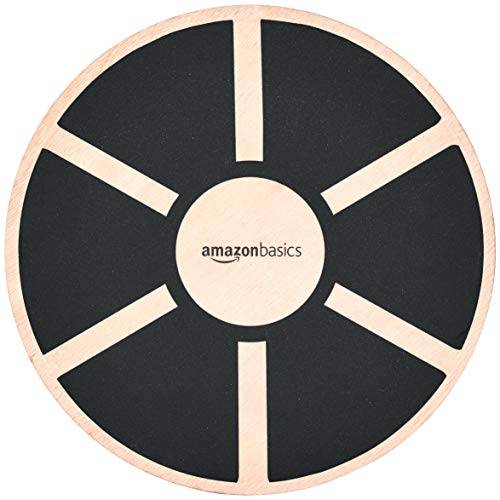
- Solid wood board supports up to 265 pounds
- Useful for balance, planks, push-ups, and core work
- Compact slip-resistant design with 1-year warranty
Best For: Straightforward home balance and core training
Most Versatile Option
3-in-1 Slant and Balance Board
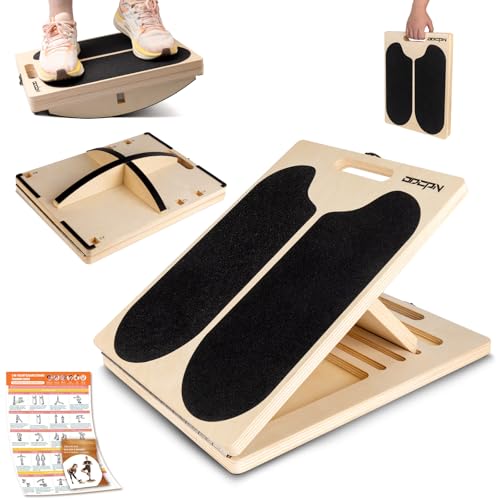
- Combines calf stretching with 180° and 360° balance modes
- Six adjustable angles from 20° to 45°
- Fold-flat design includes a training poster
Best For: Mobility, stretching, recovery, and balance training
High-Capacity Stability Pick
Professional Wooden Wobble Board

- Supports up to 350 pounds
- Suitable for balance, core, squats, planks, and therapy work
- Portable anti-slip design with floor-protection pads
Best For: Higher-capacity balance and rehabilitation exercises
Family-Friendly Twist Trainer

- Swiveling design adds rotational core work
- Non-slip, lightweight ABS plastic construction
- Suitable for balance, yoga, planks, and push-ups
Best For: Lightweight family and twist-focused workouts
Best Compact Rocker
StrongTek Wooden Balance Board
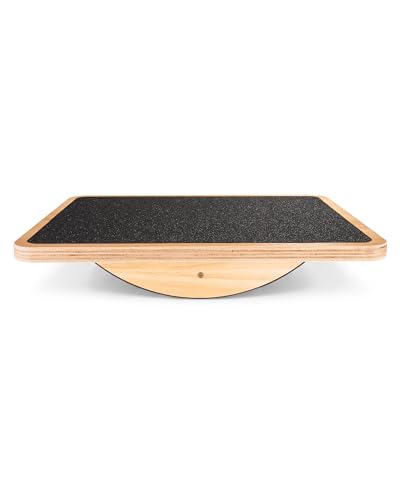
- Textured, slip-resistant surface
- Portable 17.5-by-13.5-inch design
- Supports up to 350 pounds
Best For: Beginners, rehabilitation, and portable home workouts
Best Interactive Pick
GoBalance App-Enabled Balance Board

- Bluetooth app with real-time feedback
- 12 games and four sports modes
- Supports multiplayer use for up to four boards
Best For: Gamified family workouts and app-guided training
Best Step-Up Challenge

- 360-degree directional wobble
- Cross base offers controlled movement
- Textured non-slip wooden platform
Best For: Intermediate balance and stability training
Best Wooden Option
350-LB Anti-Slip Balance Trainer

- Wooden rocker design supports balance and core drills
- Anti-slip surface and base pads help protect floors
- No assembly; compact for home, office, or travel
Best For: Beginners, seniors, and gentle stability training
Best Portable Pick
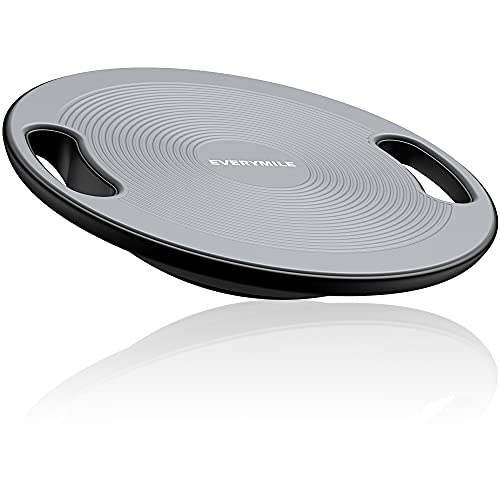
- 360-degree rotation and 15-degree tilt add drill variety
- Six non-skid feet and textured surface support stability
- Lightweight 3.5-pound design includes a carrying handle
Best For: Portable core, balance, and rehabilitation-focused workouts
Best Adjustable Choice
2-in-1 Wooden Wobble Board with Roller

- Three height levels accommodate changing skill levels
- 360-degree rotation supports varied balance and core drills
- 441-pound capacity with roller, stoppers, and storage rack
Best For: Progressive home training, surf practice, and physical therapy
Reliable Core Trainer – Amazon Basics Wood Wobble Board
For shoppers comparing balance boards for home workouts, this Amazon Basics model offers a straightforward wood wobble-board design. Its slip-resistant top supports standing balance drills as well as planks, push-ups, and targeted strengthening exercises.
Best For: Adults seeking a simple, versatile balance board for home exercise, core work, or general coordination training.
Pros:
- Supports exercises for balance, coordination, posture, and core strength.
- Solid wood construction supports up to 265 pounds.
- Non-slip surface and compact 15.75-inch square footprint.
- Backed by a 1-year limited warranty.
Cons:
- Must be used on a dry, non-slip surface; wet or smooth surfaces are not recommended.
- Its 265-pound capacity is lower than some higher-capacity options.
This is a practical pick when you want one compact board for basic wobble training and bodyweight exercises without extra adjustment mechanisms.
Most Versatile Option – 3-in-1 Slant and Balance Board
Among balance boards for home workouts, this 3-in-1 design stands out for combining calf stretching with 180-degree directional balance and 360-degree rotation. Six slant angles and a portable, fold-flat setup make it useful for mobility work, balance practice, and recovery routines.
Best For: Users who want one board for calf stretching, ankle and lower-leg mobility, balance training, and core-focused exercise.
Pros:
- Combines slant-board stretching with 180-degree and 360-degree balance modes.
- Offers six adjustable angles from 20 to 45 degrees.
- Includes a training poster and switches modes with detachable magnetic side panels.
- Wood construction, non-slip surfaces, and a fold-flat portable design.
Cons:
- The product notes list both a 460-pound capacity claim and a 300-pound maximum-weight detail; verify the applicable limit before use.
- Its multi-part design may take more setup than a basic wobble board.
This is the strongest choice for buyers who value stretching and mobility features alongside balance work, particularly when adjustable angles and compact storage matter.
High-Capacity Stability Pick – Professional Wooden Wobble Board
For balance boards for home workouts that can also support rehabilitation-style exercises, this wooden wobble board offers a 350-pound capacity and anti-slip surface. Its compact format is suited to standing drills, squats, planks, push-ups, and coordination practice.
Best For: Adults who want a compact board for balance development, core training, physical therapy exercises, or standing-desk use.
Pros:
- Supports up to 350 pounds.
- Designed for balance, coordination, proprioception, and core-strength exercises.
- Works with squats, planks, push-ups, physical therapy, and injury-recovery routines.
- Portable design includes protection pads to help prevent floor damage.
Cons:
- The supplied dimensions are presented as 13.5 by 3 by 17 inches, which may be less immediately clear than a square-board measurement.
- No adjustable angles or alternate training modes are listed.
This board makes sense for shoppers prioritizing a higher stated weight capacity and a multipurpose rocker-style platform over specialized stretching features.
Family-Friendly Twist Trainer – Blue ABS Twist Balance Board
This blue ABS twist board brings a swiveling format to balance boards for home workouts. Its non-slip surface and lightweight plastic construction support balancing drills, yoga-inspired movement, planks, push-ups, and core-engaging twisting exercises.
Best For: Families and fitness users looking for a lightweight twist board for balance, posture, core, leg, and general bodyweight exercises.
Pros:
- Swiveling design encourages twisting and core engagement.
- Can be used for balance drills, yoga, planks, push-ups, and muscle-toning exercises.
- Lightweight ABS plastic construction with a non-slip surface.
- Stated maximum weight recommendation of 400 pounds.
Cons:
- The twisting format may be less suitable for shoppers seeking a traditional fixed wobble board.
- The supplied dimensions and size listing differ, so confirm the actual footprint before purchase.
Choose this option if rotational movement and family-friendly versatility appeal more than a conventional wood rocker board or adjustable slant platform.
Best Compact Rocker – StrongTek Wooden Balance Board
For shoppers comparing balance boards for home workouts, the StrongTek Wooden Balance Board is a compact rocker designed for accessible balance, core, and conditioning practice. Its textured surface, portable size, and 350-pound weight recommendation make it a practical option for home or standing-desk use.
Best For: Beginners, families, rehabilitation-oriented routines, and users who want a portable rocker board.
Pros:
- Supports core activation, agility, reaction time, and stamina training.
- Textured surface provides a secure grip for workouts.
- Compact 17.5-by-13.5-inch design is easy to store or transport.
- Supports up to 350 pounds and includes a 30-day money-back guarantee.
Cons:
- The basic rocker design provides less multidirectional challenge than a 360-degree wobble board.
- Its 3-inch height and wooden construction may not suit users seeking app-based training or advanced feedback.
This is a straightforward choice for home exercisers who value simplicity, portability, and a stable entry point into balance training over connected features.
Best Interactive Pick – GoBalance App-Enabled Balance Board
The GoBalance Sport-Play adds connected motivation to balance boards for home workouts. Its Bluetooth sensor, free app, interactive games, sports modes, and real-time progress features are designed to make balance, coordination, core, and full-body training more engaging.
Best For: Teens and adults who enjoy gamified exercise, family challenges, and app-guided home training.
Pros:
- Includes 12 free interactive games and four sports training modes.
- Bluetooth app connectivity provides real-time analysis and progress tracking.
- Supports multiplayer use with up to four boards connected to one app.
- Wide surface, removable TPE mat, anti-slip finish, and balance cushion support varied exercises.
Cons:
- The board cannot connect directly to a TV; casting or screen mirroring requires a compatible phone and TV.
- At 8.4 pounds, it is heavier than the simpler wooden boards in this roundup.
Choose this model if interactive feedback and family participation are likely to keep you consistent. It offers the broadest digital experience here, although it depends on a compatible mobile device for its connected features.
Best Step-Up Challenge – StrongTek 360° Wobble Board
For balance boards for home workouts that offer more movement than a basic rocker, the StrongTek Advanced model adds 360-degree directional wobble. Its cross base provides a larger floor contact area, creating a middle ground between a front-to-back rocker and a traditional round-base wobble board.
Best For: Users ready to progress beyond basic rocking while working on stability, ankle control, coordination, and core engagement.
Pros:
- 360-degree movement creates a more dynamic balance challenge.
- Cross base offers more controlled contact than many round-base wobble boards.
- Textured non-slip surface helps keep feet secure during weight shifts.
- Supports home workouts, standing-desk movement, physical therapy, and balance practice.
Cons:
- Its advanced multidirectional movement may be less approachable than a basic rocker for first-time users.
- It does not include app connectivity, games, or digital progress tracking.
This model is a sensible progression option for users who have outgrown simple front-to-back movement but want a more controlled alternative to a round-base board.
Best Wooden Option – 350-LB Anti-Slip Balance Trainer
For shoppers comparing balance boards for home workouts, this wooden rocker board focuses on straightforward stability practice, core conditioning, and everyday versatility. Its anti-slip surface and non-slip base make it suitable for exercises such as planks, squats, and push-ups, while the compact, no-assembly design is convenient for home, office, or travel use.
Best For: Beginners, seniors, and users who want a portable board for balance, posture, ankle, knee, and core training.
Pros:
- Supports balance, core strength, posture work, and coordination drills.
- Wood construction has a stated maximum weight recommendation of 350 pounds.
- Anti-slip top and base pads help provide stability while protecting floors.
- Arrives ready to use and stores easily in limited spaces.
Cons:
- Its rocker-style design may provide less rotational variety than a 360-degree wobble board.
- The notes do not list adjustable difficulty levels.
This is a practical choice when you want a simple, floor-friendly balance board that can support gentle stability work as well as familiar bodyweight exercises.
Best Portable Pick – No-Skid Wobble Exercise Board
This wobble board is a convenient option for balance boards for home workouts when portability and multidirectional movement matter. Its 360-degree rotation and 15-degree tilt support side-to-side, front-to-back, stretching, and circular drills, while the handle makes it easier to carry between home, the office, and the gym.
Best For: Users seeking a lightweight board for core stability, balance practice, coordination work, or rehabilitation-oriented exercise.
Pros:
- 360-degree rotation and 15-degree tilting angle allow varied movement drills.
- Textured surface and six non-skid feet are designed for stability.
- Weighs 3.5 pounds and includes a portable handle.
- Supports users up to 300 pounds and is suitable for a range of users, including seniors and athletes.
Cons:
- Its 300-pound maximum is lower than some higher-capacity options.
- The plastic-and-TPR construction may appeal less to shoppers seeking a wooden board.
Choose this model if you value easy transport and varied rotational drills more than a wood-platform feel or a higher weight rating.
Best Adjustable Choice – 2-in-1 Wooden Wobble Board with Roller
For balance boards for home workouts that can grow with your skill level, this VEVOR trainer combines a wooden board with a roller, magnetic stoppers, and a storage rack. Three height settings and 360-degree rotation let you vary the training intensity, making it suitable for balance practice, core workouts, surf-style training, and physical therapy exercises.
Best For: Beginners through advanced users who want adjustable balance training and a high-capacity board for home or office use.
Pros:
- Three height levels—2.5, 2.7, and 2.9 inches—support adjustable difficulty.
- 360-degree rotation adds variety for coordination and stability training.
- Multi-layer solid wood construction has a stated 441-pound capacity.
- Anti-slip top and base, roller, stoppers, and storage rack expand its training and storage options.
Cons:
- The 28-inch board and roller setup may require more practice and space than a basic rocker board.
- Its broader feature set may be more than needed for simple balance exercises.
This is the most versatile pick of the three for progressive training, especially if you want one board to cover basic balance work, core exercises, and surf-inspired practice.
How We Picked the Best Balance Boards for Home Workouts
We focused on the features that matter most for safe, repeatable home training: construction, traction, stability, movement style, stated weight capacity, and setup requirements. Rocker boards generally offer a more controlled introduction to balance training, while 360-degree wobble boards demand more coordination and allow a wider range of movement.
We also considered whether each board supports useful exercises such as squats, calf raises, ankle mobility drills, planks, standing desk sessions, and rehabilitation-focused balance work. App connectivity and included accessories were treated as extras rather than substitutes for solid construction and a dependable non-slip surface.
Quick Comparison
| Board type | Best suited to | What to look for |
|---|---|---|
| Rocker board | Beginners and controlled drills | Stable platform, grippy top, moderate tilt |
| 360-degree wobble board | Experienced users and advanced balance work | Responsive movement and secure footing |
| Roller balance board | Dynamic coordination and board-sport practice | Stoppers, adequate clearance, and open floor space |
| App-enabled board | Users motivated by feedback and games | Reliable sensors, compatible app, and easy charging |
Key Buying Factors for Balance Boards for Home Workouts
Movement and Difficulty
Choose a rocker or limited-tilt design if you are new to balance training, recovering from inactivity, or want a board for basic standing drills. A 360-degree model creates a greater challenge but may require more practice and nearby support. Roller designs are typically the most dynamic and need additional space.
Grip, Construction, and Capacity
A textured or slip-resistant surface is essential, particularly during barefoot exercises or sweaty sessions. Wood can provide a solid, natural feel, while molded materials may be easier to clean. Check the manufacturer’s stated weight limit and leave a sensible margin rather than choosing a board at its maximum capacity.
Space and Safety
Measure the training area and use a level, hard surface with enough room to step off safely. Beginners should practice near a wall, countertop, or sturdy support and start with short sessions. Do not use a balance board on a wet or unstable floor.
Extra Features
Calf-stretch angles, removable stoppers, rollers, and app-based games can expand a board’s usefulness. However, extras should match your goals. A simple board may be the better value for foundational strength, while interactive feedback can help users stay consistent.
Who Should Buy Which Balance Boards for Home Workouts?
Beginners: Start with a rocker-style board or a model with a predictable range of motion and a clearly textured surface.
Core and fitness users: Choose a sturdier wobble board that supports squats, planks, lunges, and standing balance drills.
Rehabilitation or mobility users: Prioritize controlled movement, secure grip, and a capacity rating that comfortably exceeds your body weight. Follow professional guidance when recovering from an injury.
Advanced users and board-sport athletes: Consider a 360-degree or roller design, preferably with stoppers or other features that make progression manageable.
Motivation-focused home exercisers: An app-enabled model with games or performance feedback may make regular practice more engaging.
Related Posts: