The best balance boards for workout can turn simple standing drills into dynamic training for balance, stability, coordination, and core control. The right model depends on your experience, available space, and whether you want bands, rollers, cushioning, or adjustable difficulty.
We compared 10 popular options across construction, grip, movement style, weight capacity, portability, and training versatility to help you choose a board that fits your routine.
Best 10 Balance Boards for Workout Picks for 2026
Simple Stability Pick
Amazon Basics Wood Wobble Board
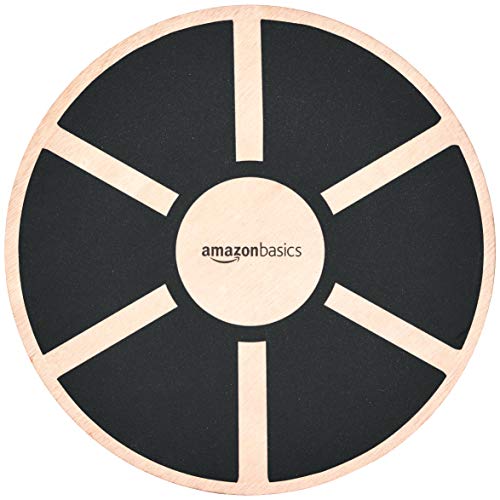
- Solid wood board supports up to 265 pounds
- Non-slip surface for balance and core exercises
- Compact design for home workouts
Best For: Adults and athletes seeking a straightforward wobble board
Low-Impact Cardio Option
MERACH Ski-Style Balance Trainer

- Side-to-side motion mimics cross-country skiing
- Includes resistance bands and an LCD monitor
- Quiet design supports up to 300 pounds
Best For: Home users wanting low-impact cardio and balance tracking
Cushioned Stability Choice
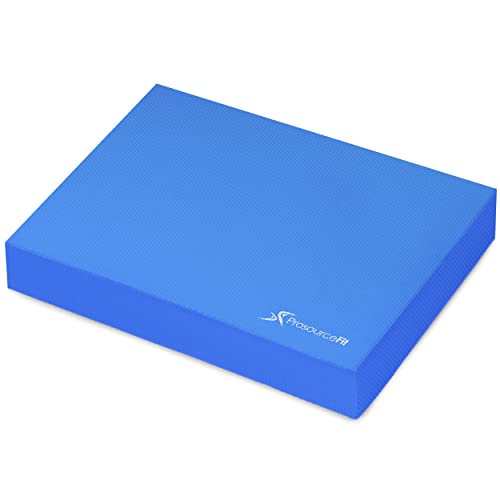
- Soft, unstable surface challenges balance and core control
- Slip-resistant TPE is sweat-proof and easy to clean
- Lightweight design works for fitness and rehabilitation
Best For: Beginners, yoga users, and cushioned stability training
Most Adjustable Trainer
Sportneer 7-Mode Balance Board
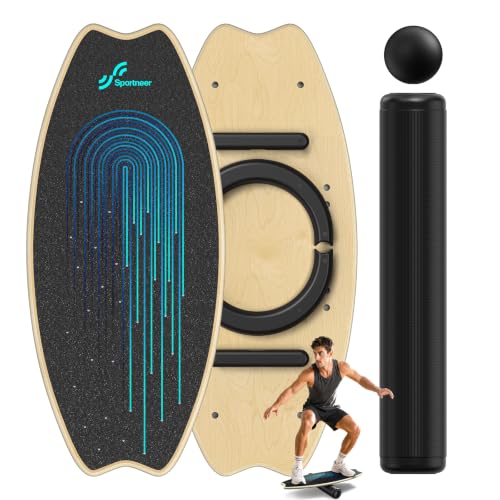
- Seven modes support progressive balance challenges
- Includes a roller, ball, and adjustable stoppers
- Birch board supports up to 450 pounds
Best For: Athletes and users seeking adjustable stability training
Versatile Twist Trainer

- Supports balance, yoga, twisting, and bodyweight exercises
- Lightweight ABS build with a non-slip surface
- 400-pound maximum weight recommendation
Best For: Family-friendly balance and core workouts
Controlled 360° Trainer
StrongTek Wooden Balance Board

- 360° wobble challenges stability and coordination
- Cross base offers a more controlled feel
- Textured surface and 350-pound capacity
Best For: Progressive balance, core, and ankle training
Adjustable All-Rounder

- Three height levels for adjustable difficulty
- 360° rotation with roller and magnetic stoppers
- 441-pound maximum weight recommendation
Best For: Versatile progressive balance and surf-style training
Best Full-Body Cardio Pick
LCD Balance Board with Resistance Bands

- Side-to-side cardio motion engages the core, glutes, and thighs
- LCD tracks time, calories, and steps
- Fully assembled, quiet, portable design
Best For: Home cardio and full-body training with progress tracking
Best Versatile Training Pick
Professional Wooden Wobble Board

- Works for balance practice, squats, push-ups, and planks
- Anti-slip surface and floor-protection pads
- 350-pound capacity in a compact portable design
Best For: Multi-purpose home, office, or physical therapy training
Best Simple Rehab Pick

- Engages the lower legs, hamstrings, groin, and core
- Supports balance, posture, and recovery exercises
- Lightweight design with non-slip and floor-protection pads
Best For: Beginners and rehabilitation-focused balance training
Simple Stability Pick – Amazon Basics Wood Wobble Board
If you want a straightforward option among balance boards for workout routines, this wood wobble board provides an unstable surface for core, balance, coordination, and posture exercises. Its non-slip top supports movements such as planks, push-ups, and standing balance poses.
Best For: Adults, athletes, home gyms, and rehabilitation-focused exercise spaces.
Pros:
- Solid wood construction supports up to 265 pounds.
- Non-slip surface is designed to provide a secure grip.
- Compact 15.75-by-15.75-inch footprint suits home workout areas.
- Useful for several exercises targeting balance, core strength, and stability.
Cons:
- Should be used only on dry, non-slip surfaces.
- Does not include resistance bands, monitoring features, or other accessories.
This is a practical choice if you prefer a compact, traditional wobble board without added workout technology. The 265-pound capacity and versatile exercise surface make it suitable for general stability training.
Low-Impact Cardio Option – MERACH Ski-Style Balance Trainer
For shoppers comparing balance boards for workout variety, the MERACH combines side-to-side ski-style motion with resistance bands and LCD feedback. It is designed for low-impact cardio and balance work while engaging the thighs and glutes.
Best For: Home users who want a compact, quiet cardio and balance workout with performance tracking.
Pros:
- Side-to-side motion provides a skiing-inspired workout.
- Includes two resistance bands for additional exercise options.
- LCD screen tracks steps, time, and calories.
- Steel construction supports up to 300 pounds and operates below 25dB.
Cons:
- The ski-like motion may require caution for beginners or people with balance issues.
- Its 31-inch length may require more storage space than a basic wobble board.
- Two LR41 batteries are required for the monitor.
The MERACH stands out when a balance-focused workout also needs a cardio element. Its quiet operation, bands, and built-in display add versatility, though new users should start carefully with the lateral motion.
Cushioned Stability Choice – ProsourceFit Balance Pad
This foam balance pad offers a softer alternative to rigid balance boards for workout sessions. Its unstable, cushioned surface can challenge balance and core control during lunges, squats, planks, and yoga while also supporting foot and ankle rehabilitation exercises.
Best For: Beginners, older adults, yoga users, and rehabilitation or stability training.
Pros:
- Sweat-proof, slip-resistant TPE material is easy to clean.
- Lightweight 12-ounce design is convenient to carry.
- Can be used for workouts, knee support, seating, meditation, or standing desks.
- Cushioned surface is suitable for balance and rehabilitation-focused exercises.
Cons:
- Foam construction may provide less challenge than a rigid wobble board for advanced users.
- The pad is intended for standing and floor exercises rather than rolling or rocking practice.
Choose this pad if comfort and versatility matter more than a pronounced rocking motion. Its approachable surface makes it a useful stability tool for a range of fitness levels and non-workout tasks.
Most Adjustable Trainer – Sportneer 7-Mode Balance Board
The Sportneer gives balance-board workouts a progression-focused design with seven challenge modes, a roller, a ball, and adjustable stoppers. It can support core, coordination, stability, and sport-specific training for activities such as skating, snowboarding, dance, gymnastics, and martial arts.
Best For: Users who want adjustable difficulty and a high-capacity board for progressive balance training.
Pros:
- Seven modes and four removable magnetic stoppers allow difficulty adjustments.
- Two-in-one setup includes a board, roller, and solid rubber ball.
- Birch construction supports up to 450 pounds.
- Matte surface is designed to provide non-skid grip with bare feet or shoes.
Cons:
- At 10.6 pounds, it is heavier than a basic wobble board.
- The roller-and-ball configuration may be more demanding for beginners.
- Its 31.5-inch length requires dedicated storage space.
This is the strongest fit for shoppers who want one balance trainer that can evolve with their skill level. Its adjustable setup and 450-pound capacity make it particularly versatile for athletic and progressive stability work.
Versatile Twist Trainer – Blue Fitness Balance Board
If you want balance boards for workout routines that combine stability practice with core exercises, this lightweight ABS twist board is a flexible option. Its non-slip surface supports drills such as planks, pushups, yoga movements, and twisting exercises, while the swiveling design encourages core and leg engagement.
Best For: Families and fitness users seeking a lightweight board for balance, twisting, yoga, and bodyweight workouts.
Pros:
- Supports balancing drills, core-focused movements, yoga, and muscle-toning exercises.
- Non-slip surface is designed to provide a firm grip.
- Lightweight ABS construction is easy to move and suitable for home use.
- 400-pound maximum weight recommendation.
Cons:
- The swiveling design may be less suitable for users who specifically want a simple rocker board.
- Its listed dimensions are long and narrow, which may not suit every stance or workout style.
This is a practical pick for varied home workouts, especially if you want one board for balance practice and bodyweight training rather than a dedicated rehabilitation or surf-training tool.
Controlled 360° Trainer – StrongTek Wooden Balance Board
For balance boards for workout sessions that progress beyond basic rocking, the StrongTek Wooden Balance Board offers a controlled step up. Its cross base allows 360° directional wobble, while the textured surface and wooden platform support stability, coordination, ankle control, and core training.
Best For: Adults who want a more challenging balance trainer for home workouts, standing-desk movement, ankle practice, or physical-therapy-oriented routines.
Pros:
- 360° directional wobble adds challenge beyond front-to-back or side-to-side rocker movement.
- Cross base provides a larger floor contact area for more controlled practice.
- Textured top helps keep feet secure during weight shifts.
- Solid lauan hardwood plywood construction supports a 350-pound maximum weight recommendation.
Cons:
- The advanced wobble setting may be demanding for complete beginners.
- It does not include the adjustable height levels or roller supplied with some multi-part trainers.
The cross-base design makes this a useful middle ground: more dynamic than a basic rocker, but intended to be more manageable than a traditional round-base wobble board.
Adjustable All-Rounder – VEVOR 2-in-1 Balance Trainer
If you need balance boards for workout training with adjustable difficulty, the VEVOR 2-in-1 trainer offers three height levels and 360° rotation. Its wooden construction, anti-slip top and base, roller, magnetic stoppers, and storage rack make it suitable for core work, balance practice, surf-style training, and compact home or office setups.
Best For: Beginners through advanced users who want adjustable balance training and multiple workout configurations.
Pros:
- Three height settings help users adjust training intensity.
- 360° rotation supports coordination and stability work.
- Includes a roller, magnetic stoppers, and storage rack for varied training and storage.
- Engineered-wood construction has a 441-pound maximum weight recommendation.
Cons:
- The multi-piece design may require more setup and storage space than a basic board.
- At 27.6 inches long, it may be less convenient for users seeking a very small trainer.
This is the most configurable option of the three, making it a strong choice when you want to change the challenge level or use one trainer for general balance, core, and surf-oriented practice.
Best Full-Body Cardio Pick – LCD Balance Board with Resistance Bands
If you want balance boards for workout sessions that do more than challenge stability, this fully assembled rocker board adds side-to-side cardio movement, resistance bands, and workout tracking. Its 300-pound capacity and compact design make it practical for home use.
Best For: Adults seeking a low-impact full-body workout with core, glute, and thigh engagement, plus basic progress tracking.
Pros:
- Combines rocking cardio movement with resistance bands for broader training.
- LCD monitor tracks workout time, calories, and step count.
- Quiet, portable, and ready to use without assembly.
- Supports up to 300 pounds and stores easily in compact spaces.
Cons:
- Its dynamic side-to-side motion may require beginners to start slowly and use nearby support.
- It is designed for adults rather than children.
This is the most feature-rich option in the group for shoppers who want a balance board that can support cardio-style movement while keeping a simple record of activity.
Best Versatile Training Pick – Professional Wooden Wobble Board
For balance boards for workout routines that can scale from simple standing practice to strength exercises, this wooden wobble board offers a stable training platform with an anti-slip surface. Its 350-pound capacity also suits a broad range of adult users.
Best For: Adults who want one compact board for balance work, core training, push-ups, squats, planks, or physical therapy exercises.
Pros:
- Supports exercises ranging from basic balance practice to advanced bodyweight movements.
- Anti-slip surface helps provide grip during workouts.
- Supports up to 350 pounds.
- Compact and portable for home, gym, or office use.
Cons:
- It does not include an LCD monitor or resistance bands.
- The wooden rocker design may feel challenging for users who are new to balance training.
This is a flexible choice for buyers who prioritize exercise variety and a higher weight capacity over built-in workout metrics or accessories.
Best Simple Rehab Pick – Anti-Slip Wooden Rocker Board
If you prefer a straightforward option among balance boards for workout and rehabilitation use, this wooden rocker board focuses on weight-shifting practice, lower-body engagement, and stability. Non-slip foot and floor pads help support controlled use on hard surfaces.
Best For: Beginners, seniors, office users, and adults working on balance, posture, lower-leg strength, or injury recovery.
Pros:
- Weight shifting engages the lower legs, hamstrings, groin, and core.
- Suitable for balance practice, bodyweight exercises, and physical therapy routines.
- Non-slip surface and floor-protection pads support safer use.
- Lightweight, portable construction supports use at home, work, or the gym.
Cons:
- It has no electronic tracking or included resistance accessories.
- The product information describes a compact wooden rocker rather than a full cardio platform.
This board is a practical pick when simplicity matters most and you want a portable tool for controlled balance work, posture support, or gradual conditioning.
How We Picked the Best Balance Boards for Workout
We evaluated these balance trainers by looking at the features that matter during repeated home workouts: platform stability, surface traction, range of motion, materials, portability, and ease of progression. We also considered whether each design suits beginners, experienced users, rehabilitation exercises, full-body workouts, or standing-desk use.
Because balance training can be demanding on ankles and knees, we prioritized boards with useful grip features and clear differences in movement. Weight limits were also considered, but always verify the manufacturer’s specifications before purchase.
Quick Comparison
| Best For | Look For |
|---|---|
| Beginners | Wide platforms, limited tilt, or a cushioned balance pad |
| Core and full-body workouts | Rocking or 360-degree movement plus resistance bands |
| Progressive training | Interchangeable rollers, balls, stoppers, or multiple modes |
| Physical therapy | Controlled movement, secure traction, and guidance from a professional |
| Standing desks | A durable wooden rocker with a comfortable, non-slip surface |
Key Buying Factors for Balance Boards for Workout
Movement Type
Rocker boards tilt mainly from side to side or front to back, making them approachable for beginners. Wobble boards with a central pivot allow movement in multiple directions and generally demand more ankle and core control. Roller-based designs can add another level of challenge, while foam pads provide a softer, less predictable surface.
Surface Grip and Build Quality
Choose a textured or slip-resistant top, especially if you train barefoot or perform squats and lunges. Wood platforms are typically rigid and durable; foam pads are lighter and more forgiving. Check the underside for stabilizing features such as stoppers or a fixed base if you are new to balance training.
Weight Capacity and Size
A higher stated capacity does not automatically mean a board feels more stable. Match the board to your body weight, footwear, and intended exercises, leaving a sensible margin below the maximum rating. Larger platforms offer more foot-placement room, while compact models are easier to store and carry.
Adjustability and Accessories
Resistance bands can make a balance board more useful for upper-body and full-body circuits. Adjustable modes, removable rollers, magnetic stoppers, or multiple base configurations let you increase difficulty over time. These features are worthwhile if you expect to train consistently rather than use the board occasionally.
Who Should Buy Which Balance Boards for Workout?
New users: Start with a broad rocker, stable wobble board, or cushioned pad and practice near a wall or sturdy support.
Home-gym users: Choose a versatile model with bands or adjustable movement so it can complement strength, mobility, and conditioning sessions.
Advanced trainees: Look for a 360-degree board or roller-based system that offers measurable progression and enough surface grip for demanding drills.
Rehabilitation users: Select controlled, low-impact equipment only after confirming suitability with a physical therapist or other qualified clinician.
Related Posts:

