A functional trainer squat belt attachment can turn a cable system, rack, or home gym setup into a more versatile lower-body training station. The right choice should feel stable, sit comfortably, and handle load without shifting mid-rep.
Below, we focus on practical factors that matter most: support, durability, adjustability, and how well each option fits your training style and equipment.
Best 10 Functional Trainer Squat Belt Attachment Picks for 2026
If you’re shopping for a functional trainer squat belt attachment, this THEFITGUY option is built around keeping the belt low, stable, and out of the way. It uses padded side straps and a reinforced back panel to support loaded squat work on racks, machines, and lever arms without the ride-up common in basic belts.
Best For: Lifters who want a structured belt squat attachment for racks, belt squat machines, and lever-arm setups.
Pros:
2.36″ low-profile padded side straps are designed to stay flat and avoid bunching mid-set.
Reinforced 5-panel EVA back adds structured lumbar stability under heavy load.
Adjustable 2″ inner strap with metal buckle is made to stay secure during tension.
Balanced 57″ length and padded contact zones are built for longer training sessions.
Cons:
Rated support tops out at 350 lbs, which may be limiting for some advanced lifters.
One-size design may not fit every waist as well as a fully customized belt.
Overall, this is a practical belt squat solution if your priority is clean movement and a locked-in feel. It’s especially appealing for gym setups where you want a purpose-built attachment rather than a makeshift workaround.
This functional trainer squat belt attachment alternative is really a classic weighted dip belt, but it can still make sense if your training includes belt squats, dips, and pull-ups. DMoose focuses on comfort and load handling, with neoprene padding and a robust steel chain for plate or kettlebell attachment.
Best For: Lifters who want a padded weighted belt for dips, pull-ups, and other chain-loaded exercises.
Pros:
Thick neoprene padding is designed to reduce lower back and hip strain.
Heavy-duty steel chain supports secure attachment for plates or kettlebells.
Reinforced stitching and strong carabiners are built for frequent use.
Rated support up to 350 lbs gives it solid capacity for serious training.
Cons:
It is primarily a dip belt, not a dedicated belt squat or functional trainer attachment.
Chain setup may feel less streamlined than purpose-built rack attachments.
If your workouts include classic weighted bodyweight movements, this is a straightforward and durable option. It offers strong comfort and capacity, but it’s best suited to traditional loading rather than a dedicated squat-machine interface.
For a functional trainer squat belt attachment setup, this multi-link cable connector is designed to combine multiple pulley cables into one point. That makes it useful for belt squat-style work on dual-cable stations, while also opening up cleaner transitions for rows, crossovers, and other cable movements.
Best For: Home gym users and lifters who want to simplify a dual-cable setup for belt squat and other cable exercises.
Pros:
Connects two or more pulley cables into a single point for smarter setups.
Works with functional trainers, crossover machines, racks, and cable towers.
USA steel construction with powder coat finish is built for high-tension use.
Helps reduce clutter by eliminating extra cables and accessories.
Cons:
It is an attachment for cable routing, not a belt with padding or waist support.
Best results depend on already having a compatible carabiner-style pulley system.
This is a smart accessory if your goal is to streamline a cable-based setup rather than buy a traditional belt. It fits best in a functional trainer environment where versatility and quick transitions matter.
If you need a functional trainer squat belt attachment alternative for loaded bodyweight work, this Gymreapers dip belt is built for weighted dips, pull-ups, chin-ups, and belt squats. It pairs a contoured, padded design with a heavy-duty steel chain so you can add resistance without losing a secure fit.
Best For: Lifters who want a padded weighted belt for pull-ups, dips, chin-ups, and belt squats.
Pros:
Supports up to 300 lbs for progressive resistance training.
Contoured design and soft back support are made for comfort under heavy load.
5-inch cushioned padding helps reduce pressure on the lower back and hips.
38-inch steel chain is long enough for balanced plate loading.
Cons:
Lower listed capacity than some competing weighted belts.
As a dip belt, it is not a dedicated machine attachment for every cable setup.
For lifters who want a stable, comfortable belt for weighted calisthenics and belt squat work, this is a strong all-around choice. The emphasis here is on fit, comfort, and dependable chain loading rather than specialized machine hardware.
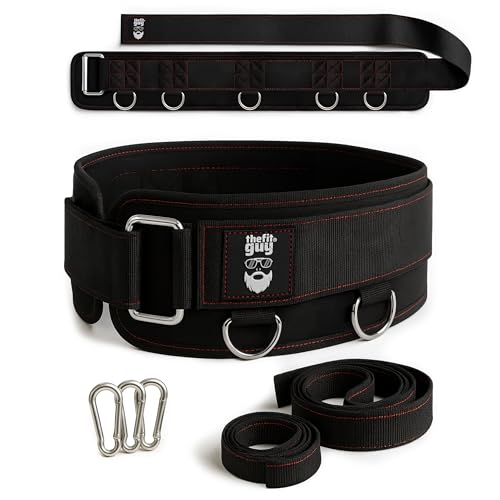
If you want a functional trainer squat belt attachment that can do more than just one movement, this THEFITGUY belt is built around cable squats and cable hip thrusts. Its five attachment points let you connect from the side, rear, or front, and the included straps and metal hooks give you flexible setup options for single or dual pulley machines.
Best For: Home gym users who want a versatile cable belt for squats, hip thrusts, and other pulley-based lower-body work.
Pros:
Five attachment points for multiple cable connection setups
Includes 40″ and 27″ straps plus 3 metal snap hooks
Compatible with single and dual pulleys, classic machines, and smart gyms
One size fits most waists from 32″ to 52″
Cons:
Built primarily for cable resistance work, not as a dedicated dip belt
Fit depends on measuring your waist and matching your machine setup
Overall, this is a practical pick if you want one belt to handle several cable-based lower-body exercises. The multiple connection points and included hardware make it easier to adapt across different machines, as long as your pulley system provides the right tension.
This functional trainer squat belt attachment is aimed at lifters who want a sturdy, comfortable harness for heavy lower-body training. REP Fitness focuses on quick lock-in use, multiple connection points, and thick internal padding, so the belt is designed to stay secure while supporting demanding squat and leg sessions.
Best For: Lifters who want a premium-feeling, heavy-duty belt squat harness for racks, machines, and cable setups.
Pros:
Quick lock-in design helps reduce setup time between sets
Multiple connection points work with cables, chains, or carabiners
Thick internal padding improves comfort during longer sessions
1000D CORDURA nylon adds abrasion resistance and durability
Cons:
More specialized than a simple accessory belt
One-size design may not suit every user equally well
For serious lower-body work, this model stands out for its sturdy construction and comfort-focused build. If you want a belt squat harness that feels ready for heavy training and frequent use, this is the most rugged option in the group.
If you need a straightforward functional trainer squat belt attachment for a home gym, this multi-purpose belt keeps the setup simple. It is designed for home gyms and functional trainers with two cable pulleys, and it supports weighted squats, lunges, and even dips as part of a basic cable-based training routine.
Best For: Home gym users who want an easy-to-use belt for cable squats, lunges, and general multi-purpose training.
Pros:
Compatible with most home gyms and functional trainers with 2 cable pulleys
Works for weighted squats, lunges, and dips
Heavy-duty nylon webbing and a triangular metal buckle
Easy to attach for quick setup
Cons:
Less feature-rich than belts with multiple attachment points
Best suited to 2-pulley systems rather than broader machine compatibility
This is a practical, no-fuss option if you mainly want a cable belt that gets the job done. It keeps the design focused on compatibility and durability, which makes it a sensible pick for straightforward lower-body workouts.
If you want a functional trainer squat belt attachment that stays out of the way during heavy lower-body work, this belt is built around that use case. Its low-profile side straps, reinforced back panel, and secure buckle are aimed at keeping the belt flat, stable, and comfortable through deep squats on racks and machines.
Best For: Lifters using belt squat machines, rack attachments, or lever arms who want structured support and a belt that stays low during deep reps.
Pros:
2.36″ low-profile padded side straps are designed to stay flat and avoid bunching.
Reinforced 5-panel EVA back provides structured lumbar support under load.
Adjustable 2″ inner strap and metal buckle are built to stay secure without slipping.
57″ total length is intended to keep plates clear of the thighs on squat setups.
Cons:
The longer design is not meant for flat-ground squats unless you use a platform or blocks.
Rated support up to 350 lbs, so it may not suit lifters needing a higher load ceiling.
This is a practical choice if your priority is clean movement on squat machines and rack setups rather than a general-purpose dip belt. The design choices clearly favor depth, stability, and reduced interference during leg training.
This functional trainer squat belt attachment leans more toward versatility than a dedicated belt-squat-only design. It uses a complete buckle closure, structured back support, and included strap-and-hook setup, so it can cover weighted squats along with dips and pull-ups.
Best For: Buyers who want one belt for belt squat attachment work, weighted dips, and pull-up loading.
Pros:
Complete buckle closure is designed to help prevent slipping and unwanted weight swings.
Structured firm back adds lumbar support for squats, dips, and pull-ups.
45-degree angle rings are intended to support a natural position and reduce pinching.
Includes a 40-inch strap plus two metal snap hooks.
Cons:
Maximum load is listed at 250 lbs, which is lower than some heavy-duty belt squat options.
The hook-and-loop closure may not appeal to lifters who prefer a rigid metal-buckle belt.
As a multi-use option, this belt makes sense if you want one setup for several cable or bodyweight movements. It is less specialized than a dedicated belt squat belt, but the support and included accessories give it strong utility for mixed training.
For a functional trainer squat belt attachment built around machines and lever arms, this model keeps the focus on fit, support, and durability. Its low-profile side straps, five EVA back panels, and metal buckle are all aimed at making squat-machine training feel secure and controlled.
Best For: Users who train on lever arms or squat machines and want a straightforward belt with strong back support.
Pros:
Designed specifically for squat machines and lever arms.
Low-profile 2.2″ side straps are intended to stay secure during deep squats.
Five EVA back panels provide added lumbar support and stability.
Adjustable 2-inch strap and sturdy metal buckle support a snug fit up to 50-inch waists.
Cons:
The listed waist sizing details are a bit inconsistent in the supplied specs.
It appears more specialized for machine use than for general training versatility.
This is a strong pick if your lower-body training happens mostly on a belt squat setup or similar machine. The design is simple, but the support-oriented construction and universal length make it a sensible choice for consistent gym use.
How We Picked the Best Functional Trainer Squat Belt Attachment
We prioritized products that make lower-body training safer and more efficient on a functional trainer, rack, or belt squat setup. The strongest picks offer secure closures, strong hardware or straps, enough padding for longer sessions, and a design that stays in position under load. We also considered versatility, since many buyers want one attachment that can do more than just squat work.
Quick Comparison: What Matters Most
Some options are built more like a traditional dip belt, while others are designed specifically as a Functional Trainer Squat Belt Attachment. That difference matters. A dedicated belt squat model usually provides better load placement and hip support, while a multi-purpose belt may be more flexible for pull-ups, dips, and accessory movements. If you train heavy, stability and comfort should outweigh simple price savings.
Key Buying Factors for a Functional Trainer Squat Belt Attachment
Support and Load Distribution
Look for structured support, low-profile positioning, and padding that spreads pressure across the hips and lower back without digging in. If the belt rides up during the descent, it can affect depth and comfort.
Attachment Style and Compatibility
Check whether the belt uses chains, straps, O-rings, or multi-link connections. A good fit depends on your machine, rack attachment point, and desired range of motion. The best Functional Trainer Squat Belt Attachment should connect easily and stay centered during movement.
Durability and Weight Capacity
Hardware should feel solid, stitching should be reinforced, and closures should stay secure under repeated loading. If you plan to progress over time, choose a belt with enough margin above your current training weight.
Comfort and Adjustability
Padding, strap length, and closure design all affect usability. A more adjustable belt can serve multiple users or support different exercises, while a streamlined model may be better for dedicated squat sessions.
Who Should Buy Which Functional Trainer Squat Belt Attachment?
If you want the most squat-specific feel, choose a dedicated belt squat or hip squat style attachment with strong support and low ride-up. If you want more exercise variety, a dip belt with a chain or strap may be the better all-around option for pull-ups, dips, and weighted accessory work. For home gyms with cable systems, multi-attachment belts can offer the best balance of flexibility and functionality.
In short, choose the model that matches your main lift, your equipment, and how much comfort you need under load. The right Functional Trainer Squat Belt Attachment should make training feel smoother, not more complicated.