The best fitness tracker for runners should make training easier without overwhelming you with data. GPS accuracy, heart-rate tracking, battery life, comfort, and useful app insights matter more than a long list of features.
We’ve brought together 10 options ranging from dedicated running watches to affordable activity bands and recovery-focused wearables, so you can match the tracker to your goals, budget, and preferred level of coaching.
Best 10 Fitness Tracker for Runners Picks for 2026
Best Overall

- Built-in GPS and wrist-based heart rate
- Adaptive workouts and recovery guidance
- Up to 19 hours of GPS battery life
Best For: Runners who want structured training tools
Best Battery Life

- Up to 14 days of battery life
- Bright 1.97-inch AMOLED display
- GPS maps and 140+ workout modes
Best For: Runners wanting long battery life and navigation
Best for Everyday Wellness

- Built-in GPS and 40+ exercise modes
- Daily readiness, sleep, and stress tracking
- Google Maps and Google Wallet features
Best For: Everyday runners tracking broader wellness
Best Screen-Free Option
Smart Bracelet Fitness Tracker

- Lightweight 25g screen-free design
- 170+ sports modes and free QRing app
- Advertised 45–60 day battery life
Best For: Runners who prefer minimal, distraction-free tracking
Best for Easy Setup

- Screenless and lightweight for distraction-free wear
- Up to a week of battery life
- Uses smartphone GPS for run tracking
Best For: Runners who prefer passive tracking and a minimalist design
Feature-Packed Value

- 112 sports modes include running
- Large touchscreen with 200+ watch faces
- Up to 7 days of battery life
Best For: Casual runners wanting a versatile tracker with a display
Wellness-Focused Choice

- 40+ exercise modes with automatic tracking
- Daily Readiness and Active Zone Minutes
- Up to 10 days of battery life
Best For: Runners who prioritize wellness and everyday Fitbit insights
Premium Recovery Companion
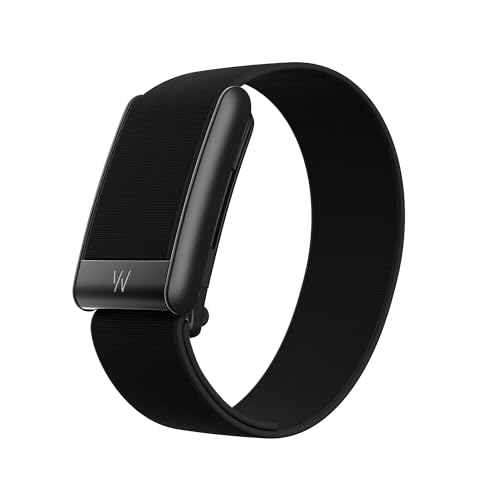
- 14+ day battery and screenless design
- Tracks recovery, strain, sleep, HRV, and VO2 max
- Includes 12-month membership and CoreKnit band
Best For: Runners prioritizing recovery and personalized coaching
Budget Display Pick

- 25 sports modes with running support
- 1.47-inch OLED display and smartphone notifications
- IP68 water resistance with extended battery life
Best For: Casual runners wanting visible basics and long battery life
Everyday AMOLED Option

- 25 sports modes with connected GPS
- 1.10-inch AMOLED touchscreen
- Up to 7 days of battery with sleep and heart-rate tracking
Best For: Phone-carrying runners wanting a compact display and route tracking
Best Overall – Garmin Forerunner 165
The Garmin Forerunner 165 is a strong fitness tracker for runners who want built-in GPS, wrist-based heart-rate tracking, and structured training guidance. Its 43 mm design combines a bright AMOLED touchscreen with physical buttons, while Garmin’s recovery and workout tools add useful context beyond basic pace and distance.
Best For: Runners who want dedicated training features and detailed recovery insights.
Pros:
- Built-in GPS and wrist-based heart-rate monitoring for outdoor runs.
- Personalized suggested workouts, Garmin Coach, and race-adaptive training plans.
- Up to 11 days of smartwatch battery life or 19 hours in GPS mode.
- AMOLED display, physical controls, 25+ activity profiles, and recovery-time guidance.
Cons:
- Some safety features require a paired smartphone and network coverage.
- Advanced training features may be more than casual runners need.
The Forerunner 165 is the most running-focused option here, especially for users training toward specific goals. It is a practical choice if workout planning, recovery feedback, and GPS battery life matter more than having the largest smartwatch display.
Best Battery Life – Amazfit Bip 6
The Amazfit Bip 6 is a versatile fitness tracker for runners who want a large, bright screen, extensive activity support, and long battery life. Its built-in GPS works with five satellite systems, and downloadable maps with turn-by-turn directions can help with route navigation.
Best For: Runners and multisport users who prioritize display size, navigation, and infrequent charging.
Pros:
- Up to 14 days of battery life for extended use between charges.
- 1.97-inch AMOLED display rated up to 2,000 nits for outdoor readability.
- Built-in GPS with support for five satellite systems and downloadable maps.
- More than 140 workout modes, 50-meter water resistance, and AI coaching.
Cons:
- Its larger rectangular design may feel less compact than a dedicated running watch.
- Some smart and coaching functions depend on a compatible smartphone connection.
The Bip 6 stands out for combining a highly visible display, broad workout coverage, and a two-week battery target. It is a good fit for runners who also want navigation and general fitness tracking without charging every night.
Best for Everyday Wellness – Fitbit Charge 6
The Fitbit Charge 6 is a compact fitness tracker for runners who want built-in GPS alongside everyday activity, sleep, and readiness features. It supports more than 40 exercise modes, tracks all-day heart rate, and adds Google Maps directions and Google Wallet functionality for compatible users.
Best For: Everyday runners who want wellness tracking and connected Google features in a slim tracker.
Pros:
- Built-in GPS, automatic exercise tracking, and 40+ exercise modes.
- Tracks heart rate, sleep, stress management, Daily Readiness, and Active Zone Minutes.
- Google Maps turn-by-turn directions and Google Wallet support.
- Up to seven days of battery life and 50-meter water resistance.
Cons:
- Some personalized coaching features require a separate Google Health Premium subscription.
- Its 1.04-inch LCD is smaller than the displays on the smartwatch-style alternatives.
The Charge 6 is a balanced choice for runners who care as much about sleep, readiness, and daily movement as they do about workouts. Its smaller tracker format is convenient, while built-in GPS keeps it useful for outdoor runs.
Best Screen-Free Option – Smart Bracelet Fitness Tracker
This screen-free smart bracelet is a lightweight fitness tracker for runners who prefer minimal distractions and very long battery life. It records activity, heart rate, HRV, stress, and sleep data through the QRing app, while Bluetooth syncing supports both iOS and Android phones.
Best For: Runners who want a lightweight, screen-free companion for basic activity and wellness tracking.
Pros:
- Lightweight 25-gram design with two interchangeable nylon straps.
- Tracks heart rate, HRV, stress, sleep stages, steps, distance, and calories.
- Supports more than 170 sports modes and offers a free QRing app.
- Advertised battery life of 45–60 days with 1ATM splash and sweat protection.
Cons:
- No built-in GPS is listed, so run routes and pace may require a smartphone.
- The screenless design does not provide on-device workout metrics.
- 1ATM protection is more limited than the 50-meter-rated alternatives.
This bracelet is best viewed as a low-maintenance wellness tracker rather than a full running watch. Its comfort, free app, and extended battery life suit runners who are happy to review data afterward instead of checking metrics during a run.
Best for Easy Setup – Fitbit Google Air
If you want a fitness tracker for runners that stays unobtrusive during workouts and daily wear, the Fitbit Google Air offers a screenless design, continuous health tracking, and smartphone-connected GPS. Its lightweight fit and weeklong battery make it practical for runners who prefer reviewing data in an app rather than on their wrist.
Best For: Runners who value a distraction-free, comfortable tracker and do not need on-device workout metrics.
Pros:
- Screenless, lightweight design is comfortable for workouts and sleep.
- Tracks heart rate, activity, skin-temperature variation, and SpO2-related metrics.
- Battery lasts up to a week, with fast charging that provides up to a day in five minutes.
- Water resistant to 50 meters and compatible with Android and iOS.
Cons:
- No display for checking pace, distance, or heart rate during a run.
- GPS functionality is provided through a connected smartphone.
The Fitbit Google Air is a strong minimalist option for runners who want passive tracking and long battery life. However, runners who depend on live, glanceable data will need to use their phone or choose a tracker with a screen.
Feature-Packed Value – MorePro AIR2 Fitness Tracker
The MorePro AIR2 is a fitness tracker for runners who want a wrist display, broad activity support, and everyday smartwatch functions. Its 112 sports modes include running, while the touchscreen shows activity data and notifications without requiring a phone for every glance.
Best For: Runners seeking an affordable, versatile tracker with a large display, multiple sport modes, and practical daily features.
Pros:
- Includes running among 112 sports modes and tracks distance, speed, calories, and duration.
- 1.57-inch touchscreen with more than 200 watch faces.
- Up to seven days of battery life per charge.
- Includes two bands and IP68 water resistance for workouts and everyday use.
Cons:
- GPS is provided through a connected smartphone rather than built into the tracker.
- Health measurements such as blood pressure and blood oxygen are not medical-device readings.
- Not compatible with iPads, tablets, or PCs.
With its running mode, on-wrist screen, and extensive daily-life tools, the AIR2 offers considerable versatility. It is best suited to casual and general fitness runners, while serious training-focused users may want more specialized running features.
Wellness-Focused Choice – Fitbit Inspire 3
The Fitbit Inspire 3 is a fitness tracker for runners who want exercise tracking alongside sleep, stress, and recovery-oriented wellness features. It supports 40-plus exercise modes, automatic exercise tracking, heart-rate monitoring, and a Daily Readiness Score, while its slim design and up-to-10-day battery suit consistent daily wear.
Best For: Runners who want a compact Fitbit with exercise tracking, wellness insights, and long battery life.
Pros:
- Supports 40-plus exercise modes and automatic exercise tracking.
- Provides all-day activity tracking, 24/7 heart rate, Active Zone Minutes, and a Daily Readiness Score.
- Tracks sleep, stress, SpO2, and resting heart rate for broader wellness context.
- Battery lasts up to 10 days and the tracker is water resistant to 50 meters.
Cons:
- GPS functionality is listed as GPS via smartphone.
- The small 0.76-inch display may provide less room for in-run information.
- Some Fitbit health and coaching features may require compatible app services or subscriptions.
The Inspire 3 is a balanced choice for runners who want their tracker to cover recovery, sleep, and everyday activity as well as workouts. Its smartphone-connected GPS and compact display make it less suited to runners seeking a dedicated on-device running experience.
Premium Recovery Companion – WHOOP 5.0
For runners seeking a fitness tracker for runners that prioritizes training readiness over on-wrist notifications, WHOOP 5.0 combines continuous health monitoring with personalized coaching. Its screenless design, 14+ day battery life, and included 12-month membership support consistent, around-the-clock wear.
Best For: Runners focused on recovery, sleep, strain, and personalized training guidance.
Pros:
- Tracks Sleep, Strain, Recovery, HRV, VO2 max, heart rate, and stress insights.
- Screenless, distraction-free design with up to 14+ days of battery life.
- Includes a 12-month membership, CoreKnit band, tracker, and charger.
- Connects with Apple Health, Google Health Connect, Strava, and Natural Cycles.
Cons:
- Requires a membership for the included coaching and health insights.
- Has no on-device screen for viewing running data during a workout.
WHOOP 5.0 is less of a traditional running watch and more of a recovery and performance system. It is a strong fit if you already use a phone or another device for workout data and want deeper guidance on when to train, rest, or adjust your habits.
Budget Display Pick – 25-Mode Fitness Tracker
This affordable fitness tracker for runners offers a visible 1.47-inch OLED display, 25 sports modes, step and distance tracking, and connected smartphone features. Its lightweight design and IP68 water resistance make it practical for everyday training and general activity monitoring.
Best For: Casual runners who want basic workout tracking, notifications, and long battery life at a budget-friendly level.
Pros:
- Includes a running mode plus 24 other sports modes.
- Tracks steps, distance, calories, heart rate, sleep, and blood oxygen.
- Offers a 1.47-inch OLED touchscreen with call, text, and app notifications.
- IP68 water resistance and a stated 10-14 day running-watch battery range.
Cons:
- Does not include built-in GPS, so it cannot independently record a running route.
- Some listed health measurements, including blood pressure data, should not be treated as medical advice.
This tracker covers the essentials for runners who mainly need activity metrics and phone-connected convenience. Because it lacks GPS, it is better suited to treadmill sessions, familiar routes, or runners comfortable carrying a phone for route tracking.
Everyday AMOLED Option – 25-Sport Health Watch
For runners wanting an easy-to-read fitness tracker for runners with everyday smartwatch functions, this model pairs a 1.10-inch AMOLED screen with 25 sports modes and continuous activity monitoring. Connected GPS can record a workout route through the phone app, while IP68 water resistance supports daily wear.
Best For: Runners who want a compact AMOLED display, phone-connected route tracking, and basic health features.
Pros:
- Provides 25 sports modes with exercise time, distance, calories, steps, and heart-rate data.
- Uses connected GPS to record workout routes through a paired phone.
- Includes 24/7 heart-rate tracking, sleep analysis, and activity goals.
- Offers IP68 water resistance, notifications, and up to 7 days of battery life.
Cons:
- GPS is connected rather than built in, so route tracking depends on a paired phone.
- Battery life is shorter than the longest-lasting option in this group.
- No warranty is listed in the supplied details.
This is a practical choice for runners who want basic workout metrics and route recording without stepping up to a dedicated GPS running watch. Its connected approach works best when your phone is part of your normal running setup.
How We Picked the Best Fitness Tracker for Runners
We focused on the features that affect real-world running: GPS availability and route tracking, heart-rate monitoring, workout support, battery expectations, comfort, water resistance, app quality, and compatibility with iPhone and Android. We also included different product types, from full-featured running watches to discreet screenless trackers, because the right choice depends on how much data and coaching you want.
Price and complexity were considered alongside capabilities. A dedicated running watch may be the better training tool, while a simpler band can be more practical for steps, sleep, and occasional runs.
Quick Comparison
- Best for serious running metrics: Garmin Forerunner 165.
- Best for an affordable GPS smartwatch: Amazfit Bip 6.
- Best for everyday fitness tracking: Fitbit Charge 6.
- Best for discreet tracking: Fitbit Charge 6? No—choose a screenless option such as Fitbit Air or WHOOP, depending on your preference for membership-based coaching.
- Best for basic budget tracking: the generic smart-band options from MorePro and other entry-level models.
Key Buying Factors for a Fitness Tracker for Runners
GPS and Running Data
If you run outdoors regularly, built-in GPS is more convenient and reliable than depending on your phone. Look for pace, distance, route, interval, and lap data. Runners training for races should also consider workout programming, recovery information, and compatibility with their preferred training platforms.
Heart-Rate Accuracy and Training Insight
Wrist-based heart-rate readings are useful for general effort tracking, but accuracy can vary with fit, skin contact, temperature, and workout intensity. A snug, comfortable band and clear heart-rate zones are especially important for structured training. Blood pressure and blood oxygen features should be treated as wellness estimates, not medical measurements.
Battery, Comfort, and Durability
Choose a battery that suits your routine. Frequent GPS use drains devices faster than everyday step and sleep tracking. Lightweight designs are generally more comfortable for long runs and overnight wear, while water resistance helps with sweat and weather. Check the included band sizes before buying.
Display, Notifications, and Subscriptions
A bright screen is helpful for checking pace without reaching for your phone, while screenless trackers are less distracting. Also check whether advanced coaching, recovery scores, or historical insights require a paid membership. Confirm phone compatibility and app support before committing.
Who Should Buy Which Fitness Tracker for Runners?
Choose the Garmin Forerunner 165 if running is a primary sport and you want purpose-built training features. Choose the Amazfit Bip 6 if you want a large display, GPS, and smartwatch functions at a generally accessible price.
Choose Fitbit Charge 6 or Inspire 3 for balanced everyday activity, sleep, and health tracking in a familiar Fitbit ecosystem. Choose a screenless Fitbit or WHOOP if low-distraction wear and recovery insights matter more than viewing live stats; remember that WHOOP’s membership model affects long-term cost.
Choose MorePro or another basic smart band if your priorities are steps, heart rate, sleep, and simple notifications on a tight budget. For any model, verify current app reviews, device compatibility, warranty terms, and the manufacturer’s health-feature limitations before purchasing.
Related Posts:

