The best fitness trackers with GPS make it easier to record outdoor workouts, monitor daily activity, and understand trends in sleep, heart rate, and recovery. The right choice depends on whether you prioritize smartwatch features, simple health tracking, detailed training data, or a lower price.
We compared 10 options across GPS capabilities, sensors, battery expectations, comfort, apps, and subscription requirements to help you find a tracker that fits your routine.
The Garmin vívoactive 5 is a strong choice for shoppers comparing fitness trackers with GPS who want a full-featured smartwatch and detailed health insights. Its built-in GPS, bright AMOLED display, extensive activity support, and up to 11 days of smartwatch battery life make it practical for everyday wear and regular training.
Best For: Users who want broad fitness, recovery, sleep, and smartwatch features in one device.
Pros:
Built-in GPS and more than 30 indoor and GPS sports apps.
Up to 11 days of battery life in smartwatch mode.
Includes Body Battery, sleep coaching, recovery time, and extensive health monitoring.
Bright AMOLED display with music storage for phone-free listening.
Cons:
Its many health and training features may be more than casual users need.
The listed water resistance is 50 meters, so it is not positioned as a deep-water device.
The vívoactive 5 stands out as the most complete option here for people who want GPS workouts alongside recovery guidance and smartwatch conveniences. It is especially appealing if battery life and training variety matter as much as basic step and heart-rate tracking.
The Fitbit Google Air takes a different approach to fitness trackers with GPS: it has no display and relies on GPS via a compatible smartphone. Its lightweight, screen-free design, week-long battery, and continuous health tracking make it a discreet option for users who prefer minimal distractions.
Best For: People who want a comfortable, screen-free tracker for everyday activity and sleep monitoring.
Pros:
Screen-free design avoids notifications and visual distractions.
Lightweight, micro-adjustable fit is designed for all-day and sleep wear.
Battery lasts up to a week, with five minutes of charging providing up to one day of battery life.
Tracks heart rate, movement, skin-temperature variation, and blood-oxygen metrics.
Cons:
GPS is provided through a smartphone rather than built into the tracker.
No display means workout information must be viewed in the app.
The Fitbit Google Air is best understood as a low-profile health and activity tracker rather than a standalone GPS sports watch. Choose it if comfort, sleep wearability, and a distraction-free design are more important than on-device maps or workout stats.
The Amazfit Bip 6 is a compelling option among fitness trackers with GPS for shoppers who want a large display, long battery life, and extensive workout coverage. Built-in GPS supports five satellite systems, while downloadable maps and turn-by-turn directions add useful navigation for outdoor activities.
Best For: Active users who want long battery life, broad workout support, and on-watch navigation.
Pros:
Up to 14 days of battery life.
Built-in GPS with GPS, Galileo, GLONASS, and BeiDou support.
Offers 140+ workout modes and 50-meter water resistance.
Bright 1.97-inch AMOLED display supports downloadable maps and directions.
Cons:
Its larger rectangular design may not suit shoppers seeking a compact tracker.
The included charging setup uses a magnetic charging base without a USB-C cable.
With the longest stated battery life in this group and built-in navigation features, the Bip 6 is a practical choice for frequent training and outdoor use. It also provides a broad set of health measurements, including heart rate, sleep, blood oxygen, and stress tracking.
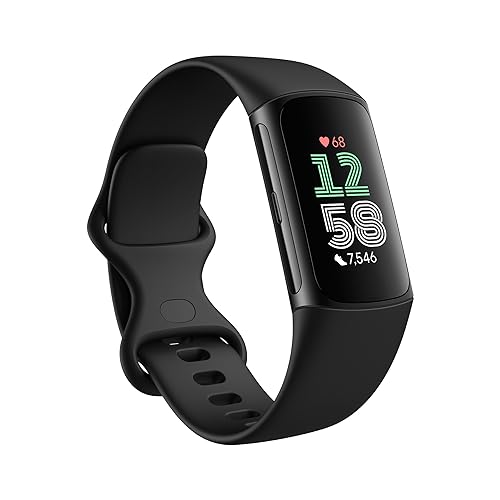
The Fitbit Charge 6 is a compact choice for shoppers comparing fitness trackers with GPS and wanting built-in route tracking plus Google features. It supports more than 40 exercise modes, all-day activity tracking, sleep and stress insights, Google Maps directions, and Google Wallet contactless payments.
Best For: Users who want a compact fitness tracker with built-in GPS and connected Google features.
Pros:
Built-in GPS and more than 40 exercise modes.
Tracks heart rate, sleep, stress, readiness, and all-day activity.
Provides turn-by-turn directions from Google Maps.
Up to seven days of battery life, plus Google Wallet and YouTube Music controls.
Cons:
The 1.04-inch display is smaller than the Amazfit Bip 6 and Garmin vívoactive 5 displays.
Some coaching features require a separately sold Google Health Premium subscription.
The Charge 6 balances a slim tracker format with useful standalone GPS and everyday smart features. It is a particularly sensible pick for users already invested in Google services who want route guidance and contactless payments without moving to a larger smartwatch.
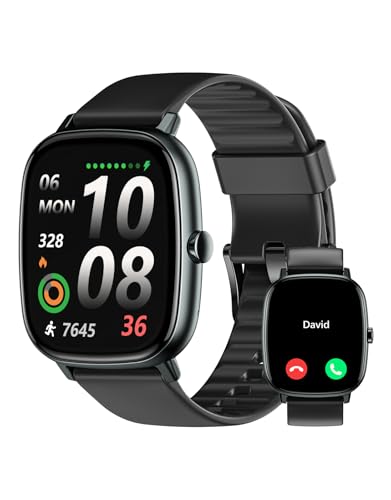
For shoppers comparing fitness trackers with GPS, the HUAKUA stands out because its built-in GPS can track pace, distance, and routes without relying on a phone. It also combines calling, broad activity tracking, wellness metrics, and a large display in one everyday smartwatch.
Best For: Runners, cyclists, hikers, and active users who want standalone GPS tracking plus smartwatch features.
Pros:
Built-in GPS supports independent outdoor pace, distance, and route tracking.
Bluetooth calling and notifications help you stay connected from your wrist.
Offers more than 100 sport modes and tracks heart rate, blood oxygen, steps, and calories.
The 1.95-inch display uses enlarged fonts and high color contrast for easier viewing.
Cons:
The supplied notes do not specify battery life or GPS operating time.
Calling requires a Bluetooth connection to a phone.
The HUAKUA is a versatile choice when independent GPS matters more than a minimalist design. Its large screen and extensive feature set make it practical for workouts and daily use, while sleep and wellness tracking add value between activities.
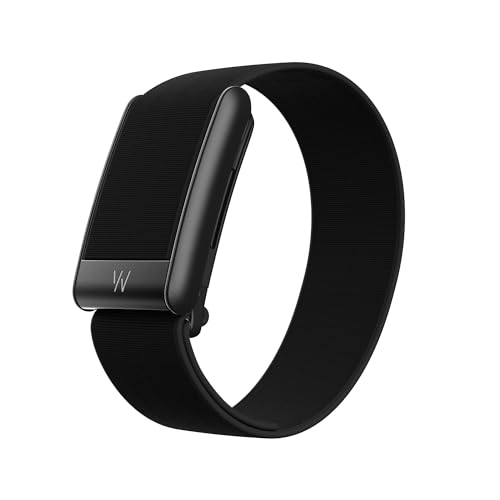
Among fitness trackers with GPS, the WHOOP 5.0 takes a different approach: it is a screenless, distraction-free wearable centered on continuous health, sleep, strain, and recovery insights. The included 12-month membership provides personalized coaching and access to the WHOOP app, while the device delivers up to 14 or more days of battery life.
Best For: Athletes and health-focused users who prioritize recovery coaching, sleep analysis, and continuous monitoring over an on-device screen.
Pros:
Includes a WHOOP 5.0 tracker, CoreKnit band, charger, and 12-month membership.
Up to 14+ days of battery life supports around-the-clock wear.
Integrates with Apple Health, Google Health Connect, Strava, and Natural Cycles.
Cons:
It has no screen and is designed without on-device notifications or display-based tracking.
The supplied notes do not identify a built-in GPS feature; compatible smartphone integrations are listed instead.
Its coaching and insights depend on the included membership service.
WHOOP is best viewed as a recovery and performance platform rather than a traditional GPS watch. Choose it if personalized guidance and long-term health patterns are your priorities; shoppers specifically needing standalone GPS should verify their requirements before buying.
The Fitbit Inspire 3 is a slim, straightforward option among fitness trackers with GPS, but its GPS is provided through a connected smartphone rather than built into the tracker. In return, it offers all-day activity and heart-rate tracking, automatic exercise detection, sleep tools, stress features, and up to 10 days of battery life.
Best For: Users who want a lightweight fitness and wellness tracker and are comfortable carrying a compatible phone for GPS data.
Pros:
GPS via smartphone supports route and location tracking during connected workouts.
Tracks activity, heart rate, sleep, stress, blood oxygen, and menstrual health metrics.
Includes 40+ exercise modes, automatic exercise tracking, and reminders to move.
Water resistant to 50 meters with up to 10 days of battery life.
Cons:
GPS is not built in, so outdoor GPS tracking requires a compatible smartphone.
The small 0.76-inch display may provide less at-a-glance space than larger smartwatches.
Compatibility requires iOS 16.4 or higher or Android 11.0 or higher.
Inspire 3 makes sense for everyday activity, sleep, and wellness tracking at a compact size. It is a good fit for phone-connected workouts, but runners and hikers seeking independent route tracking should choose a model with built-in GPS instead.
If you want fitness trackers with GPS connectivity for everyday activity tracking, this model combines broad health monitoring with phone-assisted route mapping. It tracks heart rate, blood oxygen, blood pressure, sleep stages, steps, distance, and calories, while its 120-plus exercise modes cover a wide range of workouts.
Best For: Users who want extensive health and lifestyle features, customizable watch faces, and connected GPS route tracking through a smartphone.
Pros:
Offers 120-plus exercise modes and all-day activity tracking.
Includes 24/7 heart rate, blood oxygen, blood pressure, and sleep monitoring.
Provides call and message alerts plus useful reminders and phone controls.
Includes a 1.58-inch high-resolution display, always-on clock, and more than 250 watch faces.
Cons:
GPS route mapping requires connecting to the phone’s GPS rather than using stated built-in GPS.
The supplied notes do not specify battery life.
This is a feature-rich choice for general wellness and workout tracking, particularly if you already carry your phone during outdoor activities. Its extensive exercise selection and daily-assistant tools add flexibility, while phone-dependent GPS is an important consideration for runners and cyclists.
For shoppers specifically comparing fitness trackers with GPS, this smartwatch stands out with built-in GPS and support for five satellite systems. It records outdoor routes and distance for activities such as running and cycling, while adding 170-plus sport modes, health monitoring, Bluetooth calling, and 5 ATM water resistance.
Best For: Outdoor exercisers who want onboard route tracking, extensive sport coverage, swim-ready water resistance, and smartwatch communication features.
Pros:
Built-in GPS with five satellite systems records outdoor routes and distance.
Supports more than 170 exercise modes and 5 ATM water resistance.
Monitors heart rate, blood oxygen, stress, and sleep around the clock.
Includes Bluetooth 5.4 calling, notifications, and a 1.43-inch AMOLED display.
Cons:
The supplied details list Android-device compatibility but do not clearly confirm iPhone support.
At 200 g, the listed item weight may feel substantial for some users.
This is the strongest match in the group for independent outdoor tracking because its GPS is built in rather than phone-dependent. The combination of route recording, 170-plus modes, and 5 ATM resistance makes it well suited to varied training, although compatibility and weight deserve a check before buying.
This activity tracker is a straightforward option for shoppers seeking fitness trackers with GPS-style outdoor support through a connected smartphone. It focuses on continuous heart-rate and blood-oxygen monitoring, sleep insights, daily activity metrics, and 24-plus sports modes, with a compact curved display and up to seven days of stated use.
Best For: Everyday wellness tracking, sleep monitoring, and casual workouts for Android 10.0-plus and iOS 10.0-plus smartphone users.
Pros:
Provides continuous heart-rate and blood-oxygen monitoring plus sleep-stage tracking.
Tracks steps, distance, calories, and heart rate across 24-plus sports modes.
Offers 5–7 days of use after a two-hour charge, according to the supplied notes.
Includes call and message alerts, music controls, weather, and more than 200 watch faces.
Cons:
The supplied notes do not mention built-in GPS or phone-connected GPS functionality.
It is not compatible with PCs, iPads, or tablets.
Its one-year warranty is shorter than the warranties listed for the other two products.
This tracker is best viewed as a wellness-focused wearable rather than a dedicated GPS training device. Its lightweight design, useful health features, and stated 5–7-day battery range make it practical for daily use, but GPS shoppers should verify route-tracking support before purchase.
We focused on the features that matter most in everyday use: built-in GPS or GPS-enabled workout tracking, activity and sleep monitoring, heart-rate data, water resistance, battery practicality, display quality, phone compatibility, and overall ease of use. We also considered the differences between full-featured smartwatches, screenless wearables, traditional fitness bands, and subscription-based coaching platforms.
Because specifications and software support can vary by model, check the manufacturer’s current compatibility details before buying—especially if you use an older Android phone or an iPhone.
Quick Comparison
Best For
Look For
Potential Trade-Off
Outdoor workouts
Built-in GPS, route tracking, and reliable workout modes
GPS use can reduce battery life
Everyday health tracking
Heart rate, sleep, steps, and comfortable all-day wear
Fewer advanced training tools
Smartwatch functionality
Bright display, notifications, calls, and apps
Usually larger and more distracting
Recovery and coaching
Detailed trends, personalized guidance, and sleep analysis
Some features may require a membership
Budget-conscious buyers
Essential sensors, basic workouts, and broad phone support
GPS, app quality, or accuracy may be more limited
Key Buying Factors for Fitness Trackers with Gps
GPS and Workout Tracking
Built-in GPS lets a tracker record outdoor distance and routes without relying on your phone. If you mainly walk, run, or cycle near your phone, connected GPS may be sufficient. For training away from your phone, choose a model explicitly listing built-in GPS and review its supported activities.
Sensors and Health Data
Heart-rate monitoring is useful for workout intensity and long-term trends. Sleep tracking, blood oxygen estimates, stress tools, and recovery scores can add context, but they are not medical diagnostics. Treat blood pressure and other wellness readings as general information unless the product has appropriate clinical validation.
Battery, Comfort, and Durability
Consider how often you are willing to charge. GPS workouts, bright screens, calls, and always-on sensors can shorten runtime. A lightweight band may be better for sleep, while a larger watch can provide easier-to-read workout data. Water resistance is important for sweat and rain, but verify the rating before swimming.
App Ecosystem and Subscriptions
The companion app often matters as much as the hardware. Check whether it works with your phone, exports data to your preferred health platform, and provides the metrics you want without a paid plan. Subscription wearables can offer stronger coaching, but calculate the total cost beyond the first year.
Who Should Buy Which Fitness Trackers with Gps?
Choose a Garmin-style fitness smartwatch if you want robust workout tools, GPS, and a broad health feature set. A Fitbit band is a better fit for straightforward activity, sleep, and heart-rate tracking in a slimmer design. Consider an Amazfit-style smartwatch if you want a large display, GPS, and smartwatch features at a competitive price. Screenless or coaching-focused trackers suit buyers who prefer discreet wear and deeper habit or recovery insights. Finally, inexpensive generic trackers can cover basic steps, notifications, and wellness metrics, but they are best for casual monitoring rather than precise training.