The best lightweight heart rate monitors make it easier to track training intensity without adding bulky equipment or distracting you during exercise. This roundup includes armbands, chest straps, fitness trackers, and purpose-built wearable sensors.
Whether you train with a phone, smartwatch, bike computer, or no connected device at all, the right monitor should stay comfortable, provide dependable readings, and match the way you exercise.
Best 10 Lightweight Heart Rate Monitors Picks for 2026
Best Chest-Strap Pick
Wahoo TRACKR Heart Rate Monitor

- Chest strap provides real-time heart rate data
- ANT+ and Bluetooth connectivity
- Up to 200 hours of active battery life
Best For: Serious runners, cyclists, and multisport athletes
Best Everyday Tracker

- 24/7 heart rate and activity tracking
- Sleep, stress, SpO2, and exercise features
- Up to 10 days of battery life
Best For: Daily wellness and fitness tracking
Best Armband Design

- Upper- or lower-arm optical sensor
- ANT+ and Bluetooth 5.1 connectivity
- 110-hour battery with 30-minute charging
Best For: Connected cycling, fitness, and multisport workouts
Best No-Phone Simplicity

- Basic use does not require an app or phone
- Tracks heart rate, sleep, and daily activity
- Five to seven days of battery life
Best For: Beginners and casual daily fitness tracking
Best Lightweight Armband

- 17 g armband with optical heart-rate sensing
- Bluetooth 4.0 and ANT+ connectivity
- Rechargeable battery lasts up to 25+ hours
Best For: Comfortable app-connected workouts and cycling
Best All-Day Tracker

- 24/7 heart-rate and wellness monitoring
- 25 sport modes with sleep tracking
- 5 ATM waterproof design and 10–14-day battery
Best For: Daily activity, sleep, and fitness tracking
Best Chest Strap
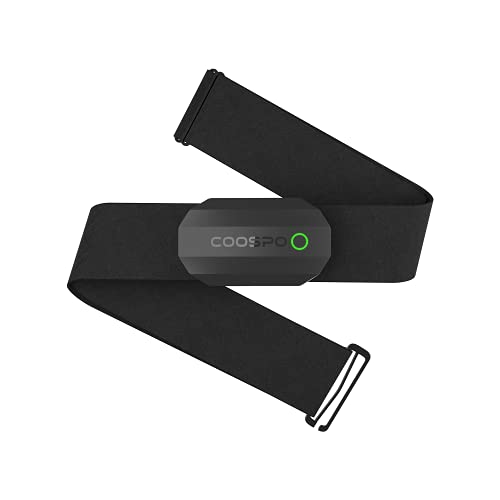
- 15 g sensor with stated ±1 BPM accuracy
- Bluetooth 4.0 and ANT+ connectivity
- Replaceable battery rated for up to 300 hours
Best For: Running, cycling, and structured indoor training
Best Lightweight Smart Band

- Tracks heart rate, sleep, and blood oxygen
- Includes 25 sports modes and phone alerts
- IP68 waterproof with a lightweight band
Best For: Everyday health and activity tracking
Best Lightweight Heart Rate Monitor for Women

- Clips onto medium- and high-support sports bras
- Provides real-time heart rate and HRV data
- Battery lasts up to one year
Best For: Discreet training data during women's workouts
Best Lightweight Chest Strap Monitor

- Shows continuous heart rate and target zones
- Includes stopwatch and calorie tracking
- 5ATM water resistance with replaceable battery
Best For: Simple phone-free workout monitoring
Best Chest-Strap Pick – Wahoo TRACKR Heart Rate Monitor
For athletes who prioritize responsive workout data, the Wahoo TRACKR is one of the more practical lightweight heart rate monitors. Its chest-strap design, dual wireless connectivity, and long rechargeable battery life make it well suited to repeated training sessions.
Best For: Serious runners, cyclists, and multisport athletes who want a comfortable chest strap with broad device compatibility.
Pros:
- Provides real-time heart rate data designed to support training and performance.
- ANT+ and Bluetooth connectivity works with smartphones, fitness equipment, and training apps.
- Rechargeable battery provides up to 200 hours of active use.
- Soft, secure strap and LED indicators add convenience during workouts.
Cons:
- Chest-strap placement may be less convenient than a wrist or arm monitor.
- It is a heart rate sensor rather than a standalone fitness watch.
The TRACKR is a strong choice when accurate workout heart rate data and long battery life matter more than smartwatch features. Its simple design keeps the focus on training metrics.
Best Everyday Tracker – Fitbit Inspire 3
The Fitbit Inspire 3 is a lightweight heart rate monitor for people who want heart tracking alongside everyday wellness features. It adds sleep, stress, activity, and exercise monitoring in a slim, water-resistant tracker with up to 10 days of battery life.
Best For: Everyday users seeking a compact fitness tracker for heart rate, sleep, activity, and wellness monitoring.
Pros:
- Tracks heart rate throughout the day and supports 40-plus exercise modes.
- Includes sleep scores, stress management tools, SpO2, and irregular heart rhythm notifications.
- Up to 10 days of battery life and water resistance to 50 meters.
- Compatible with Apple iOS 16.4 or higher and Android OS 11.0 or higher.
Cons:
- GPS functionality relies on a connected smartphone.
- Some users may prefer a dedicated chest or arm sensor for focused workout heart rate tracking.
Choose the Inspire 3 if you want heart rate monitoring to be part of a broader health-tracking experience. It is less specialized for performance training but more versatile for daily wear.
Best Armband Design – CYCPLUS H1 Heart Rate Monitor
The CYCPLUS H1 is a lightweight heart rate monitor that shifts the sensor from the chest to the upper or lower arm. Its optical sensor, color-coded heart rate zones, and ANT+/Bluetooth connectivity offer a convenient setup for cycling, fitness, and multisport workouts.
Best For: Athletes who want an adjustable armband with wireless compatibility and clear heart rate zone indicators.
Pros:
- Arm placement keeps the wrist free and avoids a traditional chest strap.
- Optical sensor is specified to measure real-time heart rate within ±1 BPM.
- ANT+ and Bluetooth 5.1 support smartphones, bike computers, sports watches, and fitness equipment.
- 110-hour battery and 30-minute charging time support frequent training.
Cons:
- No display, so readings must be viewed through a connected device or LED zones.
- LED zone colors provide less detailed information than a full numeric display.
The H1 is a practical middle ground between a chest strap and a smartwatch. Its fast charging, long battery life, and open ANT+/Bluetooth support are especially useful for connected workouts.
Best No-Phone Simplicity – LIVIKEY Fitness Tracker Watch
The LIVIKEY fitness tracker watch suits shoppers who want lightweight heart rate monitoring without depending on an app or phone for basic use. It also tracks sleep, steps, calories, distance, and several sport modes in a simple watch-style design.
Best For: Beginners and casual users who want basic heart rate and activity tracking with minimal setup.
Pros:
- Basic fitness tracking does not require an app or smartphone connection.
- Monitors heart rate and sleep, along with steps, calories, distance, and active time.
- Offers nine sport modes plus alarms, a stopwatch, breathing guidance, and sedentary reminders.
- Provides five to seven days of use and an IP68 waterproof rating.
Cons:
- Heart rate and sleep features are more basic than those on specialized training sensors.
- It does not make calls or send texts, despite displaying notifications.
- Phone compatibility is limited to iOS 8.0 or Android 4.0 and newer devices with Bluetooth 4.0 or above.
This tracker is best for straightforward daily activity monitoring rather than advanced performance analysis. Its phone-free basic operation makes it approachable for users who want fewer setup requirements.
Best Lightweight Armband – COOSPO HW706 Armband
For shoppers comparing lightweight heart rate monitors, the COOSPO HW706 is a compact armband with a 17 g listed weight, optical heart-rate sensing, and real-time exercise tracking. Bluetooth 4.0 and ANT+ support make it suitable for phones, watches, bike computers, and compatible fitness equipment.
Best For: Athletes who want a comfortable, rechargeable armband for app-based workouts, cycling, or Peloton sessions.
Pros:
- Lightweight 17 g design with a comfortable fabric strap and two included straps.
- Supports both Bluetooth 4.0 and ANT+ connections.
- Rechargeable battery provides up to 25+ hours of workout use per charge.
- IP67 construction helps handle sweat and rain.
Cons:
- It should not be used for swimming, despite its IP67 rating.
- Requires a compatible phone, watch, app, or fitness device to view tracked data.
The HW706 is a practical choice when comfort and flexible connectivity matter more than having a built-in display. Its rechargeable design also avoids routine coin-cell battery replacement.
Best All-Day Tracker – Zeacool Fitness Tracker
The Zeacool Fitness Tracker is a lightweight heart rate monitor option for shoppers who want heart-rate tracking alongside broader daily wellness features. It includes a 1.10-inch AMOLED display, 24/7 heart-rate monitoring, sleep tracking, activity metrics, and 25 sport modes.
Best For: Users seeking an all-day fitness tracker with heart-rate, sleep, activity, and wellness tracking in one wearable.
Pros:
- Tracks heart rate continuously, along with blood oxygen, blood pressure, temperature, and sleep data.
- Offers 25 sport modes and records steps, distance, and calories in the Keep Health app.
- 5 ATM waterproof rating supports use during swimming, bathing, and rain.
- Battery lasts approximately 10–14 days with regular use.
Cons:
- Its health readings are presented as tracking features rather than a substitute for professional medical measurement.
- Requires the Keep Health app and a compatible iPhone or Android smartphone for full functionality.
Choose this tracker if you want more than exercise heart-rate data. The longer battery life, display, sleep analysis, and daily reminders make it better suited to continuous wear than a workout-only sensor.
Best Chest Strap – COOSPO H808S Chest Monitor
The COOSPO H808S is one of the most lightweight heart rate monitors in this lineup, with a listed sensor weight of 15 g. Its chest-strap format is designed for real-time exercise tracking and supports both Bluetooth 4.0 and ANT+ for broad device compatibility.
Best For: Runners, cyclists, and indoor-training users who prioritize a compact chest sensor and multi-device connectivity.
Pros:
- Lightweight 15 g sensor with stated ±1 BPM accuracy.
- Bluetooth 4.0 and ANT+ allow connection to compatible watches, bike computers, apps, and equipment.
- Replaceable CR2032 battery provides up to 300 hours of battery life.
- IP67 waterproof construction supports sweaty and wet-weather workouts.
Cons:
- The electrode areas should be moistened before use.
- The strap is recommended for replacement every six months or 300 washes.
- Users must connect the sensor inside the fitness app rather than through the phone’s standard Bluetooth menu.
The H808S is a strong fit for structured training where a chest strap’s placement and low weight are desirable. Its replaceable battery and ANT+ support are particularly useful for frequent cyclists and watch users.
Best Lightweight Smart Band – 24/7 Health Tracker
If you want lightweight heart rate monitors with broader everyday tracking, this smart band combines automatic heart rate readings with sleep and blood oxygen monitoring. Its 1.47-inch OLED display, 25 activity modes, and phone notifications make it useful for daily wear and basic workout tracking.
Best For: Everyday users who want a lightweight, waterproof fitness band with multiple health and activity features.
Pros:
- Tracks heart rate, sleep stages, blood oxygen, steps, distance, and calories.
- Offers 25 sports modes, including running, swimming, and yoga.
- Lightweight, skin-friendly, and IP68 waterproof for wear during showers or swimming.
- Works with iOS and Android and provides call, text, and app notifications.
Cons:
- No built-in GPS, so it does not independently record routes.
- Battery claims vary between up to 7 days of continuous use and 10–14 days of regular use.
- Its health-monitoring features are intended for tracking rather than medical diagnosis.
This is a versatile choice if comfort and all-day functionality matter more than dedicated training features. The lack of GPS is the main limitation for runners who want route tracking from the device itself.
Best Lightweight Heart Rate Monitor for Women – Garmin HRM-Fit
Among lightweight heart rate monitors, the Garmin HRM-Fit stands out for its purpose-built clip-on design. It attaches to medium- and high-support sports bras and sends real-time heart rate and heart rate variability data to compatible Garmin devices, fitness equipment, and smartphone apps.
Best For: Women who want a discreet, sports-bra-mounted monitor for running, cycling, HIIT, strength training, or fitness classes.
Pros:
- Clips directly onto compatible medium- and high-support sports bras.
- Transmits real-time heart rate and heart rate variability data.
- Can capture running dynamics with a compatible Garmin device.
- Offers up to one year of battery life and stores activity data when out of smartwatch range.
Cons:
- Not recommended for longline, front-zip, or light-support sports bras.
- Advanced running metrics require a compatible Garmin device.
- It is a dedicated sensor rather than a standalone watch with its own display.
The HRM-Fit is a focused option for athletes who already use Garmin equipment or compatible apps. Its comfortable clip-on format and long battery life reduce the need to wear a full smartwatch during training.
Best Lightweight Chest Strap Monitor – EZON T007 HRM Watch
The EZON T007 is a practical pick for shoppers seeking lightweight heart rate monitors with a dedicated watch display. Its chest strap provides continuous real-time heart rate readings, while the wrist unit adds target-zone alarms, calorie estimates, a stopwatch, and a large, easy-to-read screen.
Best For: Exercisers who prefer a simple chest-strap system with on-device heart rate zones and no dependence on a phone.
Pros:
- Provides continuous real-time heart rate readings with audio and visual target-zone alerts.
- Includes a chest strap, sports watch, stopwatch, and calorie calculation features.
- Water-resistant to 5ATM/50M for activities such as cycling, running, and exercise.
- Uses a replaceable CR2032 battery and coded transmission to reduce cross-talk.
Cons:
- Weighs more than the Garmin sensor at 3.84 ounces including the listed product specification.
- Water resistance is not intended for diving.
- Its feature set is centered on heart rate and watch functions rather than connected smartwatch features.
This system suits users who want clear workout feedback without phone interference. The readable display and target-zone alarms are especially useful for structured exercise, while the replaceable battery helps simplify maintenance.
How We Picked the Best Lightweight Heart Rate Monitors
We focused on comfort, sensor design, connectivity, battery life, water resistance, and ease of use. The selection includes chest straps for responsive workout data, optical armbands for a less restrictive fit, and fitness trackers for users who also want steps, sleep, or all-day activity metrics.
We also considered compatibility with common training devices and apps. Bluetooth and ANT+ support can make a monitor more versatile, while standalone displays are useful if you prefer exercising without a phone. Published battery claims, charging or battery-replacement requirements, and waterproof ratings were also weighed because they affect everyday convenience.
Quick Comparison
- Best for broad device compatibility: Wahoo TRACKR and Garmin HRM-Fit options.
- Best for long battery life: CYCPLUS H1 and COOSPO H808S models.
- Best for an armband fit: CYCPLUS H1 and COOSPO optical armband monitors.
- Best for all-day wellness tracking: Fitbit Inspire 3 and the Zeacool fitness tracker.
- Best for phone-free workouts: Standalone fitness tracker and sports-watch designs.
Key Buying Factors for Lightweight Heart Rate Monitors
Chest Strap Vs. Armband or Wrist Device
Chest straps generally respond quickly to changes in intensity and are a strong choice for intervals, cycling, and structured training. Armbands can be more comfortable for users who dislike a chest band while often offering a steadier fit than a wrist tracker. Wrist-based fitness trackers are convenient for all-day wear but may be less consistent during vigorous movement or exercises that flex the wrist.
Connectivity and Compatibility
Check whether the monitor supports Bluetooth, ANT+, or both. Bluetooth is common with phones and many fitness apps, while ANT+ is useful with compatible bike computers, watches, and gym equipment. If you want to train without carrying a phone, choose a model with its own screen or onboard activity features.
Battery, Water Resistance, and Fit
Long battery life reduces maintenance, but consider whether the unit uses a rechargeable battery or replaceable coin cell. IP67 protection handles sweat and splashes, while a higher swim-rated design is preferable for pool use. Adjustable straps, soft materials, and a secure sensor position matter just as much as low weight.
Who Should Buy Which Lightweight Heart Rate Monitors?
Runners and cyclists who need responsive workout data should start with a chest strap such as the Wahoo, COOSPO, or Garmin option. Users prioritizing comfort may prefer an optical armband that avoids chest pressure. People wanting one wearable for everyday health metrics should consider a Fitbit or fitness-tracker watch. Phone-free exercisers should choose a model with a built-in display and independent tracking features. Finally, frequent trainers who dislike charging should prioritize the monitors with the longest stated battery life.
Related Posts: