Finding a running watch that fits a smaller wrist comfortably can be harder than comparing features alone. The best compact models balance case size, sensor accuracy, battery life, readable displays, and secure straps without feeling bulky during a run.
This roundup compares 10 options across dedicated GPS running watches, multisport models, fitness trackers, and stylish smartwatches, so you can choose the right fit for your training and daily routine.
Best 10 Running Watches for Small Wrists Picks for 2026
Best Overall

- Compact 42mm case for smaller wrists
- AMOLED display with buttons and touchscreen
- Adaptive training and recovery features
Best For: Runners and triathletes wanting advanced coaching in a compact watch
Best Simple Training Timer

- Small 34mm digital case
- 100-hour chronograph with lap memory
- INDIGLO display and countdown timer
Best For: Runners wanting basic workout timing without smartwatch complexity
Best Battery Life

- 42mm design for smaller wrists
- Up to 15 days of smartwatch battery
- Multi-band GNSS and adaptive workouts
Best For: Runners prioritizing battery life and advanced training data
Best Budget Fitness Tracking

- 1.10-inch AMOLED touch display
- 25 sports modes with connected GPS
- Up to 7 days of battery life
Best For: Casual runners wanting compact everyday health and activity tracking
Best Running Pick

- Lightweight 43 mm design with AMOLED display
- Built-in GPS and wrist-based heart-rate tracking
- Adaptive workouts and up to 19 hours of GPS battery
Best For: Runners wanting dedicated training tools in a compact case
Best for Advanced Training

- Lightweight 43 mm case with AMOLED display
- Up to 23 hours of GPS battery life
- Training readiness and 80-plus activity profiles
Best For: Runners seeking extensive training and recovery guidance
Best All-Arounder

- 42mm case with AMOLED touchscreen
- Up to 11 days of smartwatch battery life
- GPS, music, recovery, and health tracking
Best For: Versatile runners who want fitness and smartwatch features
Best Dedicated Running Pick
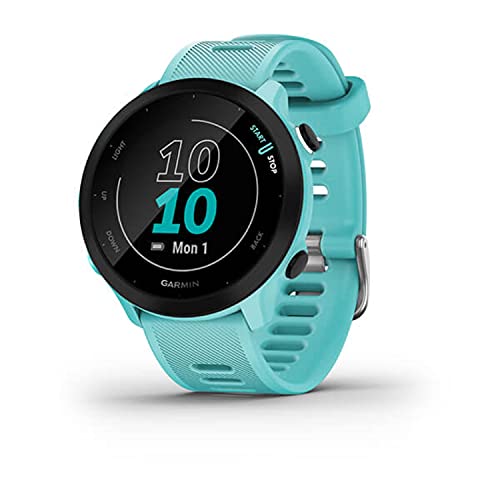
- Lightweight 37g wrist-mounted design
- Daily workouts and PacePro guidance
- Up to 20 hours in GPS mode
Best For: Runners focused on structured training and pacing
Best Smallest Stylish Option

- Compact 35mm case for smaller wrists
- Phone-connected GPS for outdoor runs
- Up to 5 days of battery life
Best For: Users who prioritize style, compactness, and wellness tracking
Best Overall – Garmin Forerunner 570 42mm
For runners seeking feature-rich running watches for small wrists, the Garmin Forerunner 570 combines a compact 42mm case with an AMOLED touchscreen, button controls, and extensive training guidance. Its training, recovery, and smartwatch tools make it suited to structured fitness plans.
Best For: Runners and triathletes who want advanced training insights in a smaller watch size.
Pros:
- 42mm design is intended to fit smaller wrists.
- Offers up to 10 days of smartwatch battery life and up to 18 hours in GPS mode.
- Includes Garmin Coach plans, training readiness, daily suggested workouts, and 30+ activity profiles.
- Built-in microphone and speaker support calls when paired with a smartphone.
Cons:
- Several safety and calling features require a compatible smartphone and network coverage.
- Training metrics are estimates rather than medical measurements.
The Forerunner 570 is the most comprehensive option here for runners who prioritize adaptive coaching and recovery data while still wanting a relatively compact case.
Best Simple Training Timer – Timex Ironman Essential 34mm
The Timex Ironman Essential 34mm is a straightforward choice among running watches for small wrists. Its small resin case, digital display, chronograph, lap memory, and countdown timer focus on practical workout timing rather than app-based training analysis.
Best For: Runners who want an uncomplicated digital watch for timing workouts and intervals.
Pros:
- Compact 34mm resin case suits smaller wrists.
- 100-hour chronograph includes 10-lap memory and a 24-hour countdown timer.
- INDIGLO illumination helps with visibility in low light.
- Adjustable 12mm strap fits wrists up to 7.5 inches.
Cons:
- Does not include GPS, heart-rate tracking, or smartwatch training features.
- Battery powered rather than rechargeable.
This Timex is a good fit if you mainly need lap timing, alarms, and a readable display in a small, uncomplicated package.
Best Battery Life – Garmin Forerunner 265S
The Garmin Forerunner 265S is a strong contender for running watches for small wrists, pairing a lightweight 42mm design with an AMOLED touchscreen and traditional buttons. It adds race-planning, multi-band positioning, and detailed recovery features for runners who want training support without a larger case.
Best For: Serious runners who want long battery life, accurate positioning, and adaptive workout guidance.
Pros:
- 42mm lightweight design is made for smaller wrists.
- Provides up to 15 days in smartwatch mode and up to 24 hours in GPS mode.
- Daily suggested workouts adapt to performance and recovery.
- Multi-band GNSS with SatIQ technology is designed to improve positioning while managing battery use.
Cons:
- Safety and assistance features require a paired compatible smartphone and network coverage.
- Training and readiness data are estimates, not medical measurements.
With its longer stated battery life and advanced running features, the 265S is especially appealing for runners who dislike frequent charging and want dependable training tools in a smaller format.
Best Budget Fitness Tracking – AMOLED Fitness Tracker
This compact fitness tracker is a practical entry point for shoppers comparing running watches for small wrists. Its 1.10-inch AMOLED screen, 25 sports modes, connected GPS, activity tracking, and notification support cover everyday fitness needs, though it is less specialized for performance-focused running.
Best For: Casual runners and everyday users who want basic activity, sleep, and notification tracking.
Pros:
- Small 1.10-inch AMOLED display offers a compact profile.
- Tracks heart rate continuously and monitors sleep, steps, calories, and exercise time.
- Includes 25 sports modes and connected GPS for workout routes.
- Offers up to 7 days of battery life and IP68 water resistance.
Cons:
- GPS is connected rather than built into the tracker.
- Health measurements are for reference only and do not replace medical advice.
- No warranty is listed in the supplied details.
This tracker makes sense for users who want a small screen and broad wellness features at a basic level, especially if connected GPS and smartphone notifications are sufficient.
Best Running Pick – Garmin Forerunner 165
For runners seeking running watches for small wrists, the Garmin Forerunner 165 offers a relatively lightweight 43 mm design with built-in GPS, wrist-based heart-rate tracking, and a bright AMOLED touchscreen. Traditional button controls, adaptive workout suggestions, and up to 19 hours of GPS battery life make it a practical training companion.
Best For: Runners who want dedicated training features, clear GPS and heart-rate data, and a lightweight 43 mm watch.
Pros:
- Lightweight 43 mm case with AMOLED display and both touchscreen and button controls
- Built-in GPS, wrist-based heart rate, training effect, and recovery-time guidance
- Personalized daily workouts plus Garmin Coach race-adaptive training plans
- Up to 11 days in smartwatch mode and 19 hours in GPS mode
Cons:
- The 43 mm case may still feel large on especially petite wrists
- Safety features require a paired compatible smartphone and network coverage
The Forerunner 165 is the strongest all-around choice here for runners who prioritize training feedback without moving to a heavier watch. Its combination of buttons, touchscreen, GPS, and recovery tools suits regular training, while Garmin Pay and smart notifications add everyday convenience.
Best Small Stylish Option – Garmin Lily 2 Active
The Garmin Lily 2 Active is a strong option among running watches for small wrists, thanks to its small 38 mm case, metal construction, and stylish patterned lens. It includes built-in GPS, running and fitness profiles, Garmin Coach plans, and up to 9 days of battery life for users who want fitness tracking that also fits everyday outfits.
Best For: Smaller-wrist users who want a compact, style-focused smartwatch with GPS and basic running support.
Pros:
- Small 38 mm case with a metal watch case and silicone band
- Built-in GPS and sports apps for running, cardio, yoga, Pilates, and more
- Garmin Coach plans support 5K, 10K, and half-marathon preparation
- Up to 9 days of battery life plus health and wellness tracking
Cons:
- Offers fewer dedicated running-training details than the Forerunner models
- The patterned lens reveals the touchscreen only when tapped, which may not suit everyone
With its 38 mm size, the Lily 2 Active is the easiest fit for notably small wrists in this group. It is better suited to everyday fitness and lifestyle use than highly detailed run analysis, but built-in GPS and Garmin Coach make it capable for structured recreational training.
Best for Advanced Training – Garmin Forerunner 70
For runners comparing running watches for small wrists, the Garmin Forerunner 70 combines a 43 mm lightweight design with GPS, wrist-based heart rate, and a bright AMOLED display. Its training readiness, recovery insights, quick workout creation, and 80-plus activity profiles make it the most training-focused choice of the three.
Best For: Runners who want deeper training guidance, adaptive plans, and extensive activity support in a 43 mm watch.
Pros:
- Lightweight 43 mm design with AMOLED touchscreen and button controls
- Up to 23 hours of GPS battery life and up to 13 days in smartwatch mode
- Training readiness, training status, training effect, and recovery-time features
- More than 80 built-in activity profiles, including running, HIIT, and strength
Cons:
- The 43 mm case may be less suitable for very petite wrists than the 38 mm Lily 2 Active
- Supplied specifications list it as not water resistant despite a stated 50-meter depth detail
The Forerunner 70 is the best fit for runners who plan to use advanced readiness and recovery metrics consistently. Its longer GPS battery life and broader activity selection are useful for frequent training, though smaller-wrist shoppers may prefer the Lily 2 Active’s more compact case.
Best All-Arounder – Garmin vívoactive 5
For runners comparing running watches for small wrists, the 42mm Garmin vívoactive 5 offers a compact profile with a bright AMOLED touchscreen and built-in GPS. It also adds broad health, recovery, workout, and music features for everyday use beyond running.
Best For: Runners who want a versatile smartwatch with strong wellness and training features.
Pros:
- Up to 11 days of battery life in smartwatch mode, or up to 5 days with the display always on.
- Built-in GPS and more than 30 indoor and outdoor sports apps, including running.
- Includes Body Battery, sleep coaching, nap detection, recovery time, and workout guidance.
- Supports downloaded music from Spotify, Amazon Music, or Deezer for phone-free listening.
Cons:
- The 42mm case may still feel larger than an ultra-compact watch for very narrow wrists.
- Its extensive health and smartwatch features may be more than runners seeking a simple training watch need.
The vívoactive 5 is a well-rounded choice when comfort, long battery life, wellness tracking, and everyday smartwatch functionality matter as much as run tracking.
Best Dedicated Running Pick – Garmin Forerunner 55
The Garmin Forerunner 55 is a focused option for shoppers seeking running watches for small wrists. Its 37g wrist-mounted design, button controls, built-in GPS, and running-specific guidance prioritize practical training over decorative smartwatch extras.
Best For: Runners who want straightforward training tools, pace guidance, and long battery life.
Pros:
- Tracks distance, pace, and route with built-in GPS while monitoring wrist-based heart rate.
- Offers daily suggested workouts, race time predictions, recovery guidance, and PacePro pace support.
- Battery lasts up to two weeks in smartwatch mode and up to 20 hours in GPS mode.
- Lightweight 37g design and button-based operation suit focused run training.
Cons:
- It uses a smaller 1.04-inch sunlight-visible MIP display rather than an AMOLED screen.
- PacePro is not compatible with on-device courses.
- Music playback is not listed among the supplied features.
Choose the Forerunner 55 if running performance, simple controls, and training feedback are more important than a broad touchscreen smartwatch experience.
Best Smallest Stylish Option – Garmin Lily 2
For shoppers prioritizing a truly compact look among running watches for small wrists, the 35mm Garmin Lily 2 is the smallest option here. Its patterned lens conceals the touchscreen, while connected-phone GPS supports outdoor run tracking.
Best For: Small-wristed users who want a discreet, fashion-forward watch for wellness tracking and occasional runs.
Pros:
- Compact 35mm design with a metal case and silicone band.
- Tracks sleep, stress, Body Battery, heart rate, hydration, and menstrual or pregnancy metrics.
- Includes sports apps for cardio, yoga, Pilates, and more, with GPS available through a compatible phone.
- Provides smart notifications and safety features such as LiveTrack and incident detection when paired with a phone.
Cons:
- GPS requires a compatible smartphone, so it is less independent for outdoor runs.
- Battery life is up to five days, shorter than the other listed Garmin options.
- The supplied notes do not list dedicated running metrics or training-plan features.
The Lily 2 is the best fit when a small, stylish case and everyday health features come first, with phone-connected run tracking available when needed.
How We Picked the Best Running Watches for Small Wrists
We focused on watches with compact cases, manageable weights, and bands that can be adjusted securely on narrower wrists. The selection includes models from roughly 34mm to 43mm, recognizing that case shape, thickness, lug design, and strap flexibility affect comfort as much as diameter.
We also considered core running functions such as built-in GPS, heart-rate tracking, workout guidance, activity monitoring, water resistance, battery life, and display readability. Because needs vary, the list includes both advanced training watches and simpler, lower-profile options.
Quick Comparison
- Best for advanced training: Garmin Forerunner 570 or Forerunner 265S.
- Best balanced GPS option: Garmin Forerunner 165.
- Best for long battery life and simplicity: Garmin Forerunner 55.
- Best compact lifestyle watch: Garmin Lily 2 Active.
- Best for a smaller, traditional watch profile: Timex Ironman Triathlon Essential 34mm.
- Best for basic health tracking: Garmin Lily 2 or the compact fitness tracker.
Key Buying Factors for Running Watches for Small Wrists
Case Size and Comfort
A smaller case is a useful starting point, but thickness and weight matter too. A watch that sits close to the wrist is less likely to catch on clothing or shift during intervals. Look for a strap with enough adjustment holes and a soft, flexible material.
GPS and Running Features
If you run outdoors regularly, built-in GPS makes it easier to record pace, distance, and routes without carrying a phone. Dedicated Forerunner models generally offer more training metrics and workout tools, while lifestyle watches may prioritize wellness and notifications.
Battery Life
Check both smartwatch-mode and GPS-mode battery claims. Frequent GPS use can reduce runtime considerably, so runners training for longer events may prefer a model with extended battery life or efficient tracking modes.
Display and Controls
A bright display improves readability in daylight, while physical buttons can be easier to operate with sweaty fingers. Touchscreens are convenient for everyday use, but runners who train in rain or cold may prefer button-based controls.
Health and Smart Features
Heart-rate monitoring, sleep tracking, activity estimates, and notifications can make a running watch more useful between workouts. Treat wellness measurements as helpful trends rather than medical diagnoses, especially for features such as blood pressure estimates.
Who Should Buy Which Running Watches for Small Wrists?
Choose the Forerunner 570 or 265S if structured training, detailed metrics, and a more capable running platform are your priorities. Choose the Forerunner 165 for a strong middle ground between training tools, GPS performance, and everyday usability.
Choose the Forerunner 55 or Timex Ironman if you want a straightforward running companion without paying for extensive smartwatch features. The Timex is especially suitable for runners who prefer a traditional, lightweight digital watch.
Choose the Lily 2 Active or vívoactive 5 if you want running capabilities alongside wellness tracking and daily smart features. Choose the Lily 2 for a smaller, style-focused option with basic activity and health functionality.
Choose the compact fitness tracker if affordability and general activity monitoring matter more than advanced GPS training tools. Before buying any model, compare its actual case dimensions with your wrist circumference and confirm that the return policy allows a comfortable fit check.
Related Posts: