The best running watches for women make it easier to track pace, distance, heart rate, routes, and recovery without relying on a phone. This roundup compares 10 options across training features, battery life, comfort, smart functions, and price.
Whether you are starting a couch-to-5K plan, training for a race, or seeking an everyday fitness smartwatch, the right choice depends on how seriously you run and which features you will actually use.
Best 10 Running Watches for Women Picks for 2026
Best Training Companion
Garmin Forerunner 165 Whitestone

- Built-in GPS and wrist-based heart rate
- Adaptive workouts and recovery guidance
- AMOLED display with button controls
Best For: Structured training and everyday running
Best Battery Life

- Up to 14 days of battery life
- GPS, maps, and turn-by-turn directions
- 140+ workout modes and health tracking
Best For: Long-lasting training and navigation
Best for Structured Goals

- Race-adaptive training plans
- Training effect and recovery time tools
- 43 mm AMOLED GPS running watch
Best For: Event preparation and performance tracking
Best Budget-Friendly Features

- 140+ sports modes and health monitoring
- Bluetooth calling and smart notifications
- 5–7 days of typical battery life
Best For: Casual fitness and phone-connected running
Best Overall Training Pick

- Built-in GPS and wrist-based heart rate
- Adaptive Garmin Coach training plans
- Up to 23 hours in GPS mode
Best For: Structured training and recovery tracking
Best Lightweight GPS Value
Mibro GS Active2 GPS Running Watch

- 39-gram design with dual-band GPS
- Running metrics and adaptive race plans
- Approximately 15-day daily battery life
Best For: Lightweight training and long battery life
Best Simple Training Companion
Garmin Forerunner 55 GPS Running Watch
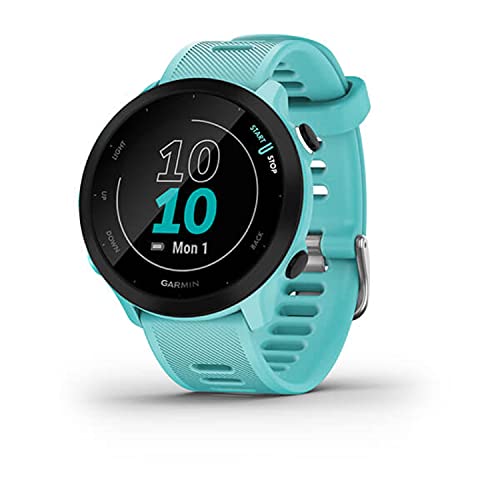
- GPS and wrist-based heart-rate tracking
- Daily suggested workouts and PacePro guidance
- Up to two weeks of smartwatch battery
Best For: Straightforward run training and long battery life
Best Value
aeac AMOLED Smart Watch for Women

- 110+ sport modes with heart rate, sleep, SpO2, and stress tracking
- Up to 10 days of battery life with a customizable AMOLED display
- Phone-connected GPS plus Bluetooth calls and voice control
Best For: Stylish everyday fitness tracking and varied workouts
Best for Training
Garmin vívoactive 5 GPS Smartwatch

- Built-in GPS with running and more than 30 sports apps
- Recovery time, workout benefit, Garmin Coach, and Body Battery insights
- Up to 11 days of smartwatch battery life and phone-free music
Best For: Structured running, recovery tracking, and GPS workouts
Best Budget Features

- 120 sports modes with heart-rate and sleep monitoring
- Large 1.83-inch display with customizable watch faces
- Bluetooth calls, notifications, music control, and 5–7 days of active use
Best For: Casual running and connected everyday fitness tracking
Best Training Companion – Garmin Forerunner 165 Whitestone
For runners comparing running watches for women, the Garmin Forerunner 165 combines built-in GPS, wrist-based heart-rate monitoring, and a lightweight 43 mm design. Its AMOLED touchscreen and physical buttons make it practical for both everyday wear and focused training.
Best For: Runners who want adaptive workout guidance, recovery insights, and a polished smartwatch experience.
Pros:
- Built-in GPS tracks pace and distance, with up to 19 hours of GPS battery life.
- Personalized suggested workouts, Garmin Coach, and race-adaptive training plans support structured goals.
- Morning reports, training effect, and recovery time provide useful training context.
- Includes 25+ activity profiles, incident detection, notifications, and Garmin Pay.
Cons:
- Some safety features require a compatible smartphone and network coverage.
- Garmin Pay availability depends on supported countries and payment networks.
The Whitestone Forerunner 165 is a strong choice for runners who value training support without giving up smartwatch conveniences. Its 11-day smartwatch battery life and 50-meter water resistance add flexibility for daily use.
Best Battery Life – Amazfit Bip 6 Smart Watch
The Amazfit Bip 6 is a practical option among running watches for women, offering built-in GPS, downloadable maps, and turn-by-turn directions on a bright 1.97-inch AMOLED display. Its lightweight aluminum design is built for extended daily wear.
Best For: Runners who prioritize long battery life, navigation, and broad activity tracking.
Pros:
- Battery lasts up to 14 days, reducing the need for frequent charging.
- Supports GPS through five satellite systems plus downloadable maps and turn-by-turn directions.
- Offers 140+ workout modes, including running, HYROX Race, and strength training.
- Tracks heart rate, sleep, blood oxygen, and stress around the clock.
Cons:
- The larger 1.97-inch rectangular display may not suit shoppers seeking a smaller watch.
- Some smart features depend on compatibility with Android 7.0+ or iOS 14.0+ devices.
With its vivid, high-brightness AMOLED screen and 50-meter water resistance, the Bip 6 balances training features with everyday smartwatch functions. It is especially appealing when charging convenience and route guidance matter.
Best for Structured Goals – Garmin Forerunner 165 Black
The black Garmin Forerunner 165 is a focused running smartwatch for shoppers seeking running watches for women with built-in GPS, heart-rate tracking, and training tools. Its 43 mm case, AMOLED touchscreen, and traditional buttons support comfortable use during runs and throughout the day.
Best For: Runners training for specific events who want personalized plans and recovery feedback.
Pros:
- Built-in GPS measures pace and distance, with up to 19 hours in GPS mode.
- Daily suggested workouts adapt to performance and recovery.
- Garmin Coach and race-adaptive plans provide event-oriented guidance.
- Includes training effect, recovery time, morning reports, and 25+ activity profiles.
Cons:
- Incident detection and Assistance require pairing with a compatible smartphone and network coverage.
- Smart notifications and Garmin Connect features depend on smartphone connectivity.
The black finish gives this Forerunner 165 a versatile look, while GarminOS supplies a deep set of running and recovery features. It is a particularly good fit for runners who want actionable training structure rather than basic step tracking.
Best Budget-Friendly Features – Smart Watch for Men and Women
This everyday smartwatch offers a broad feature set for shoppers browsing running watches for women, including 140+ sport modes, heart-rate and sleep monitoring, and GPS via a connected smartphone. Its 1.83-inch HD display and customizable watch faces make it suitable for casual fitness and daily notifications.
Best For: Casual runners who want basic workout tracking, Bluetooth calling, and long daily battery life.
Pros:
- Tracks running and other workouts across 140+ sport modes.
- Offers heart-rate detection, sleep analysis, pedometer functions, and female cycle tracking.
- Supports Bluetooth calls, notifications, music control, and remote camera control.
- Provides 5–7 days of typical battery life and IP68 water resistance.
Cons:
- GPS is provided through a smartphone rather than built into the watch.
- Message notifications cannot be answered from the watch.
- Actual battery life varies with usage.
This model is best viewed as a general-purpose fitness smartwatch rather than a dedicated GPS running watch. It makes sense for users who usually carry a phone and want calls, notifications, and health basics in one affordable wearable.
Best Overall Training Pick – Garmin Forerunner 70
For runners seeking capable running watches for women, the Garmin Forerunner 70 combines built-in GPS, wrist-based heart-rate tracking, and an AMOLED touchscreen in a lightweight design. Its adaptive Garmin Coach plans and recovery-focused features make it useful for both new and experienced runners.
Best For: Runners who want structured training guidance and detailed recovery insights.
Pros:
- GPS tracks pace and distance while the watch monitors wrist-based heart rate.
- Garmin Coach plans adapt to performance and recovery, including beginner run/walk plans.
- Up to 13 days of smartwatch battery life and up to 23 hours in GPS mode.
- Includes sleep, training readiness, training status, and recovery-time features.
Cons:
- The 1.2-inch display and 43mm case may not suit runners who prefer larger watches.
- Safety and live-location features require a paired smartphone and network coverage.
- Although rated to 50 meters, the listing identifies the water-resistance level as not resistant.
The Forerunner 70 is a strong all-around choice when training progression and recovery matter as much as run tracking. Its broad activity support and personalized suggestions add versatility beyond basic GPS recording.
Best Lightweight GPS Value – Mibro GS Active2 GPS Running Watch
The Mibro GS Active2 is a practical option among running watches for women, pairing a 39-gram body with dual-band GPS, professional running metrics, and an AMOLED display. It also includes adaptive plans for 5K, 10K, and half-marathon goals.
Best For: Runners who prioritize a lightweight watch, extended battery life, and built-in race plans.
Pros:
- Lightweight 39-gram design with a nylon band for comfortable longer sessions.
- Professional running mode provides cadence, stride, pace, VO₂ Max, and running-ability data.
- Dual-band, five-satellite positioning supports fast location tracking and route navigation.
- Offers approximately 15 days of daily use and about 15 hours in GPS mode.
Cons:
- The 46mm case is relatively large compared with some compact running watches.
- GPS battery life is shorter than its everyday-use battery life at approximately 15 hours.
- It is not suitable for hot springs or hot showers despite its 5ATM rating.
With running-specific analytics, navigation, 150-plus sport modes, and a lightweight build, the GS Active2 offers broad functionality for its category. It is especially appealing to runners who want training plans without charging every day.
Best Simple Training Companion – Garmin Forerunner 55 GPS Running Watch
The Garmin Forerunner 55 keeps the focus on essential run training, making it one of the more straightforward running watches for women. It tracks pace, distance, route, and wrist-based heart rate while adding daily suggested workouts, PacePro guidance, and race-time predictions.
Best For: Runners who want dependable training features with button controls and long battery life.
Pros:
- Built-in GPS records how far, how fast, and where you run.
- Daily suggested workouts adjust to training history, fitness level, and recovery time.
- PacePro provides GPS-based pace guidance for a selected course or distance.
- Battery lasts up to two weeks in smartwatch mode and up to 20 hours in GPS mode.
Cons:
- The 1.04-inch transflective display is smaller and less vivid than an AMOLED screen.
- It uses button controls rather than a touchscreen.
- PacePro is not compatible with on-device courses.
The Forerunner 55 is a sensible pick for runners who value clear training support over smartwatch extras. Its compact 37-gram design, extensive activity profiles, and recovery-oriented suggestions make it a reliable everyday training companion.
Best Value – aeac AMOLED Smart Watch for Women
For shoppers comparing running watches for women, the aeac smartwatch offers a broad fitness feature set in a rose-gold design. It combines activity tracking, smartphone-connected GPS, health monitoring, and more than 110 sport modes for everyday workouts.
Best For: Women who want a stylish, versatile fitness smartwatch with long battery life and extensive activity tracking.
Pros:
- Tracks heart rate, blood oxygen, stress, sleep, steps, calories, and activity routes.
- Offers more than 110 sports modes and 3ATM water resistance for activities including swimming.
- Provides up to 10 days of battery life and a 1.32-inch AMOLED display.
- Supports Bluetooth calls, voice commands, notifications, cycle tracking, and customizable watch faces.
Cons:
- GPS functionality is provided through a connected smartphone rather than built into the watch.
- The 3ATM water-resistance rating is less substantial than a dedicated high-depth sports watch.
The aeac is a practical choice when you want running and wellness features without committing to a specialized training watch. Its connected GPS and broad compatibility are worth noting if you prefer phone-free run tracking.
Best for Training – Garmin vívoactive 5 GPS Smartwatch
The Garmin vívoactive 5 is one of the more training-focused running watches for women in this lineup. Its built-in GPS, running tools, recovery guidance, and bright AMOLED display make it suited to runners who want actionable data beyond basic step counting.
Best For: Runners seeking built-in GPS, structured training support, recovery insights, and strong health-tracking features.
Pros:
- Includes built-in GPS and more than 30 indoor and GPS sports apps, including running.
- Offers workout benefit, recovery time, Garmin Coach plans, and downloadable music for phone-free listening.
- Tracks heart rate, stress, sleep, naps, menstrual cycle, pregnancy, and Body Battery energy.
- Provides up to 11 days of smartwatch battery life, or up to 5 days with the display always on.
Cons:
- Its training-oriented feature set may be more than casual walkers or occasional exercisers need.
- Music downloads require supported Spotify, Amazon Music, or Deezer accounts.
With built-in GPS and recovery-oriented guidance, the vívoactive 5 is the strongest fit here for runners who want to plan, review, and balance workouts. It also remains useful between runs with sleep, wellness, and music features.
Best Budget Features – TG08 Smart Watch for Women
The TG08 is a straightforward option among running watches for women, pairing 120 sports modes with a large 1.83-inch display and everyday smartwatch conveniences. It is designed for users who want workout tracking, notifications, and Bluetooth calling at an accessible feature level.
Best For: Casual runners and active users who prioritize a large screen, many sport modes, and everyday connectivity.
Pros:
- Includes 120 sports modes plus heart-rate and sleep monitoring.
- Features a 1.83-inch HD display with customizable watch faces.
- Supports Bluetooth calls, message and social notifications, music control, and camera control.
- Offers 5–7 days of active-use battery life and IP67 protection against splashes and sweat.
Cons:
- The supplied details do not list built-in GPS, so it is less suited to runners who need independent route tracking.
- IP67 protection is intended for splashes, sweat, and brief submersion rather than extended swimming.
- Step recording begins after more than 20 steps.
The TG08 makes sense for casual training and daily wear when a large, readable screen and communication features matter more than advanced running analytics. Consider a GPS-equipped model if you regularly leave your phone behind.
How We Picked the Best Running Watches for Women
We compared these Running Watches for Women by focusing on the features that matter during real workouts: GPS accuracy, workout tracking, battery endurance, comfort, display readability, water resistance, and health-monitoring tools. We also considered usability across different budgets and running styles, from beginner fitness tracking to structured training.
Garmin models generally emphasize dedicated running metrics and training guidance, while Amazfit, Mibro, and budget smartwatches tend to combine exercise tracking with broader lifestyle features. Product specifications can vary by size, color, software version, and region, so confirm current details before buying.
Quick Comparison
| Best For | Look For | Likely Fit |
|---|---|---|
| Structured run training | GPS, workout guidance, training metrics | Garmin Forerunner models |
| Everyday fitness and wellness | Health tracking, smart notifications, comfortable design | Garmin vívoactive 5 or Amazfit Bip 6 |
| Affordable GPS tracking | Route tracking, long battery life, simple controls | Garmin Forerunner 55 or Mibro GS Active2 |
| Basic smartwatch features | Sport modes, calls, heart-rate tracking | Budget Bluetooth-call models |
Key Buying Factors for Running Watches for Women
GPS and Run Metrics
Built-in GPS is important if you want distance, pace, and route data without carrying a phone. Runners who follow training plans should prioritize interval support, suggested workouts, pace alerts, recovery information, and other dedicated metrics over a large number of generic sport modes.
Fit, Comfort, and Display
A watch should remain secure without feeling heavy or bulky. Check case dimensions, band adjustability, screen visibility in bright sunlight, and whether the interface is easy to operate while moving. A smaller case may suit narrower wrists, but a larger display can make pace and heart-rate data easier to read.
Battery and Water Resistance
Compare both smartwatch-mode and GPS-mode battery estimates. Frequent GPS use can reduce runtime considerably. Water resistance is useful for sweat, rain, and pool workouts, but the exact rating does not automatically mean every watch is suitable for diving or high-pressure water activities.
Health and Smart Features
Heart-rate, sleep, blood-oxygen, menstrual-cycle, notifications, music, calls, and phone compatibility can add everyday value. Treat wellness readings as general insights rather than medical measurements, and verify whether key features work with your iPhone or Android phone.
Who Should Buy Which Running Watches for Women?
Choose a Garmin Forerunner if running is your main priority and you want focused training tools, dependable workout support, and a running-first interface. The Forerunner 55 is a sensible starting point, while newer models may better suit runners wanting a more modern display and expanded features.
Choose the Garmin vívoactive 5 or Amazfit Bip 6 if you want one watch for running, general fitness, health trends, and daily notifications. These are better matches for buyers who value versatility as much as dedicated run data.
Choose the Mibro GS Active2 if built-in GPS and a lightweight design are priorities at a potentially lower price. Choose a budget Bluetooth-call smartwatch if you mainly want activity counts, basic heart-rate tracking, sport modes, and phone-call convenience rather than advanced running analytics.
Related Posts: