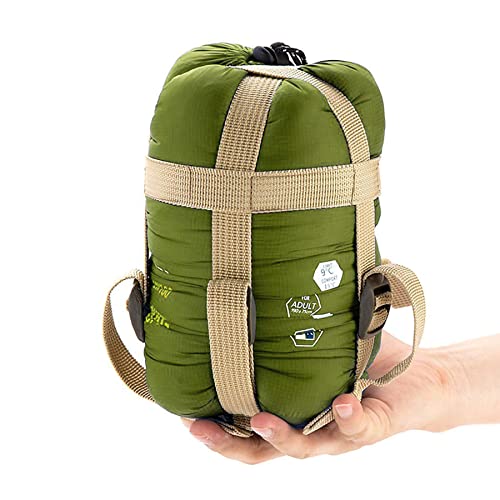
The best sleeping bags for backpacking balance warmth, weight, packability, and comfort without adding unnecessary bulk to your pack. The right choice depends on where and when you camp, as well as how much insulation you need.
This roundup compares 10 options ranging from compact warm-weather bags to robust cold-weather mummy designs, helping you narrow the field before your next overnight adventure.
Best 10 Sleeping Bags for Backpacking Picks for 2026
For backpackers seeking a versatile three-season option, the Kelty Cosmic 20 combines compressible 550-fill down with recycled fabrics and a mummy shape. Its 20-degree rating, roughly 2-pound-6-ounce regular weight, and 13-by-7-inch stuffed size make it a practical choice for sleeping bags for backpacking.
Best For: Three-season backpackers who value down insulation, packability, and recycled materials.
Pros:
550-fill down provides a lightweight, compressible design.
ISO limit rating is 21 degrees, with an ISO extreme rating of -11 degrees.
Uses recycled shell and liner fabrics with PFAS-free DWR.
Dual-direction zippers and ethically sourced, traceable RDS-certified down add practical appeal.
Cons:
The regular size is intended for sleepers up to 6 feet.
Down insulation generally requires more care around moisture than synthetic fill.
The Cosmic 20 is a well-rounded option when warmth, compressibility, and lower-impact materials matter. Confirm the size and temperature needs before choosing it for colder trips.
The SOULOUT sleeping bag favors roominess and everyday versatility over ultralight performance. Its rectangular 86.6-by-32.7-inch shape, synthetic insulation, water-resistant outer shell, and 4.5-pound weight make it more suitable for casual camping and accessible sleeping bags for backpacking than technical, weight-conscious trips.
Best For: Adults and teens who want a roomy, washable bag for camping, travel, and occasional backpacking.
Pros:
Spacious rectangular design accommodates sleepers up to 7.1 feet.
Water-resistant shell helps repel light rain, moisture, and morning dew.
Machine-washable construction simplifies cleanup.
Includes a stuff sack and packs to approximately 9.1 by 13.8 inches.
Cons:
At 4.5 pounds, it is heavier than many backpacking-focused bags.
The listed 32-77°F range may not suit genuinely cold conditions.
Its rectangular shape is less thermally efficient than a mummy design.
This is a comfort-first choice for people who want extra interior space and simple care. Backpackers should weigh its generous dimensions against the added carry weight.
The Teton LEEF is a synthetic mummy bag designed to balance warmth, portability, and comfort for camping, hiking, and backpacking. Its 20°F rating, 3.5-pound weight, roomier mummy cut, and included compression sack give it a practical place among sleeping bags for backpacking.
Best For: Backpackers who want a 20°F synthetic mummy bag with a compression sack and multiple temperature options.
Pros:
20°F option offers more cold-weather range than a basic summer bag.
Roomier mummy design allows easier movement while retaining a mummy profile.
Includes a compression sack for packing into a hiking backpack.
Available in 0°F, 20°F, and 30°F versions and three sizes.
Cons:
At 3.5 pounds, it is not an ultralight choice.
Its 81-by-21-inch dimensions may feel narrower than a rectangular bag.
Microfiber insulation is typically less compressible than down.
The LEEF makes sense for hikers who want a straightforward synthetic bag with useful temperature choices and a lifetime warranty. It is best suited to trips where dependable packability matters more than minimizing every ounce.
The OneTigris Bushcrafter’s sleeping bag emphasizes a wide sleeping area, durable-feeling pongee fabrics, and straightforward three-season utility. Measuring 82.6 by 33 inches and weighing 3.1 pounds, it offers more room than many mummy bags while remaining relevant for camping, bushcraft, and lighter backpacking trips.
Best For: Campers and bushcraft users who prefer a wide mummy bag with splash resistance and easy-care materials.
Pros:
Wide 33-inch design provides generous room for adults and kids.
300T pongee shell and 190T pongee lining offer splash resistance and quick-dry performance.
YKK anti-snag zippers and a cord-stopped hood improve usability.
Machine washable on a delicate cycle and compresses into a 7.8-by-16.5-inch sack.
Cons:
The 46.4-59°F stated comfort range limits it to milder three-season conditions.
At 3.1 pounds, it is heavier than many performance-oriented backpacking bags.
Polycotton fill is less focused on ultralight packability than down insulation.
This bag is a sensible fit when interior space, splash resistance, and simple maintenance are higher priorities than minimal weight or cold-weather performance. Check the temperature range carefully before taking it into cool conditions.
For shoppers comparing sleeping bags for backpacking in genuinely cold conditions, the Coleman North Rim emphasizes warmth and coverage over minimal packed size. Its mummy shape, 0°F rating, draft tube, adjustable hood, and big-and-tall fit make it suited to cold-weather camping when insulation is the priority.
Best For: Cold-weather campers and taller users who want a roomy mummy bag with a 0°F rating.
Pros:
Rated for temperatures as low as 0°F.
Thermolock draft tube helps limit heat loss through the zipper.
Adjustable hood provides added warmth or ventilation.
Machine washable and backed by a 5-year limited warranty.
Cons:
Its 82-by-32-inch large design may be bulkier than ultralight backpacking options.
Polyester insulation and shell prioritize practical warmth rather than premium down-level packability.
The North Rim is a practical choice when overnight temperatures may drop well below freezing. Choose it for cold-weather protection and a generous fit, but consider a lighter, more compact model for weight-sensitive trips.
Among sleeping bags for backpacking, this compact envelope-style model stands out for its low 1.5-pound weight and small packed size. Its 50°F–77°F comfort range, 79-inch length, reversible design, and machine-washable continuous fill make it a flexible option for warm-weather trips and casual use.
Best For: Summer backpackers, taller campers, and anyone prioritizing low weight and compact storage.
Pros:
Weighs 1.5 pounds and packs to approximately 4.7 by 7.9 inches.
79-inch length accommodates users up to 6 feet 7 inches, according to the supplied specifications.
Continuous microfiber fill is designed to resist clumping after washing.
Dual-side auto-lock zipper supports opening from either side and helps prevent accidental unzipping.
Cons:
Its stated 50°F–77°F comfort range is aimed primarily at warmer conditions.
The envelope shape may provide less heat-conserving contouring than a mummy bag.
The listing does not include a warranty.
This is a strong warm-weather and low-bulk option, especially for hikers who dislike restrictive bags or need extra length. For colder shoulder-season trips, verify that its temperature range matches your planned conditions.
For backpackers seeking a balance between warmth, comfort, and manageable weight, the TETON Sports mummy bag offers a 20°F rating with synthetic insulation and a stuff sack. Its hood, zipper draft tubes, vaulted footbox, and 87-inch length make it a capable three-season option for adults and taller campers.
Best For: Three-season backpacking and camping when you want mummy-style warmth, a long fit, and included compression storage.
Pros:
20°F temperature rating supports cooler three-season conditions.
Mummy hood, draft tubes, and insulated vaulted footbox help retain warmth.
Includes a compression sack for packing and hang loops for storage.
Lifetime warranty covers defects in materials or workmanship for the original owner.
Cons:
At 2.9 pounds, it is heavier than the 1.5-pound compact model in this roundup.
The supplied details identify a +20°F rating, so it is not the coldest-weather option here.
Mummy construction can feel more restrictive than an envelope bag.
The TETON is a sensible middle ground for hikers who want more cold-weather capability than a summer bag without moving to a 0°F design. Its included compression sack and long 87-inch length add practical value for regular camping trips.
If you need sleeping bags for backpacking in mild conditions, the ECOOPRO is a practical choice when low packed weight matters. It weighs about 1.5 pounds, compresses to roughly 11 inches in height, and uses a waterproof nylon exterior with a breathable polyester lining. Its 55–60°F comfort range suits warm-weather camping, hiking, and similar trips.
Best For: Warm-weather backpackers who prioritize a compact, lightweight sleeping bag.
Pros:
Lightweight design weighs about 1.5 pounds.
Compresses into a compact carrying sack for easier transport.
Waterproof nylon shell and breathable polyester lining.
83-by-30-inch envelope shape accommodates most adults.
Cons:
Its 55–60°F comfort range is aimed at warm conditions rather than cold-weather trips.
The envelope shape may be less thermally efficient than a mummy-style bag.
The ECOOPRO stands out for straightforward warm-weather portability. Choose it for summer backpacking and hiking when minimizing pack bulk is more important than cold-weather insulation.
The MalloMe is a versatile option among sleeping bags for backpacking, with a stated 50–80°F comfort range and a weight of about 3 pounds. Its waterproof outer shell, synthetic fill, and compression sack make it suitable for spring, summer, fall, and cool-weather camping, while the 86.6-by-31.5-inch rectangular design fits adults up to 6 feet.
Best For: Campers and backpackers seeking a broadly useful three-season bag for adults or kids.
Pros:
50–80°F comfort range supports three-season use.
Waterproof outer shell helps protect against damp conditions.
Compression sack with straps simplifies carrying and storage.
Snag-free double-sided zippers and an adjustable headrest add convenience.
Cons:
At about 3 pounds, it is heavier than the ECOOPRO option.
The listed comfort range does not make it a dedicated winter sleeping bag.
With its wide temperature range, durable shell, and user-friendly details, the MalloMe is a balanced choice for general camping and moderate backpacking trips. Its extra weight is the main trade-off for that versatility.
This rectangular sleeping bag is a practical pick for sleeping bags for backpacking when you want adjustable ventilation and a roomier fit. It is rated for 50–68°F, weighs 3.3 pounds, and packs into a compressed size listed between 7.9 and 14.2 inches. A hood drawstring, foot zipper, and water-resistant polyester shell add flexibility for camping, hiking, and travel.
Best For: Budget-minded campers who value adjustable warmth and a roomy rectangular design.
Pros:
Three-season design with a stated 50–68°F temperature range.
Hood drawstring helps retain warmth around the head.
Foot zipper allows additional ventilation or warmth adjustment.
At 3.3 pounds, it is relatively heavy for lightweight backpacking.
Designed to fit campers up to about 5 feet 11 inches tall.
Its 50–68°F rating is not intended for very cold conditions.
The adjustable hood and foot zipper give this bag useful control over comfort across mild conditions. It makes the most sense for shorter backpacking trips, car camping, or campers who prefer room over minimum pack weight.
We focused on practical features backpackers use most: temperature coverage, insulation type, packed size, weight, weather resistance, zipper performance, hood design, and overall versatility. The selection includes mummy bags for improved heat retention, lightweight options for three-season trips, and roomier or more affordable designs for casual camping. Because comfort ratings can vary by sleeper and conditions, treat every temperature rating as a guide rather than a guarantee.
Quick Comparison
Best For
What to Look For
Ultralight or warm-weather trips
Low packed weight, compact compression sack, and breathable construction
Three-season backpacking
A versatile comfort rating, mummy shape, and reliable hood
Cold-weather camping
Lower temperature rating, draft protection, and substantial insulation
Budget-conscious buyers
Durable synthetic fill, easy care, and useful included accessories
Variable conditions
Water-resistant shell, adjustable ventilation, and a dependable zipper
Key Buying Factors for Sleeping Bags for Backpacking
Temperature Rating
Choose a bag based on the lowest temperatures you realistically expect, not the warmest forecast. A bag rated around 20°F is commonly suited to many three-season conditions, while 0°F models are better for genuinely cold trips. Remember that ratings assume an insulated sleeping pad and appropriate clothing.
Weight, Fill, and Packability
Down generally offers excellent warmth for its weight and compresses efficiently, but it can lose insulating performance when wet and often costs more. Synthetic insulation is typically more affordable, easier to maintain, and more forgiving in damp environments. Compare packed dimensions as carefully as listed weight when carrying the bag over long distances.
Shape, Fit, and Features
Mummy bags conserve heat effectively, while roomier cuts provide more freedom to move. Check the shoulder and hip dimensions if you sleep broad-shouldered or prefer extra space. Useful features include draft collars, insulated zipper guards, adjustable hoods, snag-resistant zippers, and a compression sack.
Shell Protection and Durability
A water-resistant shell helps protect insulation from condensation and light moisture, but no sleeping bag replaces a waterproof shelter. For frequent use, prioritize sturdy fabric, dependable stitching, and a zipper that opens smoothly from inside the bag.
Who Should Buy Which Sleeping Bags for Backpacking?
Choose a lightweight compact model if your priority is minimizing pack weight on mild-weather hikes. A versatile 20°F-class mummy bag is a strong all-around option for three-season backpackers. Select a 0°F or similarly insulated cold-weather bag for shoulder-season trips, high elevations, or consistently freezing nights. Synthetic bags are often the practical choice for beginners, humid climates, and buyers who want simpler care. If you mainly camp in warm conditions, avoid paying for excessive insulation that adds bulk and reduces ventilation.