The right weightlifting belt can improve bracing, support heavy lifts, and make demanding squat and deadlift sessions feel more controlled. The best choice depends on your lifting style, preferred closure, fit, and the level of support you need.
We compared 10 popular belts across leather and nylon designs, including lever, prong, self-locking, and quick-locking options, to help you find a secure fit for your training goals.
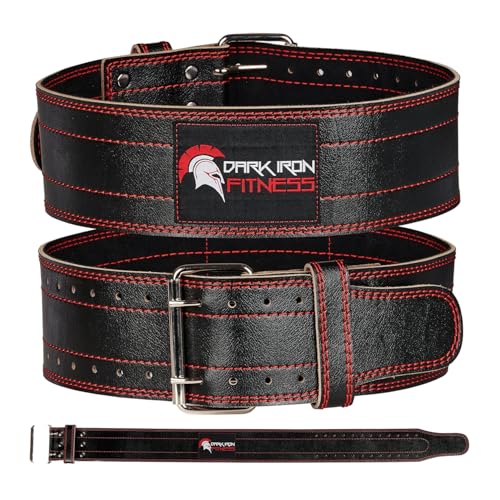
For lifters seeking dependable weightlifting belts, the Dark Iron Fitness model combines genuine leather, a 4-inch profile, and reinforced double-prong hardware. Its 12 adjustment holes accommodate waist sizes from 22 to 49 inches, making it a versatile option for squats, deadlifts, and strength training.
Best For: Lifters who prefer a traditional leather belt with rigid support and a secure double-prong buckle.
Pros:
Genuine leather construction with reinforced double-row stitching
Double-prong buckle and keeper loop help secure the belt during heavy lifts
12 one-inch adjustment holes support a precise fit across multiple waist sizes
Suitable for powerlifting, bodybuilding, CrossFit, and manual-labor tasks
Cons:
Leather requires wiping and occasional conditioning
Its rigid construction may feel less flexible than a nylon belt
This is a strong choice for serious trainees who value durable materials and firm core support. Measure at your natural waist around the belly button and size up if you are between sizes.
The Element 26 is a practical choice among weightlifting belts for athletes who want fast adjustments and a flexible fit. Its premium nylon construction conforms to the core, while the full-metal self-locking buckle is designed for squats, deadlifts, cleans, snatches, and jerks.
Best For: Olympic lifters, functional-fitness athletes, and anyone who prioritizes quick release and adjustable pressure.
Pros:
Self-locking metal buckle engages under load and releases quickly
Infinitely adjustable design allows precise pressure control
Breathable nylon can be hand-washed with soap and water
Folds easily for convenient gym-bag storage
Cons:
Hook-and-loop closure may appeal less to lifters seeking a traditional leather buckle
The straight 4-inch profile may offer less contour than a shaped belt
With no break-in period and competition-oriented design, this belt suits athletes moving between multiple lifts and training positions. Its medium listing specifies an 89-centimeter waist size, so confirm the available fit before ordering.
The Gymreapers belt offers a balanced option for shoppers comparing weightlifting belts made from leather. Its 4-inch real-leather design provides back and core support while remaining relatively lightweight and easy to roll into a gym bag.
Best For: Bodybuilders and recreational lifters who want leather support without a particularly bulky belt.
Pros:
Real reinforced leather and stitching are designed for long-term use
Lightweight 1.5-pound construction rolls up for storage
Multiple adjustment holes help create a comfortable fit
4-inch width supports the back, spine, and core
Cons:
Leather may require more care than washable nylon
The supplied medium specification lists a 38-inch waist, so sizing should be checked carefully
This model is a sensible middle ground for lifters who want the feel and durability of leather with a lighter, less bulky profile. Use the adjustment range and sizing guidance to avoid an overly tight or loose fit.
For shoppers comparing weightlifting belts with broader lumbar coverage, the RitFit uses a 6-inch contoured profile to support the back, abs, and core. Its reinforced tricot construction, stainless steel buckle, and hook-and-loop strap are designed for quick adjustments during squats, deadlifts, lunges, and thrusters.
Best For: Lifters who prefer extra-wide lumbar coverage and fast hook-and-loop adjustment.
Pros:
6-inch contoured design provides broad back and core coverage
Reinforced tricot is designed for comfort and durability
Hook-and-loop strap allows quick adjustment during training
Available in multiple colors and sizes from S through XXL
Cons:
Extra-wide profile may feel more substantial than a 4-inch belt
Hook-and-loop closure may not suit lifters who prefer a metal buckle system
The RitFit stands out when maximum coverage matters more than a compact profile. Its listed large size covers 36 to 44 inches, but checking the sizing guide is still important for a secure, comfortable fit.
For lifters who want efficient transitions between exercises, this weightlifting belt combines a quick-locking buckle with a consistent 4-inch width. Its nylon construction and reinforced stitching provide a lightweight option for training, cross-training, powerlifting, and Olympic lifting.
Best For: Lifters who prioritize fast adjustments and a lightweight, competition-tested design.
Pros:
Quick-locking buckle helps reduce downtime between movements.
Uniform 4-inch width supports the core around the waist.
Made from high-grade nylon with reinforced stitching.
Suitable for powerlifting, Olympic lifting, bodybuilding, and cross-training.
Cons:
Nylon construction may not offer the rigid feel of a leather belt.
Accurate sizing requires measuring around the navel rather than using waist or pant size.
The Gymreapers belt is a practical pick when convenience and mobility matter. Its quick-release design is especially useful for workouts that alternate between lifts and conditioning movements.
This weightlifting belt pairs premium leather with a padded, contoured 4-inch back section for support during squats, deadlifts, presses, and other strength-training movements. A double-prong buckle and reinforced holes allow for an adjustable fit.
Best For: Beginners and experienced lifters seeking padded comfort and a traditional double-prong closure.
Pros:
Premium leather construction is designed for daily heavy use.
Contoured 4-inch design follows the natural curve of the lower back.
Padded, breathable lining helps reduce friction and improve comfort.
Double-prong buckle and multiple holes provide adjustable fitting.
Cons:
Double-prong buckles can take longer to adjust than quick-lock systems.
Leather and padding may feel bulkier than a lightweight nylon belt.
Choose this model if comfort and a conventional leather feel are priorities. Its contoured profile and padded lining make it a versatile option for gym workouts and demanding strength sessions.
For a traditional training setup, this genuine leather weightlifting belt uses a widened structure, suede lining, and reinforced stitching to support the back and abdomen. Its adjustable buckle is intended for cross-training, weightlifting, and everyday fitness.
Best For: Lifters who prefer a durable leather belt with a softer suede interior.
Pros:
Double-sided leather construction is designed for durability.
Suede lining adds interior padding and helps protect the skin.
Reinforced top stitching supports long-term high-intensity use.
Multiple size ranges are available when measured by true waist size.
Cons:
Leather construction may feel less flexible than nylon alternatives.
The product details list a 6-inch width, which may feel substantial for some lifters.
Sizing requires measuring around the lower back and over the belly button, not using pant size.
This belt suits lifters looking for a durable, traditional leather design with added interior comfort. Pay close attention to the sizing instructions before ordering for a secure fit.
This lever-style option is a strong contender for shoppers comparing weightlifting belts for heavy squats, deadlifts, and other compound lifts. Its thick leather construction and quick-release buckle prioritize firm support and fast fit adjustments.
Best For: Powerlifters and strength trainees who want a durable leather belt with quick lever adjustments.
Pros:
Lever buckle allows rapid tightening and release.
Thick leather construction is designed for durability.
4-inch vertical back support helps provide lumbar and core stability.
Includes stated one-year free replacement warranty and customer support.
Cons:
Less convenient for frequent size changes than a hook-and-loop design.
The listed medium size fits a 32–38-inch waist, so careful sizing is important.
Its rigid leather build may feel less flexible than neoprene.
This is a practical choice when dependable support and quick adjustments matter more than lightweight flexibility. Confirm the sizing before ordering, especially if multiple users will share the belt.
For shoppers seeking comfortable weightlifting belts for mixed training, this DMoose model combines flexible neoprene and nylon with a wide back panel. Its hook-and-loop closure makes it easy to adjust between sets and workouts.
Best For: Men and women who want cushioned lumbar support for squats, deadlifts, cross-training, and intense gym sessions.
Pros:
Six-inch back support provides broad coverage and stability.
Hook-and-loop closure allows straightforward fit adjustments.
Breathable foam core adds cushioning during longer sessions.
Contoured design is intended to support the lumbar area.
Cons:
Neoprene and nylon may not offer the rigidity of a thick leather powerlifting belt.
Hook-and-loop closures may appeal less to lifters who prefer buckles.
The supplied details identify the size as medium without providing a waist range.
This belt makes sense for general strength training where comfort, flexible adjustment, and broad back coverage are priorities. Check the available sizing details carefully to ensure the closure fits securely.
This RDX model is one of the more traditional weightlifting belts, using 7mm cowhide leather, a dual-pronged roller buckle, and multiple adjustment holes. It is available with either a 4-inch or 6-inch padded back, making fit and support the main buying considerations.
Best For: Lifters who prefer a durable leather belt with a conventional buckle and multiple fit positions.
Pros:
Genuine cowhide leather is designed for durability and pressure management.
Ten precision-drilled holes provide flexible adjustment.
Dual-pronged steel roller buckle and reinforced rivets help resist slipping.
Suede lining and a leather buckle flap add comfort during wear.
Cons:
Measuring is essential because pant size should not be used to choose the belt size.
The dual-pronged buckle takes longer to adjust than a lever or hook-and-loop closure.
Leather may feel less flexible than a padded neoprene belt.
This is a well-rounded option for lifters who value traditional construction and fine-grained adjustability. Follow the manufacturer’s measuring instructions and choose the upper size if between sizes.
We focused on the features that matter most during strength training: belt width and thickness, material quality, closure security, adjustability, comfort, and intended use. The selection includes supportive leather belts for powerlifting and heavy compound movements, as well as lighter nylon and neoprene designs for general gym workouts.
We also considered whether each style is practical to put on and remove between sets. A belt should support a strong brace without restricting normal movement or creating pressure points.
Quick Comparison
Belt Type
Best For
Main Advantage
Potential Trade-Off
Leather prong
General strength training
Durability and adjustable fit
Can require more effort to fasten
Lever
Powerlifting and heavy sets
Fast, secure closure
Less convenient for frequent size changes
Self-locking or quick-locking
Mixed gym workouts
Easy to adjust between sets
May feel less rigid than thick leather
Nylon or neoprene
Beginners and recreational lifting
Lightweight comfort
Usually provides less rigid support
Key Buying Factors for Weightlifting Belts
Material and Stiffness
Leather generally offers firm, durable support and becomes more comfortable as it breaks in. Nylon and neoprene are lighter and more flexible, making them useful for workouts that combine lifting with other exercises.
Width and Thickness
A uniform 4-inch belt is a versatile choice for many lifters. Wider six-inch designs can provide more lower-back coverage, but they may feel restrictive depending on your torso length and lifting position. Thicker belts are typically more rigid, while thinner belts offer easier movement.
Closure and Adjustability
Prong belts provide several sizing positions and are easy to share. Lever belts offer a consistent, tight fit but can take longer to adjust. Self-locking and quick-locking systems are convenient when you change intensity or belt tension throughout a workout.
Fit and Comfort
Measure around your midsection where the belt will sit rather than relying only on your pants size. The belt should feel snug when bracing, with enough room to breathe and expand your abdomen. Avoid a design that digs into your ribs or hips.
Who Should Buy Which Weightlifting Belts?
For powerlifters: Choose a thick leather lever or prong belt with a secure, rigid fit.
For heavy squat and deadlift training: Look for substantial lumbar coverage and a closure that stays tight under load.
For general gym training: A 4-inch leather or adjustable nylon belt offers a useful balance of support and mobility.
For beginners: Start with a comfortable, easily adjustable model so you can learn proper bracing without unnecessary bulk.
For frequent belt changes: A self-locking or quick-locking design is usually the most convenient option.
Whichever style you choose, treat a belt as a bracing aid rather than a substitute for good technique. Build your core control, select a secure fit, and use the belt when added support is appropriate for your program.