The best yoga mats with alignment lines make it easier to position your hands, feet, and body consistently during flows, balance work, and stretching. Clear visual guides can be especially useful when practicing at home without an instructor.
We compared 10 popular options across grip, thickness, dimensions, materials, alignment features, and portability to help you choose a mat that fits your practice and space.
Best 10 Yoga Mats with Alignment Lines Picks for 2026
Premium Grip Pick

- Patented alignment guidance system
- Strong sweat-resistant grip
- Long, wide PVC-free design
Best For: Yogis prioritizing alignment, traction, and practice space
Extra-Wide Value Pick

- Extra-wide 32-inch surface
- Cushioning 8mm TPE construction
- Alignment marks for beginners
Best For: Home workouts needing room and joint cushioning
Beginner-Friendly Classic

- Printed alignment system
- Cushioning 6mm thickness
- Textured sticky non-slip surface
Best For: Beginners practicing yoga, Pilates, and floor workouts
Natural Rubber Alignment Pick

- Guide lines for posture checks
- Sweat-gripping PU top
- Large natural-rubber-backed surface
Best For: Alignment-focused practice requiring strong traction
Budget-Friendly Alignment Pick

- Printed alignment lines guide positioning
- 6mm double-layer cushioning
- Available in multi-pack options
Best For: Beginners, home workouts, studios, and gyms
Best for Everyday Use
Plyopic Ultra Grip PRO Yoga Mat

- PoseMap alignment references for positioning
- Designed for dry and wet grip
- 26-inch width with natural-rubber cushioning
Best For: Hot yoga and sweaty, alignment-focused practices
Travel-Friendly Pick
Wakeman Alignment Mark Yoga Mat

- Detailed guide for hand and foot placement
- Lightweight TPE with carry strap
- Waterproof and easy to clean
Best For: Travelers, beginners, and home workouts
Best Value Pick

- 6 mm cushioned TPE construction
- Alignment lines and textured grip
- Carry bag included
Best For: Home workouts, Pilates, stretching, and portable practice
Best for Extra-Wide Practice
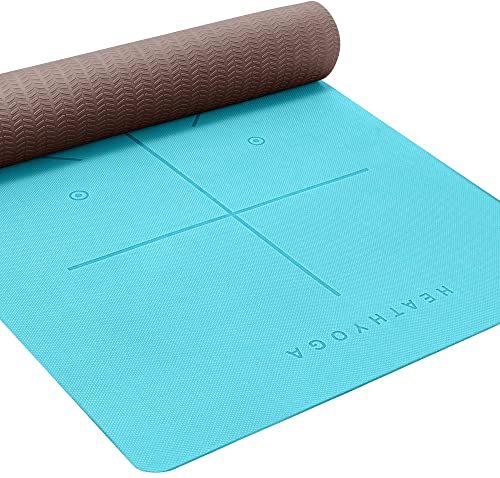
- Extra-wide 26-inch surface
- 6 mm double-layer TPE cushioning
- Includes Velcro and carrying straps
Best For: Full-body practice at home, the gym, or while traveling
Best for Portable Alignment
YOGATI Alignment Line Yoga Mat

- Laser-etched posture markings
- Textured, steady surface for balance
- Shoulder harness and reversible design
Best For: Portable practice, beginner alignment work, and fitness routines
Premium Grip Pick – Liforme Classic Yoga Mat
For shoppers seeking yoga mats with alignment lines, the Liforme Classic stands out with its patented AlignForMe guidance system. Its long, wide format, 4.2mm cushioning, and sweat-resistant GripForMe surface are suited to sessions where positioning and traction matter.
Best For: Yogis who want premium grip, clear alignment guidance, and extra practice space.
Pros:
- AlignForMe markings help guide posture and positioning.
- GripForMe material is designed for strong traction during sweaty practice.
- Longer, wider dimensions provide generous room to move.
- PVC-free, non-toxic materials and a carry bag are included.
Cons:
- Hand-wash care may require extra maintenance.
- At 5.5 pounds, it is heavier than some travel-focused mats.
The Liforme is a strong choice when alignment support and dependable grip take priority over the lightest possible carry weight. Its 4.2mm profile balances cushioning with firm stability.
Extra-Wide Value Pick – YOTTOY Alignment Yoga Mat
The YOTTOY is a practical option among yoga mats with alignment lines, combining visible alignment marks with an extra-wide 72-by-32-inch surface. Its 8mm TPE construction adds cushioning for yoga, Pilates, strength work, and other floor exercises.
Best For: Beginners and home exercisers who want maximum width and thicker joint cushioning.
Pros:
- Alignment marks can help beginners check positioning.
- Extra-wide 32-inch design offers substantial movement space.
- 8mm thickness cushions knees and joints.
- TPE material is described as non-toxic, odorless, waterproof, and recyclable.
Cons:
- Thicker construction may provide less direct ground feedback than thinner mats.
- Care instructions advise keeping it out of direct sunlight.
Choose the YOTTOY if generous dimensions and cushioning are more important than a compact profile. The included strap and mesh storage bag make the wide mat easier to transport and store.
Beginner-Friendly Classic – Gaiam Premium Alignment Mat
The Gaiam Premium is a straightforward choice for anyone comparing yoga mats with alignment lines. Its printed alignment system supports pose positioning, while the 6mm thickness and textured sticky surface provide cushioning and traction for yoga, Pilates, and floor workouts.
Best For: Beginners and general fitness users who want printed guidance on a familiar 6mm mat.
Pros:
- Printed alignment system helps with positioning in poses.
- 6mm profile offers extra-thick cushioning.
- Textured sticky surface is designed for non-slip traction.
- PVC is 6P-free, and a downloadable yoga class is included.
Cons:
- The mat may have a harmless odor when first unwrapped.
- It may need to air out for two to three days before use.
- At 68 by 24 inches, it is shorter and narrower than some alternatives.
The Gaiam delivers useful alignment guidance at a conventional size and thickness. Plan to air it out before your first session, then use it for everyday yoga, Pilates, or floor exercise.
Natural Rubber Alignment Pick – PU and Rubber Yoga Mat
This PU-and-natural-rubber option is designed for shoppers seeking yoga mats with alignment lines and strong traction. Its guide system supports posture checks, while the moisture-gripping PU top and rubber base are intended to stay secure during sweaty practice and on hard floors.
Best For: Practitioners wanting a large mat with alignment guidance and dual-sided grip.
Pros:
- Alignment lines help check pelvis, spine, and limb angles.
- PU top is designed to maintain grip when sweaty.
- Natural rubber base grips wood, tile, and concrete floors.
- Large 74.8-by-26.8-inch format includes a strap and storage bag.
Cons:
- At 2.7 kg, it is relatively substantial to carry.
- Hand-wash care is required.
- Its 0.16-inch profile offers less cushioning than thicker mats.
The mat suits alignment-focused practice where traction and a stable base are priorities. Its thinner profile preserves ground feedback, while the included strap and bag support regular transport.
Budget-Friendly Alignment Pick – Ascend 6mm Yoga Mat
For shoppers seeking yoga mats with alignment lines at a practical price, the Ascend combines printed positioning guides with a supportive 6mm double-layer design. Its 72-by-24-inch reversible surface provides room for yoga, Pilates, stretching, and home workouts.
Best For: Beginners, home practitioners, studios, schools, and gyms that need an affordable alignment mat.
Pros:
- Printed alignment lines help guide hand and foot placement.
- 6mm thickness balances cushioning and support for joints.
- Closed-cell vinyl foam wipes clean and resists moisture absorption.
- Available in one-, four-, and 10-pack options.
Cons:
- Its 24-inch width is narrower than some larger mats.
- The vinyl construction may not suit shoppers specifically seeking natural-rubber materials.
The Ascend is a sensible choice when clear alignment markings, everyday cushioning, and easy maintenance matter more than premium materials or extra width.
Best for Everyday Use – Plyopic Ultra Grip PRO Yoga Mat
The Plyopic Ultra Grip PRO is designed for shoppers comparing yoga mats with alignment lines for demanding or sweaty practices. Its PoseMap references support hand, foot, and center positioning, while the 72-by-26-inch mat uses natural rubber and Eco-PU for cushioning and traction.
Best For: Hot yoga practitioners and anyone who prioritizes wet grip, alignment guidance, knee cushioning, and a spacious practice area.
Pros:
- UltraGrip material is designed for dry and wet traction.
- PoseMap alignment references provide positioning guidance without excessive visual clutter.
- Dense natural rubber cushions pressure beneath knees and wrists.
- Wider 26-inch format includes a carry strap and is PVC-free and vegan-friendly.
Cons:
- At 2.4 kg, it is heavier than lightweight travel-oriented mats.
- Hand-wash-only care requires more maintenance than wipe-clean designs.
- Its 0.17-inch thickness may provide less cushioning than a 6mm mat.
Choose this model when secure contact during sweaty flows and more detailed alignment feedback are central to your practice. The added width and dense construction favor performance over portability.
Travel-Friendly Pick – Wakeman Alignment Mark Yoga Mat
The Wakeman mat is a straightforward option for shoppers who want yoga mats with alignment lines without adding much bulk to their gear. Its detailed guide supports hand and foot placement, while the latex-free TPE surface is lightweight, waterproof, and supplied with a carry strap.
Best For: Beginners, home workouts, and travelers who need an alignment mat that is easy to carry between home, studio, and vacation destinations.
Pros:
- Detailed alignment guide helps with positioning across a range of poses.
- Grippy surfaces on both sides support challenging movements.
- Lightweight TPE construction includes a carrying strap.
- Waterproof, tear-resistant material wipes clean easily.
Cons:
- Its 24-inch width offers less room than the Plyopic model.
- The notes do not specify a thicker or extra-cushioned construction for sensitive joints.
- Blue is the listed color option.
The Wakeman stands out for portability and simple upkeep. It is a practical fit for alignment practice on the go, particularly when a carry strap and lightweight TPE matter more than premium cushioning.
Best Value Pick – ROMIX Pro Alignment Yoga Mat
The ROMIX Pro is a practical option for shoppers looking for yoga mats with alignment lines, dependable cushioning, and easy portability. Its 6 mm TPE construction and double-sided textured surfaces suit yoga, Pilates, stretching, and general home workouts.
Best For: Home exercisers who want a versatile, cushioned mat with alignment guidance and a carry bag.
Pros:
- Alignment lines help support form during yoga, Pilates, and stretching.
- Six-millimeter cushioning provides added comfort for joints.
- Double-sided textured surfaces support grip, and the included carry bag improves portability.
- Latex-free TPE foam is designed for regular use and wipes clean with a damp cloth.
Cons:
- At 24 inches wide, it is narrower than some extra-large mats.
- The care instructions specify wipe-clean care rather than machine washing.
With its balanced cushioning, alignment markings, and straightforward maintenance, the ROMIX Pro is a well-rounded choice for structured floor workouts at home or on the go.
Best for Extra-Wide Practice – Heathyoga Body Alignment Mat
The Heathyoga mat stands out among yoga mats with alignment lines for its extra-wide 26-inch design, double-sided grip, and 6 mm cushioning. Its alignment system is intended to help users stay centered, improve positioning, and work on posture during yoga or Pilates.
Best For: Users who want more room for full-body movement and a durable mat for home, gym, or travel use.
Pros:
- Alignment lines help guide body positioning and centering.
- Extra-wide 72-by-26-inch format provides generous full-body space.
- Double-sided non-slip grip and 6 mm cushioning support steady, comfortable practice.
- SGS-certified TPE is described as latex-, PVC-, and heavy-metal-free, with straps included for carrying.
Cons:
- Its 2.8-pound weight may feel less lightweight than slimmer travel mats.
- Hand-wash care may require more effort than a simple wipe-down.
The Heathyoga is a strong fit when surface area matters most. Its wider footprint, alignment guidance, and double-layer construction make it suitable for users who want room to move and support for frequent practice.
Best for Portable Alignment – YOGATI Alignment Line Yoga Mat
The YOGATI mat is a portable choice for shoppers comparing yoga mats with alignment lines. Its laser-etched center markings provide visual guidance for hand and foot placement, while the textured closed-cell surface and dense foam support balance and comfort.
Best For: Beginners and experienced users who want alignment cues, a lightweight design, and a shoulder harness for easy transport.
Pros:
- Laser-etched markings help users refine symmetry and positioning.
- Textured surface is designed to keep hands and feet steady during flows and balance poses.
- Dense foam cushions knees, elbows, hips, and spine while remaining firm for standing poses.
- Lightweight, reversible, odor-free TPE design rolls up quickly and includes a shoulder harness.
Cons:
- At 24 inches wide, it offers less room than the Heathyoga model.
- Hand-wash care is required, followed by air drying.
The YOGATI combines useful alignment markings with convenient portability and a reversible two-tone design. It is especially appealing for users who carry their mat between home, studio, parks, or other practice spaces.
How We Picked the Best Yoga Mats with Alignment Lines
We focused on mats that provide visible alignment guides or marks while also evaluating the practical features that affect everyday use. Our comparison considers surface traction, cushioning, mat size, material, sweat resistance, portability, and included accessories such as straps. Since alignment designs vary, we also considered whether the markings appear useful for centering the body, placing hands and feet, or checking symmetry during common poses.
Thickness and construction were weighed against intended use. A 6mm mat can offer a comfortable balance for general practice, while a thinner or firmer surface may feel more stable for balance poses. Wider and longer mats can improve room to move but may be heavier or harder to store.
Quick Comparison
| What to Compare | Why It Matters |
|---|---|
| Alignment design | Helps with hand, foot, and body positioning |
| Grip | Reduces slipping during transitions and sweaty sessions |
| Thickness | Balances joint comfort with stability |
| Size | Determines available movement space and storage needs |
| Material | Affects feel, durability, odor, and maintenance |
| Portability | Mat weight and straps matter for classes and travel |
Key Buying Factors for Yoga Mats with Alignment Lines
Grip and Sweat Management
Choose a surface that feels secure under your hands and feet. Dry-grip textures may suit gentle or moderate practice, while sweat-resistant or wet-grip designs are better for hot yoga and intense workouts. Natural rubber and TPE mats can feel different, so check care instructions and allow a new mat to air out if it has an initial odor.
Thickness, Firmness, and Size
Look for around 6mm if you want general-purpose cushioning for knees and wrists. A firmer mat may provide better stability for standing poses, while extra cushioning can be helpful on hard floors. Confirm the length and width before buying, particularly if you are tall, practice broad poses, or have limited storage space.
Alignment Marks and Maintenance
Alignment lines are visual references, not substitutes for instruction or individual adjustments. Select markings that are easy to see without distracting from practice. Clean the mat according to the manufacturer’s instructions, and let it dry fully before rolling it up to help preserve grip and reduce odors.
Who Should Buy Which Yoga Mats with Alignment Lines?
Beginners and home practitioners may prefer a clearly marked, moderately cushioned mat that makes basic positioning easier. Yogis who prioritize traction should look for an ultra-grip or sweat-resistant surface. Those with sensitive knees or wrists may benefit from thicker cushioning, while balance-focused practitioners may prefer a firmer feel. Frequent travelers should choose a lighter mat with a carry strap, whereas taller users and anyone who moves through wide poses should consider an extra-long or extra-wide design.
Related Posts: