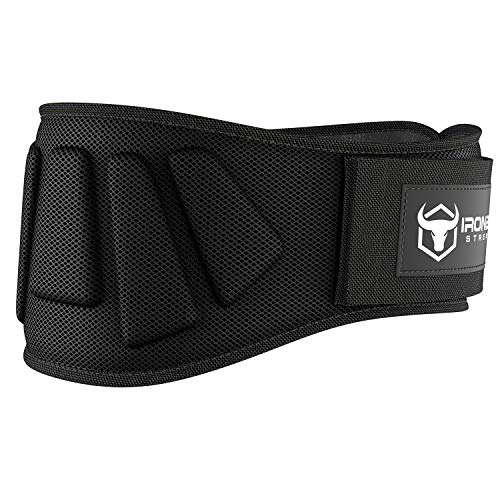
The best nylon weightlifting belts provide adjustable support without the bulk and rigidity of many leather designs. They are especially useful for lifters who want quick tightening, comfortable movement, and a secure fit across changing workouts.
We compared 10 popular options by closure design, belt width, adjustability, comfort, and suitability for strength and functional training. Use the guide below to narrow the list by lifting style, body fit, and support preferences.
If you want dependable support for heavier lifts, the Harbinger 4-Inch Nylon Weightlifting Belt combines a thick nylon web with a wider support strap. Its steel roller buckle and reinforced stitching make it a practical choice for lifters seeking a secure, durable fit.
Best For: Lifters who want sturdy lower-back and abdominal support with a traditional buckle closure.
Pros:
Extra-wide 3-inch support strap helps stabilize the lower back and abdomen.
Heavy-duty nylon is flexible, comfortable, and designed to maintain muscle warmth.
Parallel nylon stitching runs the belt length for consistent support.
Available in four waist-size ranges.
Cons:
Traditional roller-buckle adjustment may be slower than a quick-release design.
Only a 90-day workmanship-and-materials warranty is listed.
This is a straightforward option among nylon weightlifting belts, especially for users who value reinforced construction and a familiar buckle system over competition-style quick release.
The Element 26 Self-Locking Weight Lifting Belt is a competition-oriented nylon option with a full-metal self-locking buckle. It is designed to provide adjustable core pressure during squats, deadlifts, Olympic lifts, and functional fitness workouts.
Best For: Athletes who want quick-release convenience, precise adjustment, and a 4-inch profile for varied lifting movements.
Pros:
Self-locking metal buckle engages under load, while the roller enables quick release.
Breathable nylon does not retain sweat like some other materials.
Designed to meet requirements for sanctioned Olympic lifting and functional fitness events.
Cons:
The straight 4-inch profile may offer less contour than a shaped belt.
Hand washing and air drying are required for care.
With no break-in period and a foldable construction, this is one of the more versatile nylon weightlifting belts for athletes moving between gym training, Olympic lifting, and competition-style workouts.
The RitFit 6 Inch Weight Lifting Belt stands out among nylon weightlifting belts with its extra-wide contoured profile and padded lumbar support. Reinforced tricot construction, a hook-and-loop strap, and a stainless steel buckle make it suited to users who want broad coverage for squats and deadlifts.
Best For: Lifters seeking maximum midsection coverage, padded comfort, and fast adjustments during strength workouts.
Pros:
Six-inch contoured design supports the back, abs, and core.
Reinforced tricot is designed for comfort and durability.
Velcro strap and stainless steel buckle allow quick fit adjustments.
Offered in multiple sizes and colors, with a satisfaction guarantee.
Cons:
The 6-inch width may feel bulkier than a standard 4-inch belt.
Its listed material is ethylene vinyl acetate rather than nylon.
This belt is worth considering when coverage and cushioning matter more than a minimalist design. Its broad profile may be particularly appealing for heavy lower-body and core-focused training.
The large-size Element 26 Self-Locking Weight Lifting Belt offers the same competition-focused nylon construction and self-locking buckle system in a larger fit. Its straight 4-inch profile is intended to provide consistent pressure during squats, deadlifts, cleans, snatches, and jerks.
Best For: Larger-waisted athletes who want a breathable nylon belt with secure locking and quick-release functionality.
Pros:
Full-metal self-locking buckle is designed to engage under load.
Quick-release roller supports fast removal and repositioning.
Foldable design is convenient for carrying in a gym bag.
Cons:
The supplied details list a 91-centimeter waist size, so fit should be checked carefully.
Straight 4-inch construction may not suit lifters who prefer a contoured belt.
For athletes who fit the large size, this is a practical nylon weightlifting belt that balances competition approval, adjustability, and portability without requiring a break-in period.
This 6-inch nylon weightlifting belt combines a contoured shape with an auto-lock roller buckle for adjustable support during squats, deadlifts, rows, and other demanding workouts. Its neoprene and mesh construction is designed to provide stability without feeling overly bulky.
Best For: Lifters who want breathable back support and quick, secure fastening for strength training and cross-training.
Pros:
Reinforced 6-inch back area supports the lower back and abdominals.
Auto-lock roller buckle and hook-and-loop strap provide a secure fit.
Contoured, tapered design allows movement, while mesh fabric promotes breathability.
Cons:
Sizing requires measuring the true waist rather than using pants size.
The listed construction combines neoprene and nylon, so it may not suit shoppers seeking an all-nylon belt.
The auto-lock buckle is the standout feature for lifters who frequently adjust their belt between exercises. Check the sizing chart carefully, especially if your waist falls between sizes.
The RitFit 6-inch nylon weightlifting belt is built for lifters who want broad core and lumbar support with straightforward hook-and-loop adjustment. Its reinforced tricot construction and stainless steel buckle make it suitable for squats, deadlifts, lunges, and other strength exercises.
Best For: Men and women seeking a supportive, adjustable belt with multiple size and color options.
Pros:
Extra-wide 6-inch design supports the back, abs, and core.
Reinforced tricot construction is designed for durability and a snug fit.
Velcro strap and stainless steel buckle allow quick adjustments.
Available in sizes S through XXL and several colors.
Cons:
Its wide profile may feel less minimal than a narrower lifting belt.
Accurate sizing depends on consulting the manufacturer’s sizing guide.
RitFit is a practical pick if you prioritize broad support and easy adjustability over a competition-specific design. The range of sizes also makes it easier to match the belt to different waist measurements.
This Gymreapers nylon weightlifting belt uses a quick-locking metal buckle and reinforced stitching to provide consistent support during powerlifting, Olympic lifting, bodybuilding, and cross-training. The 4-inch-wide nylon design keeps the belt lightweight while maintaining an even width around the torso.
Best For: Athletes who need fast transitions between exercises and a secure belt for varied, high-intensity training.
Pros:
Quick-locking buckle supports fast on-and-off adjustments.
Made from 100% high-grade nylon with reinforced stitching.
Even 4-inch width provides consistent support around the belt.
Designed for powerlifting, Olympic lifting, bodybuilding, and cross-training.
Cons:
It has a 4-inch profile, offering less coverage than the 6-inch alternatives here.
Sizing should be based on measurement around the navel, not waist or pants size.
The quick-lock buckle makes this model especially convenient for workouts that alternate lifting and conditioning. Measure around your navel before ordering to improve the chance of a secure fit.
If you want nylon weightlifting belts with consistent torso coverage and a secure closure, the RDX RX1 is a practical option. Its constant 4-inch width supports bracing around the midsection, while the auto-lock roller buckle and hook-and-loop strap are designed to stay closed during demanding lifts.
Best For: Squats, deadlifts, Olympic lifting, powerlifting, and functional fitness workouts.
Constant 4-inch width provides even lumbar and abdominal support.
Textured nylon and polyester construction is flexible and breathable.
Nylon piping helps reduce digging and fraying.
Cons:
Sizing requires measuring against the chart rather than using pant size.
The belt is available in specific size ranges, so users between sizes should size up.
The RDX is a versatile choice for lifters who want a flexible nylon belt with a 4-inch profile and a retention-focused closure. It balances support with freedom of movement for varied training sessions.
Among nylon weightlifting belts, the Gymreapers Quick Locking Belt stands out for its lightweight design and fast-adjusting buckle. The full-length 4-inch profile is intended to support core stability and intra-abdominal pressure without adding unnecessary bulk between exercises.
Best For: Cross training, Olympic lifting, bodybuilding, powerlifting, and fast-paced gym sessions.
Pros:
Quick-locking buckle allows rapid fastening and release.
Full 4-inch width provides consistent support around the torso.
Made from 100% high-grade nylon with reinforced stitching.
Designed for use across training and competition settings.
Cons:
Accurate sizing requires measuring around the navel, not relying on waist or pant size.
Its support-focused design may be less suitable for users seeking a softer, less structured belt.
This Gymreapers model is a good fit for athletes who frequently switch movements and want a nylon belt that locks and unlocks quickly. Its lightweight construction keeps the emphasis on mobility and efficient training.
For shoppers considering nylon weightlifting belts with extra back coverage, the DMoose model uses a 6-inch support section and a cushioned foam core. Its neoprene-and-nylon construction, contoured shape, and hook-and-loop adjustment are geared toward stable, comfortable support during intense workouts.
Best For: Lifters who prefer broader lumbar coverage for squats, deadlifts, and cross-training workouts.
Pros:
6-inch back support offers broad coverage for heavy lifts.
Breathable 0.375-inch foam core adds cushioning.
Hook-and-loop closure provides adjustable fit.
Advanced locking mechanism is designed to stay secure during workouts.
Cons:
The wider 6-inch profile may feel bulkier than a 4-inch belt.
The supplied details identify the primary material as neoprene rather than nylon alone.
The DMoose is the most coverage-oriented option in this group. Choose it if a wide, cushioned back section matters more to you than the compact feel of a narrower nylon belt.
We focused on practical features that affect day-to-day lifting rather than appearance alone. Our comparison considers nylon or nylon-style construction, belt width, closure security, adjustment range, padding, and the balance between support and mobility. We also looked at whether each design suits squats, deadlifts, Olympic lifts, CrossFit-style workouts, or general gym training.
Because fit has a major effect on performance, measurements and closure systems matter as much as materials. A belt that stays secure under tension but can be released quickly between sets is often more useful than one with maximum stiffness.
Quick Comparison
Best for
Look for
Typical advantage
General strength training
Adjustable nylon body and reliable buckle
Versatile support and easy fit changes
Heavy squats and deadlifts
Wider back panel and secure locking closure
More trunk feedback and stability
Functional fitness
Lightweight construction and quick release
Better mobility between movements
Shared or changing users
Broad adjustment range
Faster, more adaptable fitting
Key Buying Factors for Nylon Weightlifting Belts
Width and Support
Four-inch belts generally offer a balance of mobility and support, while six-inch models provide more coverage around the lower back and abdomen. Wider is not automatically better; choose a profile that does not restrict your setup, breathing, or hip movement.
Closure and Adjustability
Auto-lock and quick-lock systems can make tightening and removal simple, particularly during circuit training. Check that the buckle or locking mechanism can be adjusted in small increments and remains secure when braced hard.
Comfort and Construction
Look for reinforced stitching, durable webbing, a smooth inner surface, and enough padding to prevent pinching. A supportive belt should feel firm without digging into the ribs or hips. Measure your waist according to the manufacturer’s instructions rather than relying on pants size.
Training Style
Power-focused lifters may prefer a wider, more structured belt, while Olympic lifting and CrossFit users often benefit from a lighter design that allows bending and rapid transitions. Nylon Weightlifting Belts are typically a practical middle ground for mixed training.
Who Should Buy Which Nylon Weightlifting Belts?
Choose a four-inch model if you want versatile support for deadlifts, squats, machines, and functional workouts. It is usually the easiest width for everyday gym use.
Choose a six-inch model if you prioritize greater abdominal and lower-back coverage during heavy strength work and have enough mobility for the larger profile.
Choose a quick-lock or auto-lock belt if you change exercises frequently or want fast, repeatable adjustments. For shared use, prioritize a wide adjustment range and a closure that is easy to operate under pressure.
Whichever belt you choose, use it to reinforce good bracing technique—not to compensate for poor form. Start with a secure but comfortable fit, test it with warm-up weights, and reassess the size if it limits breathing or movement.