The best balance boards for women should feel stable enough for confident practice while still offering a useful challenge as strength, coordination, and balance improve. The right design can support core training, mobility work, rehabilitation, or active standing.
Our selected boards include simple rocker models, 360-degree wobble platforms, surf-style trainers, and multifunctional slant boards. Use the guide below to match capacity, movement range, surface grip, and training goals to your needs.
Best 10 Balance Boards for Women Picks for 2026
Reliable Core Trainer
Amazon Basics Wood Wobble Board
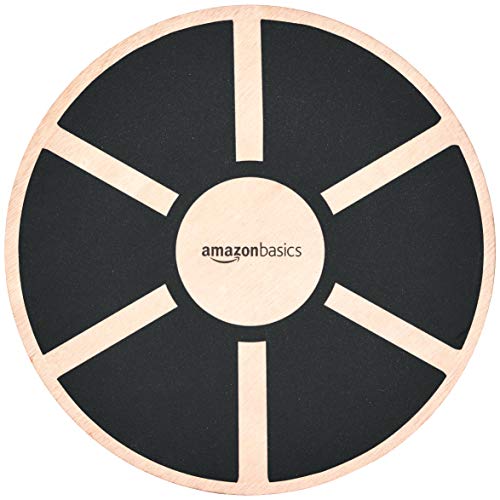
- Supports up to 265 pounds
- Non-slip solid wood surface
- Useful for core, posture, and balance work
Best For: Straightforward home balance and core workouts
Stretch-and-Strength Pick
2-in-1 Wooden Balance and Slant Board

- Four adjustable incline positions
- Useful for stretching and rehabilitation
- Designed for home or standing-desk use
Best For: Users wanting balance training plus calf stretching
Progressive Stability Choice

- Adds multidirectional 360° movement
- Cross base offers controlled progression
- Supports up to 350 pounds
Best For: Intermediate balance and ankle-control training
Board-Sport Training Pick

- Adjustable stopper spacing for progression
- 15-ply wood supports up to 300 pounds
- Targets board-sport balance and coordination
Best For: Surf, ski, snowboard, and athletic balance practice
Most Versatile Pick
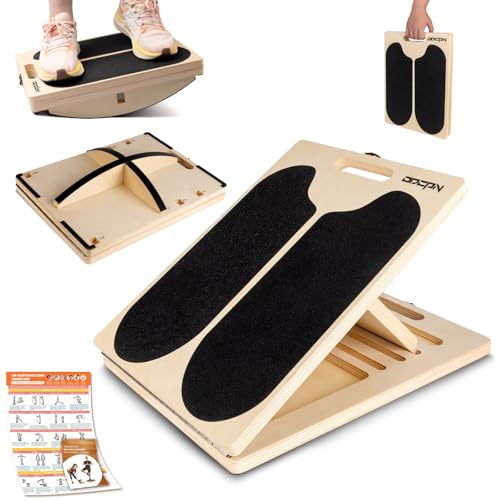
- Combines calf stretching with 180° and 360° balance modes
- Six adjustable angles for varied mobility work
- Folds flat and includes magnetic quick-switch panels
Best For: Stretching, recovery, and balance training in one compact board
Best Simple Training Board
Professional Wooden Wobble Board

- Supports balance, coordination, and core-strength exercises
- Anti-slip surface with floor-protection pads
- Compact design and 350-pound weight recommendation
Best For: Beginners, rehabilitation routines, and everyday stability practice
Best for Sport-Specific Balance
Surf Trainer with Wooden Roller

- Adjustable stoppers provide progressive difficulty
- Trains core, leg strength, agility, and coordination
- Portable wooden roller design for dynamic practice
Best For: Athletes and users training for board and outdoor sports
Top 360° Pick
Professional Wooden Balance Board
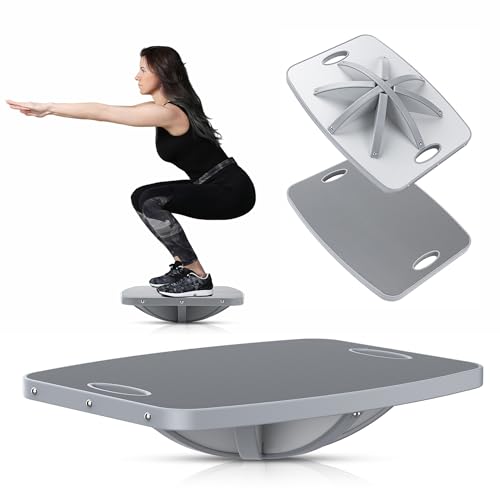
- 360-degree movement for varied exercises
- Soft silicone anti-slip surface and edges
- 500-pound capacity with carrying handles
Best For: Multidirectional training and rehabilitation
Best Portable Classic
StrongTek Wooden Balance Board
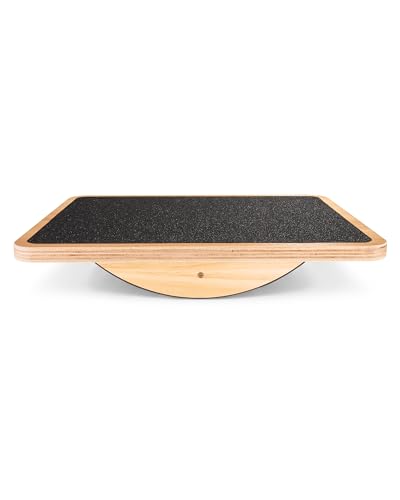
- Rocker design for basic or advanced balance work
- Textured slip-resistant surface
- Portable 4.7-pound build with 350-pound capacity
Best For: Low-impact conditioning and office use
Best for Beginners

- Ships assembled for immediate use
- Anti-slip and anti-scratch floor pads
- Suitable for therapy, posture, core, and desk use
Best For: Beginners and rehabilitation-focused routines
Reliable Core Trainer – Amazon Basics Wood Wobble Board
For shoppers comparing balance boards for women, this Amazon Basics model is a straightforward choice for core, posture, coordination, and balance work. Its solid wood platform has a slip-resistant surface and supports up to 265 pounds, making it suitable for home workouts, gyms, or rehabilitation settings.
Best For: Everyday balance practice, core exercises, planks, push-ups, and standing balance poses.
Pros:
- Supports up to 265 pounds on a solid wood platform
- Non-slip surface helps provide a secure grip
- Works with balance, core, posture, coordination, and targeted strengthening exercises
- Compact 15.75-inch square footprint for home use
Cons:
- Designed for dry, non-slip surfaces rather than wet or smooth floors
- Offers a single wobble-board configuration without adjustable settings
This is a practical, uncomplicated option if you want one board for general fitness and balance training. The fixed design keeps the learning curve simple, although users seeking adjustable incline or multiple movement modes may prefer a more specialized model.
Stretch-and-Strength Pick – 2-in-1 Wooden Balance and Slant Board
This 2-in-1 board stands out among balance boards for women who want both stability training and stretching support. It converts from a balance board to a slant board with four incline positions, making it useful for calf stretching, rehabilitation, posture work, and standing-desk movement.
Best For: Beginners, rehabilitation routines, calf and lower-leg stretching, and standing-desk users.
Pros:
- Four adjustable incline positions expand exercise and stretching options
- Non-slip surface, antiskid feet, and floor-protection pads support safer use
- Can help with core strength, posture, calf stretching, and recovery-focused movement
- Compact, lightweight design works at home, in an office, or during physical therapy
Cons:
- Its multifunctional design may be more than needed for basic balance practice
- Supplied notes list different maximum capacities in the feature copy and details
The adjustable format gives this board broader utility than a basic wobble trainer, especially if stretching or desk use matters as much as balance work. Confirm the applicable weight limit before purchasing, given the inconsistent capacity information supplied.
Progressive Stability Choice – StrongTek 360° Wobble Board
For balance boards for women that offer a step up from basic rocking, the StrongTek advanced model adds 360° directional wobble. Its cross base provides more floor contact than a round-base board while still challenging ankle control, coordination, core stability, and overall balance.
Best For: Intermediate users, progressive balance training, ankle control, physical therapy, and standing-desk movement.
Pros:
- 360° movement creates a more dynamic challenge than a basic rocker
- Cross base offers a controlled middle step before round-base boards
- Textured non-slip top helps keep feet secure during weight shifts
- Supports up to 350 pounds and suits home fitness or balance practice
Cons:
- Advanced movement may be demanding for complete beginners
- It is larger than some compact wobble boards at 17.5 by 13.5 inches
This board is a strong fit for shoppers who have outgrown simple front-to-back rocking but are not ready for a fully round-base trainer. The cross-base design balances challenge with control, making progression more approachable.
Board-Sport Training Pick – Yes4All Surf Balance Trainer
Among balance boards for women, the Yes4All surf trainer is geared toward dynamic, board-sport-inspired practice. Its roller setup includes two removable stoppers, letting users choose 11-, 16-, or 22-inch spacing—or remove the stoppers for a more advanced challenge.
Best For: Surfing, snowboarding, skiing, skateboarding, and users who want a more athletic balance workout.
Pros:
- Adjustable stopper positions accommodate different skill levels
- 15-ply pressed wood supports up to 300 pounds
- Emery top and TPE-covered roller are designed to help with grip and smooth use
- Targets balance, coordination, agility, core, legs, thighs, and waist
Cons:
- Longer roller-board format requires more setup space than a compact wobble board
- The moving roller may be less approachable for users seeking simple stationary balance work
This is the most sport-focused option in the group, with adjustable stopper spacing that can support progression. Choose it if you want to simulate board-sport balance and coordination rather than perform only basic stability exercises.
Most Versatile Pick – 3-in-1 Slant & Balance Board
For women seeking balance boards for women that also support mobility work, this 3-in-1 wooden design combines calf stretching with 180° directional balance and 360° rotation. Its adjustable angles and compact, fold-flat format make it practical for warm-ups, recovery, and home workouts.
Best For: Users who want one board for calf stretching, balance training, ankle mobility, and core work.
Pros:
- Combines slant-board stretching with 180° and 360° balance modes.
- Six adjustable incline angles accommodate beginners through advanced users.
- Non-slip EVA base, PVC sandpaper footing, and a stated 460-pound board capacity.
- Magnetic side panels switch modes quickly and the board folds flat for storage.
Cons:
- Its multifunctional setup may be more than needed for shoppers seeking a simple wobble board.
- The supplied details list both a 460-pound capacity and a 300-pound maximum weight recommendation, so buyers should verify the applicable limit.
This is the strongest all-around option of the three for combining stretching and balance practice. The included training poster and one-year warranty add useful support for structured, gradual use.
Best Simple Training Board – Professional Wooden Wobble Board
This wooden wobble board is a straightforward choice among balance boards for women who want to build stability, coordination, and core strength. Its anti-slip surface and compact design suit home, office, gym, and physical-therapy routines.
Best For: Beginners, older adults, people working on balance, and users who want a simple board for squats, planks, push-ups, or rehabilitation exercises.
Pros:
- Designed for balance, motor coordination, weight distribution, and core-strength work.
- Supports advanced exercises including squats, push-ups, and planks.
- Anti-slip surface and floor-protection pads support safer, cleaner use.
- Compact and portable, with a stated 350-pound maximum weight recommendation.
Cons:
- It offers a single wobble-board format rather than multiple training modes.
- The supplied notes do not specify adjustable difficulty settings.
Choose this model if you prefer a focused, uncomplicated balance trainer. It is especially practical for users prioritizing rehabilitation-oriented stability work over sport-specific roller training.
Best for Sport-Specific Balance – Surf Trainer with Wooden Roller
For women looking for balance boards for women with a more dynamic feel, this surf trainer uses a wooden roller to create moving, full-body balance practice. Adjustable stoppers let beginners limit the tilt range before progressing to wider or unrestricted movement.
Best For: Athletes and fitness users training balance, agility, and core control for surfing, snowboarding, skateboarding, skiing, and similar sports.
Pros:
- Adjustable stoppers allow the challenge to progress from controlled to full-range movement.
- Engages the legs, thighs, waist, and core during balance training.
- Non-slip wooden surface and roller are designed for traction and smooth, quiet motion.
- Portable format works at home, in the office, or at the gym.
Cons:
- The rolling design may require more initial control than a fixed wobble board.
- Its 29-inch length and moving roller may need more clear floor space during use.
- The supplied specifications list both 29 × 11 × 5 inches and a 24 × 24 × 3 inch size, so shoppers should confirm dimensions.
This is the most sport-oriented option, with progression built into the stopper system. It is a good fit for users who want balance practice to feel active and engaging rather than primarily therapeutic.
Top 360° Pick – Professional Wooden Balance Board
For shoppers comparing balance boards for women, this professional wooden model offers full 360-degree movement, a comfortable silicone-covered surface, and a sturdy design for home workouts, office use, or rehabilitation. Its handles and 5.7-pound weight also make it practical to move and store.
Best For: Core training, rehabilitation, standing-desk movement, and users who want multidirectional balance work.
Pros:
- 360-degree tilt supports varied exercises, including squats, planks, lunges, and bridges.
- Soft silicone surface and edges provide an anti-slip, more comfortable contact area.
- Supports up to 500 pounds and includes carrying handles.
- Compact 17.5-by-13.4-inch design weighs 5.7 pounds.
Cons:
- Its 360-degree movement may feel challenging for beginners.
- The medium-sized platform may offer less standing space than a larger board.
This is the most robust option in the group, with the highest stated weight capacity and the broadest range of movement. It suits buyers who want one board for strength, stability, and therapy-oriented exercises.
Best Portable Classic – StrongTek Wooden Balance Board
Among balance boards for women, the StrongTek wooden board is a straightforward choice for low-impact conditioning, balance practice, and standing-desk use. Its compact rocker-style design has a textured surface and supports both basic and more advanced balance work.
Best For: Beginners, home or office use, low-impact conditioning, and users who want a portable rocker board.
Pros:
- Designed to support core activation, agility, reaction time, and stamina.
- Textured, slip-resistant surface is intended to feel secure under bare feet.
- Compact 17.5-by-13.5-inch size and 4.7-pound weight make it easy to transport.
- Supports up to 350 pounds and includes a 30-day money-back guarantee.
Cons:
- Its 350-pound capacity is lower than the top-capacity option in this roundup.
- The supplied details do not specify edge padding or carrying handles.
This board balances portability and versatility with a familiar rocker format. It is a practical pick for everyday balance training, especially if you want equipment that can transition from workouts to a standing desk.
Best for Beginners – Anti-Slip Wooden Wobble Board
If you are evaluating balance boards for women with convenience and stability in mind, this preassembled wooden wobble board is an accessible option. Anti-slip pads, reinforced construction, and ankle support make it suitable for home exercises, physical therapy, and movement breaks at a desk.
Best For: Beginners, physical therapy, posture work, standing-desk use, and users who prefer a ready-to-use board.
Pros:
- Arrives assembled, so it can be used immediately.
- Anti-slip pads help grip the floor and reduce slipping during exercise.
- Double reinforcement bands support a stated capacity of up to 350 pounds.
- Designed for balance, coordination, core strength, posture, and physical therapy.
Cons:
- At 1.95 kg, it is heavier than the lightest board listed here.
- The 16.45-by-12.99-inch platform is slightly smaller than the other wooden options.
- The supplied notes do not state a warranty or money-back guarantee.
This is a sensible choice when ease of setup and floor-friendly features matter most. Its ready-assembled design and broad intended use make it especially appealing for beginners and rehabilitation-focused routines.
How We Picked the Best Balance Boards for Women
We focused on practical features that affect comfort, safety, and versatility rather than appearance alone. The selection includes boards with different movement patterns, from front-to-back rocking to multidirectional wobbling and roller-based surf training. We also considered weight capacity, nonslip surfaces, adjustable stoppers, portability, and whether each design supports stretching or standing-desk use.
Because “women’s” balance equipment is not defined by a single body type or skill level, the best choice depends on your height, weight, training experience, and intended use. Beginners may benefit from a controlled rocker, while experienced users may prefer a 360-degree board or a movable roller.
Quick Comparison
| Best For | Look For | Most Suitable Design |
|---|---|---|
| Beginners | Fixed rocker and nonslip top | Simple wooden rocker board |
| Core and balance training | 360-degree movement | Wobble board |
| Surf-style practice | Roller and adjustable stoppers | Surf trainer |
| Mobility and recovery | Incline settings and calf support | Slant-board combination |
| Standing desks | Stable platform and comfortable surface | Rocking or low-profile board |
Key Buying Factors for Balance Boards for Women
Movement and Difficulty
A rocker board generally offers a more predictable learning curve. A 180-degree or 360-degree board demands more ankle control and engages stabilizing muscles in multiple directions. Roller models can be the most challenging and are better suited to users who already feel comfortable on a stationary board.
Capacity, Dimensions, and Stability
Check the manufacturer’s stated weight limit and compare it with your body weight, footwear, and any equipment used during training. A wider platform can feel more reassuring, while a compact board is easier to store. Adjustable stoppers may limit travel and provide a safer progression for new users.
Grip and Construction
Look for a textured or nonslip surface, sturdy wood or composite construction, and edges that do not dig into bare feet. A board used on hard flooring may need a mat to reduce sliding and protect the floor. Inspect the surface and hardware regularly, particularly on models with moving parts.
Purpose and Portability
For physical therapy or gentle mobility work, prioritize control and adjustability over maximum instability. For core workouts, select a board with enough movement to remain challenging. If you plan to use it at work, consider noise, height, comfort, and whether it remains stable while you shift position.
Who Should Buy Which Balance Boards for Women?
- New users: Choose a basic rocker with a grippy surface and a manageable height.
- Fitness-focused buyers: Choose a 360-degree wobble board for more demanding core and ankle training.
- Surf or board-sport enthusiasts: Choose a roller trainer with adjustable stoppers so difficulty can be increased gradually.
- Mobility and recovery users: Choose a combination slant board with multiple incline settings.
- Standing-desk users: Choose a stable, low-profile rocker that allows gentle movement without constant correction.
Start near a wall or sturdy support, use controlled movements, and increase difficulty only after you can maintain balance comfortably. If you are recovering from an injury or have significant joint or balance concerns, ask a qualified clinician which style is appropriate first.
Related Posts: